
 Explore Hyndburn this Christmas and let us know about the local places you enjoy. Also try the new Pebble Walk at Peel Park and The Coppice. Winter Wanderings
Winter Tree Identification 3
Here is the third of a series of posts to help you identify some common trees in Winter. To see the others click here: Winter Tree Identification , Winter Tree Identification 2
Winter tree identification is based on the twigs, buds and bark so here is a simple guide to the twigs of some trees you should see in a woodland: Twig ID or look online for Winter Tree ID Guides.
ASH

Ash can grow up to 35m tall. It is usually found in woods but can also be seen as individual trees in parks and fields. It is currently a common tree but due to Ash Dieback disease it is now under threat. The ends of it’s shoots and branches tend to curl up and twigs and branches grow in opposite pairs.

The bark is pale brown to grey and tends to fissure as it gets older. It is often found with lichens and mosses growing on it. The bark can be mistaken for other trees but it’s distinctive buds are the main clue to it’s identity.

The tree has smooth, slightly flattened twigs, which are green or grey. The buds are a very distinctive black colour and are in pairs on the twig with a large bud at the end, often surrounded by smaller buds.
HAWTHORN

Hawthorn is a smaller tree which can grow to 15m but is often found in hedges as a more shrubby plant. It’s dense thorny foliage makes it an excellent hedge plant and shelter for nesting birds.

The bark is brown-grey and knotted and fissured, although in younger trees it tends to be grey and smoother. It has thorns on it’s twigs so can be confused with Blackthorn. You may see red fruits on it and also dead leaves which are heavily lobed.

Hawthorn has small buds which usually emerge from the base of a thorn and are sometimes on the end of wrinkled shoots. This helps tell it apart from Blackthorn which tends to have longer thorns and buds which grow from the thorn.
So get out and visit local woodlands, see what trees you can find and we’ll be putting some more tree ID tips up soon. We are developing a woodland website for Hyndburn and are interested in your local wood so if you’d like to take pictures of the trees you see or tell me about your local wood then you can email me at roger.plum@prospectsfoundation.org.uk and for more information on how to get involved with Prospects and activities you can do, then visit our website www.prospectsfoundation.org.uk
Winter Tree Identification 2
Here is the second of a series of posts to help you identify some common trees in Winter. To see the first post click here: Winter Tree Identification
Winter tree identification is based on the twigs, buds and bark so here is a simple guide to the twigs of some trees you should see in a woodland: Twig ID or look online for Winter Tree ID Guides.
BEECH

Beech is a large tree which can grow up to 50m tall. It is usually found in woods but is also used as a hedge plant. The bark is smooth, thin and grey and even in older trees doesn’t become very rough. It has dense leaf cover in the Summer so the ground below Beech trees is often bare of other plants and in Winter has a thick carpet of dead leaves and Beech Mast, which are the fruits of the tree.

Beech buds are long and thin and stick out from the twig. Beech can be confused with Hornbeam as they have similar bark and buds but the buds on a Hornbeam grow along the twig and are not such a copper colour.

During the Winter Beech trees can hold onto their dead leaves and this can be seen most in young trees or hedgerow trees.
SILVER BIRCH

Silver Birch is a distinctive tree, which can grow to 20m high. It is found in woodlands, heathland, open ground and parks. With it’s silvery white bark it stands out and has elegant drooping branches with slender purple twigs. Some trees may also have catkins on the twigs.

Mature trees still have the silvery colour but the lower trunk develops dark diamond shaped fissures, which can be thick and corky. The buds of Silver Birch are small, 4-5mm (0.2 in), and egg-shaped. But due to the unique features of the rest of the tree these aren’t usually needed to identify it.
So get out and visit local woodlands, see what trees you can find and we’ll be putting some more tree ID tips up soon. We are developing a woodland website for Hyndburn and are interested in your local wood so if you’d like to take pictures of the trees you see or tell me about your local wood then you can email me at roger.plum@prospectsfoundation.org.uk and for more information on how to get involved with Prospects and activities you can do, then visit our website www.prospectsfoundation.org.uk
Winter Tree Identification
Winter is here and at this time of year trees can look sparse but with a few simple tips you can identify some common trees in our woodlands. Woodlands are a great place for a Winter walk. They are more sheltered and even at this time of year have wildlife that you can see. Birds are about looking for food to get them through the winter, trees can have fruits and seeds and plants such as ferns and mosses are visible along with Christmas related plants such as Holly, Ivy and Mistletoe. The low Winter sunshine casts long shadows and lights up the bare trees, giving different views of familiar woods. As the current government guidelines restrict movement not everyone is lucky enough to have woodlands near enough that they can walk to, although in Hyndburn there are a number of woodland sites that are near enough to the towns to be visited. More information about Hyndburn’s Woodlands can be found here: Hyndburn’s Woodlands and local walks can be found here: Discover Hyndburn. This is the first of a series of posts to help you identify some common trees.
Winter tree identification is based on the twigs, buds and bark so here is a simple guide to the twigs of some trees you should see in a woodland: Twig ID or look online for Winter Tree ID Guides.
HAZEL

Hazel is a common tree in woods and hedges. It is often multi-stemmed and grows to a maximum height of 15m. The bark is shiny and silvery or light brown and has horizontal lines or ‘breathing pores’.
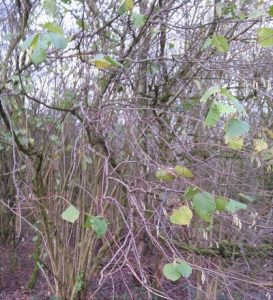
Especially in early Winter you may still see some of the leaves on the tree, either still green or usually yellow. They are quite large and roughly circular or heart shaped with a pointed end. If not on the tree then you may see them on the ground below, you may also see hazelnuts on the floor which is another clue.

During the Winter Hazel produce male and female flowers. The female flowers are small and red but the male flowers are long yellow catkins which can be seen on the tree. The twigs have buds which are short and blunt with green red scales and young shoots are hairy.
OAK

Oak trees can grow to 40m tall and are a vital habitat throughout the year for a variety of birds and insects. Young oaks have smooth, silvery-brown bark. As trees age, this grows rugged and is covered in finger-shaped platelets with deep fissures in between. Young oak bark can be confused with other trees so you need to look at the twigs to identify them.

Oak twigs have a distinctive cluster of brown buds at the end of the twig, other individual buds are spread down the twig in a spiral pattern.
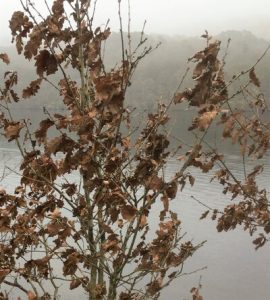
Oaks can keep their leaves in Winter, although dead and brown they have the distinct oak leaf shape. They are easier to see on young trees but another clue for an oak is to look on the floor for leaves, acorns and acorn cups.
So get out and visit local woodlands, see what trees you can find and we’ll be putting some more tree ID tips up soon. We are developing a woodland website for Hyndburn and are interested in your local wood so if you’d like to take pictures of the trees you see or tell me about your local wood then you can email me at roger.plum@prospectsfoundation.org.uk and for more information on how to get involved with Prospects and activities you can do, then visit our website www.prospectsfoundation.org.uk
Meet our Outdoor Learning Officer
 We’re very pleased to announce that Danielle Rowlands has joined our team at PROSPECTS as our new Outdoor Learning Officer and started working for us last week!
The Outdoor Learning Project has come about as a result of an initiative funded and promoted by the Ernest Cook Trust. Danielle’s role is all about educating people about the natural environment whilst also raising awareness of climate change.
Danielle will work with Hyndburn schools, community groups and individuals to deliver exciting and engaging environmental activities across the borough. Danielle’s role is to inspire the people of Hyndburn to get out into nature and live a more environmentally friendly lifestyle. She is a firm believer that if we all make small everyday changes, we can make a massive impact on Climate Change. To find out more, get in touch by emailing danielle.rowlands@prospectsfoundation.org.uk
Danielle has bags of enthusiasm and will bring lots of energy to the office – we can’t wait to see what exciting activities she will be delivering!
Green Mentor Post Recruitment
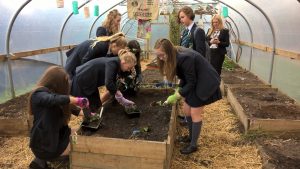 New Green Mentor needed!
We’re very pleased to announce that we have secured funding from the Ernest Cook Trust for a new 2-year part-time post (18.5 hours per week).
With your encouragement, groups of young people aged between 10 and 14 years old (known as Green Influencers) will engage with their peers and others in their local community and lead on environmental action projects.
You will help the Green Influencers to learn about engagement techniques, project and budget management and project delivery skills while making a difference to the environment and connecting to our local community.
The deadline for applications is 5.00pm on Monday 14th December, with ONLINE interviews taking place on Monday 21st December.
Click HERE to visit the job page.
Community Tree Planting Post
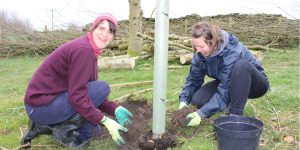 Prospects is currently recruiting for a new post!
We have secured funding from Hyndburn Windfall Fund and Hyndburn Borough Council to fund a 4-day a week (29.60 hours a week) post for an initial 12 months. We are working with our partners to try and extend this by another 12 or 24 months.
The deadline for applications is 5.00pm on Thursday 10th December, with ONLINE interviews taking place on Thursday 17th December.
Click HERE to visit the job page.
Funding Success!
Great news!
Announced today – Monday 23rd November 2020 – we’re one of 300+ community organisations to secure a CCLORS grant. It’ll help us provide vital support to our local community, particularly those most impacted by the Covid-19 pandemic.
We’re planning to use the grant to develop our Growing Together initiative that we ran during the first lockdown. We are aiming to put together many, many more salad and veg grow packs to give out to communities, schools and organisations to help get people growing together! We are also going to translate the growing instructions into a number of other languages, such as Urdu, Gujarati, Arabic and Polish to help reduce the barriers to participation in this initiative. We will also be developing other related activities including recipe ideas, photo competitions, improving gardening skills, advice on how to build raised beds and how to re-use everyday items as growing containers.
We are currently recruiting for another member of staff to carry out this project so watch this space and get in touch if you are interested in taking part.
CCLORS is the Covid-19 Community-Led Organisations Recovery Scheme. It is being delivered by Power to Change, Locality, Social Investment Business and the Ubele Initiative in partnership with The National Lottery Community Fund


Helping Wildlife This Winter
With Winter on it’s way find out how you can help your local wildlife here: Helping Wildlife this Winter 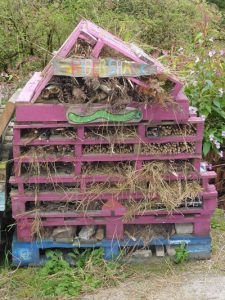
Rewilding Job
We’re now recruiting for a Project Officer to deliver our Rewilding programme (incorporating the Growing Together initiative)
We have secured funding from the Hyndburn Windfall Fund and the National Lottery Community Fund to provide a 12-month contract for a 3 days a week (22.20 hours per week) post.
This will continue to deliver our successful Rewilding project whilst also delivering a wider ‘Growing Together’ programme that was launched as a direct response to the covid-19 lockdown during 2020.
The deadline for applications is 5.00pm on Monday 23rd November, with online interviews taking place on Thursday 3rd December.
Click HERE to visit the job page.
Autumn in Hyndburn
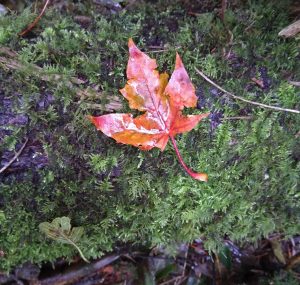
Autumn is here so click on the link to find out what to see and where to see it in Hyndburn. Autumn in Hyndburn
Last Chance …
Hurry – there’s only just over two weeks left for you to donate and support our work by choosing us as your local cause when you shop at your local Co-op. This round of the Local Community Fund closes on Saturday 24th October.
At the end of last year a PROSPECTS project was chosen as one of the local causes in the Rishton and Clayton-le-Moors Co-op stores. Supporting our cause means that 1% of what you spend on most Co-op products and services will automatically go to support our environmental work.
So, if you are a Co-op member, sign in via this link, https://lght.ly/3m57jg3 or alternatively why not download the new Co-op App, available on the App store or Google Play and you will be able to choose our project to receive your donations, wherever you are in the country.
The environmental activities you will be supporting include work on the canal towpath, conservation management in local woodlands, community food growing such as the Growing Together programme, improving biodiversity in school grounds, Churchyards and other areas of green space and the work of the Rishton and Clayton PROSPECTS Panels.
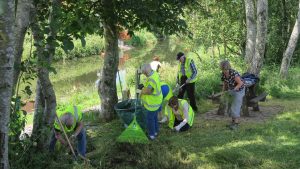
New Outdoor Learning Post
Just like buses, two come at once! Yes, we’re recruiting for another post at Prospects
We have secured funding from the Ernest Cook Trust, Hyndburn Windfall Fund and the D’Oyly Carte Charitable Trust to provide a new 3-year, 3 days a week (22.20 hours per week) post.
The deadline for applications is 5.00pm on Monday 12th October, with interviews taking place in Accrington on Thursday 22nd October.
Click HERE to visit the job page.
Community Tree Planting Post
Prospects is currently recruiting for a new post!
We have secured funding from Hyndburn Windfall Fund and Hyndburn Borough Council to fund a 4-day a week (29.60 hours a week) post for an initial 12 months. We are working with our partners to try and extend this by another 12 or 24 months.
The deadline for applications is 5.00pm on Monday 28th September, with interviews in Accrington on Thursday 8th October.
Click HERE to visit the job page.
Discover Hyndburn Walks Launch
On Thursday 27th August The PROSPECTS Foundation is launching a series of ‘Discover Hyndburn’ self-guided walk leaflets.
The leaflets are aimed at people new to walking, those returning to walking, people new to the Hyndburn area as well as visitors and ramblers wishing to explore Hyndburn and the surrounding areas.
They range from shorter walks of 2-3 miles (4.8kms), medium walks 3-6 miles (9.7kms) and longer walks of 7-10+ miles (16kms) covering smooth, easy, moderate, and rough terrains. Some are mainly on the flat, but the longer hikes tend to have a few climbs. Several of the walks include sections of river side paths, greenways and multiuser tracks and/or canal towpaths.
The self-guided walk leaflets also include local history information and the routes pass by key features, go via woodlands and greenspace areas managed by PROSPECTS or places maintained by local volunteers from the township-based PROSPECTS Panels.
The walks can be found at https://prospectsfoundation.org.uk/walking/ and the Discover Hyndburn sub-page where there are links to download the leaflets and for the technical minded they can be downloaded as gpx files to android phones and other devices.
For more information contact mike.stapleford@prospectsfoundation.org.uk
PROSPECTS 2019-2020 Annual Report
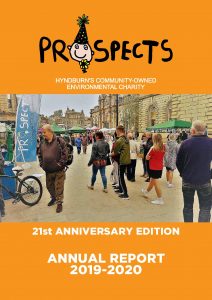 Why not check out our 2019-2020 Annual Report?
It’s packed full of everything we got up to in the last year and there’s lots of great photos too. It’s the ideal read for a quick summary of all our projects, not forgetting a look back at our hugely successful 21st anniversary celebration event in Accrington Town Square.
Other highlights include:
– A summary of all the projects supported by the Windfall Fund over the year
– Our collaboration with the Canal and River Trust
– The work of the PROSPECTS Panels
– Progress with the Hyndburn Woodlands Project
– The launch of our new look website
If you feel inspired by what you’ve read then sign up to our newsletter list or register as a volunteer – who knows, next year you might see yourself in the annual report!
Happy reading!
Hard copies are also available from our premises on Broadway in Accrington.
Hyndburn’s Local Nature Reserves
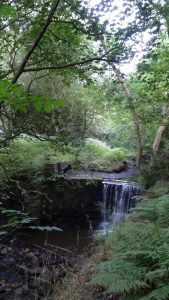 Just over two years ago our successful Heritage Lottery Fund project achieved it’s aim of getting two areas of Hyndburn declared as Local Nature Reserves. The two reserves of Peel Park & The Coppice and Woodnook Vale were officially designated at a ceremony at Haworth Art Gallery.
You can learn more about the reserves here Hyndburn’s Local Nature Reserves or visit the project webpage here Connecting People to Hyndburn’s Natural Heritage
Our current National Lottery Heritage Fund project is focussing on Hyndburn woodlands and you can get more information and see how you can get involved by looking at the webpage here Hyndburn Woodlands
Orienteering in Peel Park
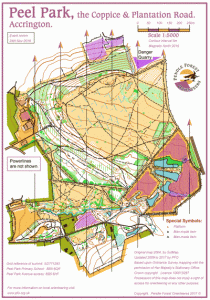
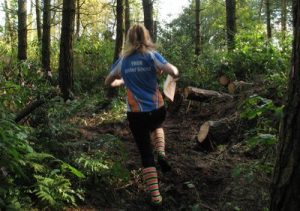
Last year, as part of our Heritage Lottery Funded project to designate two new Local Nature Reserves in Hyndburn, Prospects Foundation in partnership with Pendle Forest Orienteers and Hyndburn Borough Council established a new orienteering course in Peel Park, Accrington. The course provides a good way to exercise in the open air and explore one of our new Local Nature Reserves. The course is designed so you can follow different routes depending on your experience and fitness levels. The easiest course can be followed on or very near paths whilst the hardest course involves challenging terrain and navigation skills.
To see our website page about the course click here: PEEL PARK ORIENTEERING COURSE
To download the map and suggested routes click this link: Orienteering Sheet
To see more details of the course and information on Pendle Forest Orienteers click this link: Pendle Forest Orienteers

Keep Safe Near Water
Keep Safe
PROSPECTS will share public safety information in relation to keeping safe when you are out and about in public spaces and the countryside. Some of these have already been shared via social media but we believe it is important to repeat them here. Please share the information especially with children and young people. Most reservoirs and rivers, whilst being close to public footpaths and bridleways, are on private land so please do not trespass!
Stay Safe when near reservoirs – https://www.unitedutilities.com/about-us/recreation-sites/reservoir-safety/
Is your river fit to swim in? – There are some areas in Hyndburn which are not fit for swimming and should be avoided. An example is the Hyndburn near the old paper mill in Rishton, which is on private land, and warnings about this location have already been issued and water tests are currently being carried out.
There is no public health monitoring of river water quality in the UK. There are pathogens (bacteria or viruses) in rivers which can cause illnesses. These can come from agricultural pollutions, discharges from badly connected household appliances and hidden septic tanks etc. Therefore, we can never be 100% sure that a location is safe for swimming or recreational access.
The Rivers Trust https://www.theriverstrust.org/2019/07/24/river-safety-routine/
Water Safety for Kids – https://canalrivertrust.org.uk/explorers/water-safety
YouTube video – Water Contamination – https://www.youtube.com/watch?v=Om42Lppkd9w

Sustainable Travel – Cycling
PROSPECTS is not running any cycling activities at the moment. We receive regular information from our partner organisations and associates. We share this information via emails, our website and social media. See Positive Spin, Go Velo and Pedal Away below to find out about led cycle rides, adult cycle training and cycle maintenance courses for Hyndburn residents.
To keep local cyclists up-to-date there is a Hyndburn Cyclists Facebook page. This is a private group to protect people who wish to invite people to join them on a cycle ride so you will need to join the group.
Cycling UK provide up-to-date information on safe cycling.
Hopefully Pedal Away Hyndburn will be able to resume their Monday cycle rides in the not too distant future. Pedal Away Hyndburn link.
Positive Spin have recently received funding from Connecting East Lancashire and they will be providing led rides (ages 16+) on either a Saturday or a Sunday in the Hyndburn area starting soon. You will need your own bike and helmet in order to participate. The rides will be geared towards various levels with some being beginner/improving confidence rides and some being for the more experienced cyclists. If you would like to know more, please contact David via email at SPDLancashire@hotmail.com
Go Velo are now providing cycle training and are looking forward to starting another Sofa to Saddle in Accrington in September. The course is a six week course and is specifically for those who have never ridden a bike or those who haven’t ridden in years. You will start at week one learning basic bike maintenance and by week six you will be taking part in a led ride. The Sofa to Saddle will be at the Accrington Stanley Sports Hub on Thorneyholme Road. Go Velo will promote the course via Eventbrite in due course. Contact info.govelo@googlemail.com for details.
