


Hyndburn's Community-Owned Environmental Charity
On Saturday 16th November 2024 we held our ‘Festive Crafts’ event at Accrington Cricket Club! The session was led by the talented Gareth Muir of Crag Moor Bushcraft.
Participants learned safe knife handling skills, proper whittling techniques, and crafted their very own Winter Wonderland display! Participants used whittling knives to make different tree models from a length of hazel wood, once these were crafted they were attached to a wood cookie to make their own display!
Thank you to Accrington Cricket Club for lending us their wonderful space, and thank you to Gareth for lending us his amazing knowledge!
Activity funded by Lancashire County Council, Hyndburn Borough Council, and the Windfall Fund.


On Tuesday 12th November 2024 the Hyndburn’s Woodlands Volunteers were back at Huncoat East woodland continuing with the pathway maintenance started in September.
This involved using spades and shovels to clear back vegetation that had encroached onto the paths. The vegetation covered around 3/4’s of the entire path! We are happy to say the paths have been extended outwards a tremendous amount! Another session will be needed to finish the full path, some 400m.
Thank you to our wonderful volunteers who helped us maintain Hyndburn’s woodlands on a very cold day!
Activity funded by Lancashire County Council, Hyndburn Borough Council, and the Windfall Fund.


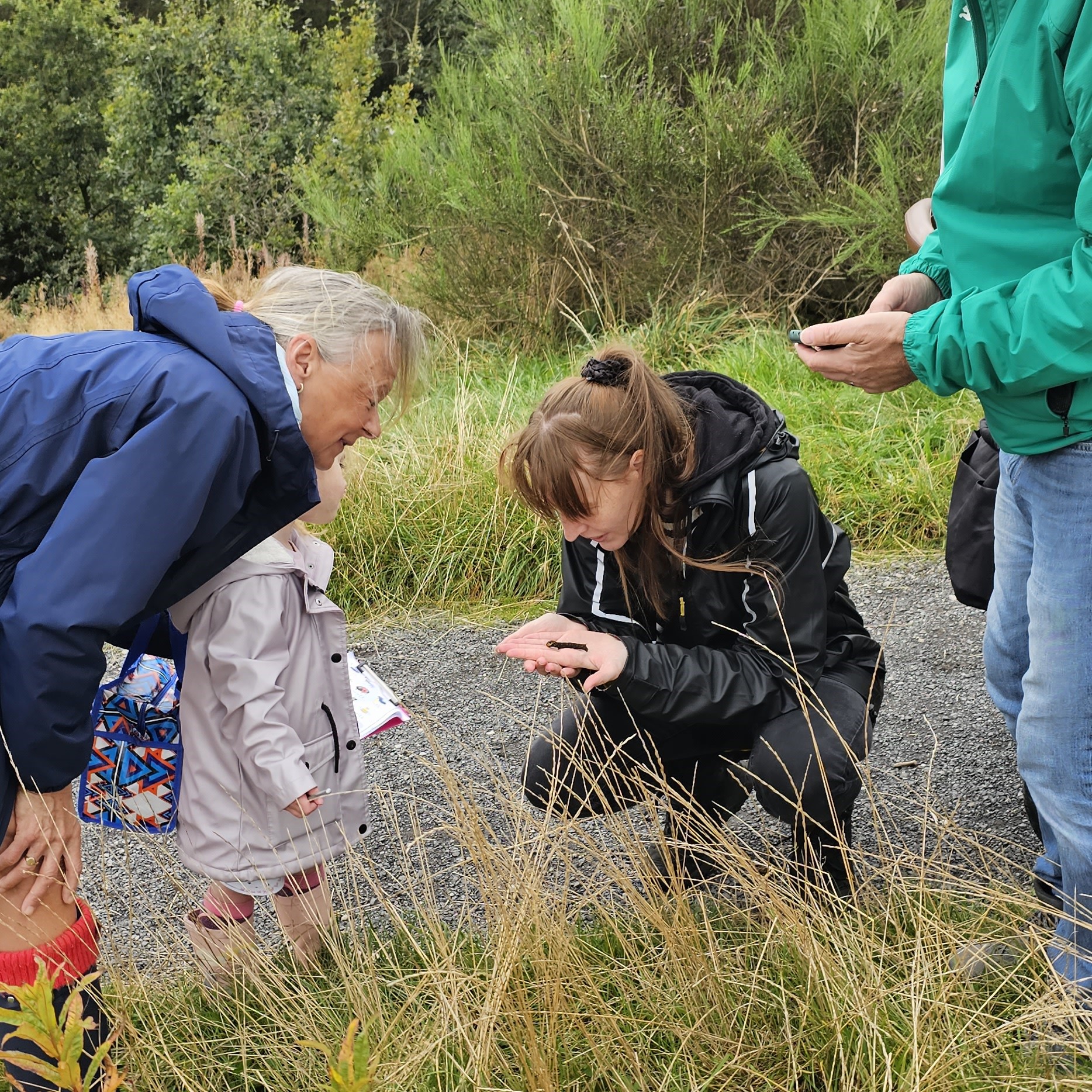


 3.003 – 20240615 – Map-winged Swift
 54.008 – 20240625 – Six-spot Burnet
 54.009 – 20240708 – Narrow-bordered 5-spot Burnet
 66.010 – 2024 03 16 – Drinker (Larval)
 69.016 – 20240924 – Elephant Hawk-moth (Larval) on RBWH
 70.094 – 20240810 – Small Phoenix Male
 70.100 – 20240615 – Green Carpet
 70.101 – 2023 03 08 – Mottled Grey
 70.218 – 20240706 – Latticed Heath
 70.241 – 20240810 – Scalloped Oak
 70.245 – 2024 03 16 – March (Resting)
 70.252 – 20240706 – Peppered
 70.255 – 2024 02 17 – Dotted Border
 70.265 – 20240706 – Mottled Beauty
 70.277 – 20240615 – Common White Wave
 71.025 – 20240930 – Buff-tip (Larval) on Hazel
 72.002 – 20240907 – Straw Dot
 72.063 – 20240711 – Blackneck
 73.012 – 20240810 – Burnished Brass f.aurea
 73.015 – 20240602 – Silver Y on Yellow Rattle
 73.016 – 20240615 – Beautiful Golden Y
 73.022 – 20240907 – Gold Spot
 73.113 – 20240924 – Angle Shades
 73.169 – 20240810 – Common Rustic agg
 73.194 – 2024 02 17 – Chestnut
 73.210 – 2024 02 17 – Satellite
 73.216 – 20240810 – Dun-bar
 73.242 – 2024 03 16 – Clouded Drab
 73.244 – 2024 03 17 – Common Quaker
 73.245 – 2024 03 17 – Small Quaker
 73.291 – 20240809 – Common Wainscot
 73.301 – 20240810 – Shoulder-striped Wainscot
 73.317 – 20240706 – Heart and Dart
 73.333 – 20240615 – Ingrailed Clay
 73.334 – 20240615 – Small Square-spot
 73.336 – 2024 03 16 – Red Chestnut
 73.342 – 20240706 – Large Yellow Underwing
 73.343 – 20240907 – Broad-bordered Yellow Underwing
 73.345 – 20240810 – Lesser Yellow Underwing
 73.348 – 20240810 – Lesser Broad-bordered Yellow Underwing
 73.352 – 20240615 – Green Arches
 73.353 – 20240810 – Dotted Clay
 73.357 – 20240907 – Square-spot Rustic
 73.358 – 20240810 – Six-striped Rustic
 73.365 – 20240907 – Autumnal Rustic
 16.001 – 20240810 – Bird-cherry Ermine
 41.003 – 20240615 – Large Pale Masoner
 49.127 – 20240615 – Thistle Straw
 49.154 – 20240615 – Dusky Marble
 63.073 – 20240810 – Peppered Grey
 07.001 – 20240618 – Yellow-banded Longhorn
 07.006 – 20240501 – Green Longhorn
 48.001 – 20240722 – Common Nettle Tap
 20240730 – Small Skipper
 20240625 - Large Skipper
 2024 04 16 – Small White
 20240505 - Orange-tip
 20240722 – Large White
 20240516 - Green-veined White
 20240903 – Red Admiral
 20240903 – Small Copper
 20240903 – Peacock
 20240814 – Gatekeeper
 20240702 – Ringlet
 20240625 - Meadow Brown
 20240814 – Small Tortoiseshell
 20240802 - Holly Blue
 20240419 - Common Carder Bumblebee
 20240530 - Heath Bumblebee
 20240814 – White-tailed Bumblebee
 20240411 - Garden Bumblebee
 20240326 - Red-tailed Bumblebee
 20240322 - Buff-tailed Bumblebee
 20240530 - Early Bumblebee
 20240411 - Forester's Cuckoo
 20240814 - Patchwork Leafcutter Bee
 20240421 - Orange-tailed Mining Bee (pair)
 20240411 - Lasioglossum sp.
 20240324 - Andrena sp.


On Tuesday 5th November the Hyndburn’s Woodlands Volunteers were back at Jubilee woodland to continue with the meadow maintenance that we started the week prior.
Much of the scything had already been carried out, so this session primarily focused on raking off the cuttings to reduce the nutrients present.
Once the last bit of scything was complete, and the raking carried out, volunteers sowed Yellow rattle seeds into the cut meadow. This was done via the ‘heeling’ technique, volunteers small indents into the meadow using the heel of their boots. A small sprinkle of seeds were then placed into the indent, which was then covered over using their heel.
Yellow rattle is a valuable plant for meadow management as the plant parasitizes grasses, reducing their prevalence which in turn benefits other wildflowers. Yellow rattle itself is a wild flower which provides benefits to pollinators.
Activity funded by Lancashire County Council, Hyndburn Borough Council, and the Windfall Fund.
On Tuesday 29th October the Hyndburn’s Woodlands Volunteers were hard at work at Jubilee woodland continuing with the meadow management that has been going on for 3 years.
This involves using scythes to cut as much of the grassy material as low to the ground as possible, the cuttings (arisings) are then raked off the meadow area and removed. This reduces the available nutrients in the following years, which reduces the overall height of grass and allows wildflowers to sprout up.
Thank you to our amazing volunteers who helped us on the day, it was definitely hard work but we managed to get it done!
Activity funded by Lancashire County Council, Hyndburn Borough Council, and the Windfall Fund.


On Friday 25th October The PROSPECTS Foundation held their first ‘Fairy Door Making’ activity at Accrington Cricket Club.
Participants used natural material such as bark, berries, wood chippings and twigs to create their very own fairy doors and fairy houses, with accompanying furniture!
Everyone crafted some spectacular creations that our mystical friends will no doubt love!
Thank you to everyone who attended the session, you all made it a wonderful afternoon. Thank you also to Accrington Cricket Club for lending us their incredible space!
Activity funded by Lancashire County Council, Hyndburn Borough Council, and the Windfall Fund.


On Tuesday 22nd October the Hyndburn’s Woodlands Volunteers were back at Whinney Hill woodland carrying out some maintenance work on the butterfly glade located at the top part of the woodland. The glade has a good number of pollinator-benefitting wildflower species, such as cowslip, Marsh mallow, and eyebright.
Maintenance involves using scythes to cut the grassy areas as low as possible, cuttings are then removed to decrease the total available nutrients in that area. Wildflowers prefer nutrient low soil as this reduces grass height which in turn reduces competition for wildflowers to grow.
Once the scything had been completed, volunteers sowed Yellow rattle seeds into the glade by creating a patch of bare soil and then heeling seeds into the soil. Yellow rattle is a species which parasitises grass, and therefore reduces grass prevalence in the area.
Thank you to our amazing volunteers who helped us improve local biodiversity.
Activity funded by Lancashire County Council, Hyndburn Borough Council, and the Windfall Fund.


On Saturday 13th October, Hyndburn’s Woodlands Officer Brandon Cherry and Irene, of the Lancashire Wildlife Trust, held a fungi walk at Whinney Hill woodland! (Livingstone Road)
The walk was very well attended, with 21 people turning out for the walk! Irene, a professional mycologist, strolled through the woods while attendees scouted for fungi. The attendees found an abundance of fungi which Irene identified and discussed.
The weather, unfortunately, only held for an hour for us after which a downpour occurred and forced an early finish!
Thank you to Irene for leading the session and for sharing her bountiful knowledge! Thank you also to those that attended the walk and made it a lovely afternoon
As always, thank you to our funders for making it all possible
Funding provided by Lancashire County Council, Hyndburn Borough Council, and the Windfall Fund.


 Removing Himalayan Balsam!
 Removing Montbretia!
 Grassland Condition Assessment with Ben Hargreaves (LWT)
 Pleck Meadow's Third Annual Cut
 Butterfly Bank Creation
 Tufted Vetch & Yellow Rattle
 Wild Marjoram
 All the wildflowers at the Northern Gateway!
 Marsh Woundwort
 Common Globetail on Ox-eye Daisy
 Small Heath
 Peacock on Black Knapweed
 Large Skipper
 Small Copper on Common Ragwort
 Red Admiral
 Early Bumblebee on Comfrey
 Bumblebee Plumehorn
 Honey Bee on Heather
 Stripe-backed Fleckwing on Cat's-ear
 Patchwork Leafcutter on Black Knapweed
 Common White Wave
 Green Carpet
 Project Officer, Robert Gabryszak.
 Green Arches
 Beautiful Golden Y
 Latticed Heath
 July Moth Morning w/ Dave Bickerton!
 Large Yellow Underwing
 July Moth Morning w/ Dave Bickerton!
 Peppered
 August Moth Morning
 Burnished Brass
 August Moth Night!
 Scalloped Oak
 Brews and a Large Yellow Underwing!

Overall, you spotted just seven butterflies on average per 15-minute Count, a drop of almost 50% on last year’s average of 12, and the lowest in the 14-year history of the Big Butterfly Count.
Small Heath
Peacock
Large Skipper
Small Copper
Red Admiral
 Gatekeeper
 Orange-tip
 Green-veined White
 Small White
 Meadow Brown
 Ringlet
 Speckled Wood
On Friday 27th September 2024 The Hyndburn’s Woodlands project held their second bat walk of the year at Woodnook Vale LNR!
Participants were led by Roger, the Batman, Cunliffe who took them for a light stroll through the vale, with detectors in hand, to search for our nocturnal friends! It didn’t take long to spot them, only a few 100 meters into the walk and we could already see them swooping overhead!
The walk was positively teeming with activity and everyone got to both hear and see our native bats in action!
Thank you to everyone who attended our walk, your presence made it the wonderful evening it was! Thank you also to Roger Cunliffe for sharing his incredible knowledge with us!
Activity funded by Lancashire County Council, Hyndburn Borough Council, and the Windfall Fund.


 Dock Removal at Pleck Meadow!
 Removing Himalayan Balsam
 Wildflower Planting with Benjamin Hargreaves Primary School!
 Rosebay Willowherb Removal and Wildflower Planting
 Pleck Meadow Carved Bench
Small White
Pleck Meadow Carved Bench
Small White
 Orange-tip
 Speckled Wood
 Small Copper
 Peacock
 Honey Bee
 Orange-tailed Mining Bee Pair
 Early Bumblebee
 Red-tailed Bumblebee (with mites!)
 Heath Bumblebee
 Small Phoenix
 Hebrew Character
 May Moth Night
 Clouded Drab
 Common Quaker
1. Creating the outline for the bank
Common Quaker
1. Creating the outline for the bank
 2. Digging up clay and burying top soil
 3. Building up the bank with soil and clay
 4. Capping the bank with limestone aggregate
 5. Seeding the bank.


On Tuesday 8th October the Hyndburn’s Woodlands Volunteers were back at Whinney Hill carrying out some maintenance jobs in the area.
Initially, we re-established the information board that had been torn down a few months prior. The information board can now be used to publicize events for the local area.
We then used scythes to clear back the verges on the Livingstone road entrance to the site to open it up more and improve visibility, as well as making the area look tidier. Hand tools like loppers and bow saws were then used to cut back vegetation overhanging on the fence.
Finally a litter pick was carried out along the entrance to help keen the area clean and tidy, we unfortunately did find quite a lot of litter this time!
Thank you to our wonderful volunteers who help us carry out this important work
As always, thank you to our funders at Lancashire County Council, Hyndburn Borough Council, and the Windfall Grant.


On Monday 10th June the Hyndburn’s Woodlands Project engaged with the Great UK WaterBlitz. The Great UK WaterBlitz is a national citizen science scheme aimed at assessing how clean the UK waterways are.
For the scheme, we measured the quality of two parameters, that of nitrates and phosphates. We are happy to report that both parameters came back as ‘Low’ which means they are in ‘Good’ ecological health!
Thank you to our volunteers who came along and helped us assess the quality of one of our beautiful waterways!
Activity funded by Lancashire County Council, Hyndburn Borough Council, and the Windfall Fund.


On Thursday 30th May The Hyndburn’s Woodlands volunteers had a much drier session in The PROSPECTS Foundation’s tool store! Here we prepared ‘Wood Cookie Key-rings’ for our annual EcoFest celebration!
This involved using a miter saw to first cut lengths of logs into small ‘cookies’. Cookies were then, very carefully, hand drilled using a corkscrew hand drill. These were chosen to minimise the cookies splitting. With the hole inserted into the cookies, key rings were attached followed by a firm stamping of the ‘EcoFest’ logo!
Thank you to our amazing volunteers who helped us prepare for the big day, we couldn’t have done it without you!
Activity funded by Lancashire County Council, Hyndburn Borough Council, and the Windfall Fund.

 Dock Removal at Pleck Meadow!
 Before and after removing Silver Birch.
 Thank you to BT Accrington Staff!
 Silver Birch removal!
 Hedgerow planting with the TreeACTION project!
 March Moth
 Common Quaker
 Small Quaker
 Clouded Drab
 Red Chestnut
 Red-tailed Queen
 Buff-tailed Queen
 Andrena Sp.
 Andrena Sp.