Biodiversity

Tuesday 3rd February 2026 – Jubilee Woodland

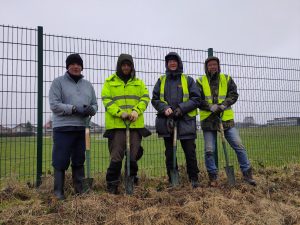
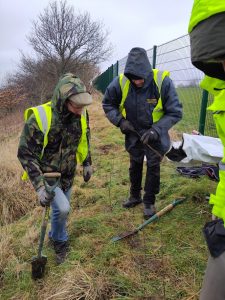
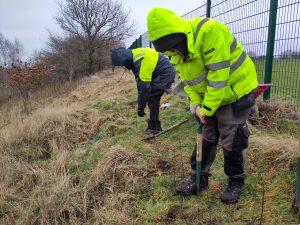
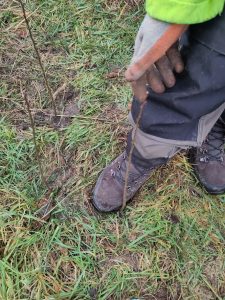
On Tuesday 3rd February 2026 the Hyndburn’s Woodlands Project was at Jubilee woodland for an extremely windy tree planting session!

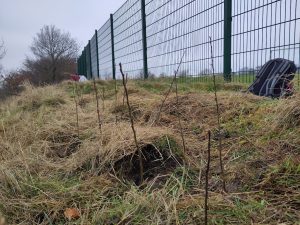
We planted 225 Hawthorn saplings in a brand new hedgerow. This will provide habitat for wildlife and, in particular, food for overwintering birds

Thank you to our incredible volunteers who braved the very wild weather to help us improve Hyndburn’s biodiversity

As always, thank you to our funders at Lancashire County Council, Hyndburn Borough Council, and the Windfall Fund for making it all possible


September 2025 – Meadow Maintenance

Throughout September the Hyndburn’s Woodlands project has been carrying out extensive work on the wildflower meadows managed through the project.

Meadows managed include the two meadows located in Whinney Hill woodland (the butterfly glade at the tops, and the meadow adjacent to the pond), and jubilee meadow.

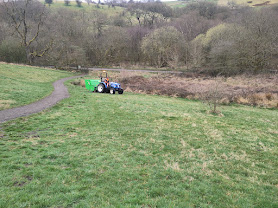
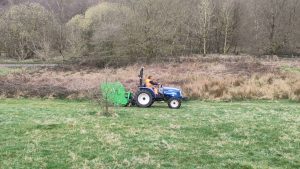
For Jubilee, we rehired our expert tractor driver who managed to cut jubilee in a couple of hours, this would have normally taken staff and volunteers 2-3 volunteer days to do. Yellow-rattle was again sown into the meadow, but in much larger quantities. This Summer (2025), we saw quite a few large clumps of Yellow-rattle from the previous seasons sowing (The first major success in establishing a wildlife meadow at Jubilee). Yellow-rattle is an extremely useful plant in wildflower meadow creation, as it parasitises grass, reducing its overall abundance, which in turn is good for wildflowers, as there is less competition for them. Despite nearly 4 years of grassland management at Jubilee, the grass is still quite dense, likely due to the previous dominant land use (cow grazing), which has left the area very fertile.

The butterfly glade located at the top of Whinney Hill, on the other hand, is very fine and sparse (Very handy for scything!). This is due to a combination of previous land use (previously a tip) and continual management through the Hyndburn’s Butterfly Project (and later, the Hyndburn’s Woodlands Project). This year around 15 wildflowers were recorded onsite, a number we are quite proud of, but would love to see increase. To that end, we have sown more Yellow-rattle, wildflower seeds, and planted wildflower bulbs such as Ramsons (Wild garlic) and Wood Anemone. We are hoping to plant UK native Bluebells too (when the bulbs are back in stock!). We have also cut further into the periphery than previous years, in an attempt to extend the glades overall size.

The wildflower meadow located adjacent to the Whinney Hill pond had a major highlight this year, with Common blue butterflies being recorded onsite (both male and female). Management is thus being aimed at increasing their numbers via targeted scything and seed sowing. This involves retaining as much Birds-foot trefoil as possible (as this is the Common blue’s host plant). The meadow here is quite dense so the scything does very much take its toll, but we managed to get it all cut and raked off (aside from patches of Trefoil).

Thank you to all our incredible volunteers who help us with these tasks, it is a lot of effort (and perhaps a touch therapeutic), but the pollinators of Hyndburn will thank you in future generations.

As always, thank you to the funders of the project (Lancashire County Council, Hyndburn Borough Council, and the Windfall Fund) for making all of this possible.


24 Hour Bioblitz at Peel Park!

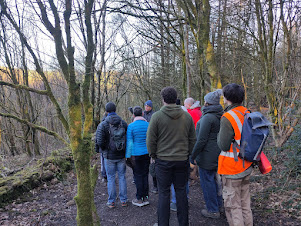
At the end of April, PROSPECTS participated in the worldwide City Nature Challenge weekend by running a 24-Hour Bioblitz at Peel Park and the Coppice! Run over 2 days, the event aimed to record as many species on iNaturalist as possible, with a series of walks and sessions open to the public throughout the event. The species recorded on iNaturalist will assist their citizen science project to map the spread of different species across the world, and how this changes over time in response to climate change. Sessions included a bat walk, moth trap, early morning bird walk, woodland ID walk, pollinator and wildflower walk, and pond ID sessions. In total, we recorded over 153 species! Some of the most impressive species were Daubenton’s bat and the Emperor moth.

During the freshwater session, we also surveyed Pleck Brook as part of the national WaterBlitz, which was happening on the same weekend! Both nitrogen and phosphate levels were very low, which means that the stream is an excellent quality habitat!

Thanks to everyone who took part in the recording!

Tuesday 3rd April – Whinney Hill

On Thursday 3rd April 2025 the Hyndburn’s Woodlands Volunteers took part in the ‘Great British Spring Clean’ event, a nationwide event which promotes cleaning up Great Britain!

We had a very successful day at Whinney Hill, collecting around 15 bags of rubbish, a rubble-sack filled with miscellaneous bottles, and a van bumper!

This session, we joined by staff from CurrentCare Limited, a local business in Accrington!

Thank you to all our wonderful volunteers who give their time to help us keep Hyndburn’s Woodlands clean!

As always, thank you to our funders at Lancashire County Council, Hyndburn Borough Council, and the Windfall Fund for making it all possible!


Tuesday 1st April 2025 – Jubilee Meadow

The Hyndburn’s Woodlands were back at Jubilee Meadow on Tuesday 1st April! We were continuing with the meadow maintenance that has been ongoing for 3 years.

In previous years, we have hand scythed the meadow. This time round, we hired a contractor who used a tractor to give the meadow a really good mow! This will hopefully take the grass down to a level that helps promote wildflower seed growth!

We have sown seeds in previous years, last year we put down a lot of Yellow-Rattle seeds. This year, we have gone for a ‘Bee and Butterfly mix’ that will hopefully take and produce a sea of colour for passer-by’s and nature to enjoy!

Thank you to everyone who came along and helped enhance biodiversity in Hyndburn!

As always, thank you to our funders at Lancashire County Council, Hyndburn Borough Council, and the Windfall Fund for making it all possible!


Saturday 15th March – Woodnook Vale LNR

On Saturday 15th March 2025 the Hyndburn’s Woodlands Project teamed up with the Hyndburn’s Nature Reserves Project to deliver a ‘dawn chorus’ bird walk at Woodnook Vale LNR, with the session being led by Dave Bickerton of the Lancashire and Cheshire Fauna Society!

The walk started at 7:00 (much later than a proper dawn chorus walk would normally be held) and took participants through Hollins Woods, Jubilee Woodland, and Woodnook Vale LNR.

Throughout the walk, Dave shared his bountiful knowledge with the group, identifying birds by sight and by call, teaching participants about each species habits, and, sometimes, giving us perfect imitations of their calls (when they wouldn’t play ball!)

The walk was immensely successful, with 35 species being recorded throughout! Some notable finds include Mistle Thrush, Song Thrush, Chiff Chaff, Nuthatch, and Greenfinch.

Thank you to everybody who attended our walk and made it such a wonderful event! Thank you also to Dave Bickerton for sharing his wonderful knowledge with us!

As always, thank you to our funders at Lancashire County Council, Hyndburn Borough Council, and the Windfall Fund for making it all possible


Tuesday 11th March 2025 – Woodnook Vale

On Tuesday 11th March 2025 the Hyndburn’s Woodlands Volunteers were back at Woodnook Vale LNR carrying out some Invasive Non-Native Species management.

This time, it took the form of Small-leaved Cotoneaster removal. The coverage of this shrub was quite extensive as it had been allowed to grow for many a year.

The main issue with this plant is its density and coverage, which tends to prevent any foliage growing underneath it, reducing the overall species diversity and reducing the prevalence of native species. Some bird species also eat the berries, which retain through Winter and so offer an appealing snack, this is turn helps the plant spread far and wide through seed dispersal.

Initially, all of the branches must be cleared away until just a small stump remains, which makes mechanical removal via digging the roots out much easier.

We are happy to say we have cleared two large shrubs, with one more on the radar.

Thank you to our amazing volunteers who help us keep Hyndburn’s Woodlands native

As always, thank you to our funders at Lancashire County Council, Hyndburn Borough Council, and the Windfall fund for making it all possible

#


Tuesday 25th February 2025 – Bat Box Making

On Tuesday 25th February 2025 the Hyndburn’s Woodlands volunteers had a change of pace from our usual activity session! Today, we created 9 bat boxes from scratch that will be installed around Whinney Hill woodland to create habitat space for bats!

We followed The Wildlife Trust methodology for our boxes, which is available to view HERE

Everyone had a great day making the boxes, it was very much an appreciated change being dry inside a building!

Thank you to our amazing volunteers who have helped us create habitats for UK wildlife!

As always, thank you to our funders at Lancashire County Council, Hyndburn Borough Council, and the Windfall Fund for supporting our work, and making it all possible


Tuesday 11th February 2025 – Whinney Hill

On Tuesday 11th February the Hyndburn’s Woodlands Volunteers were back at Whinney Hill woodland carrying out some Invasive Non-Native Species (INNS) removal. This took the form of removing 3 large Cherry Laurels from the site, along with a few much smaller Japanese Spotted Laurel (Variegated Laurel).

Volunteers first used loppers to clear away much of the foliage, leaving the main trunk exposed. Bow saws were then used to fell the remaining tree using a traditional ‘V notch’ technique.

We also carried out a litter pick in the opened up area as the density of the INNS had attracted quite a lot of litter.

The arisings from the INNS management were put to good use as a fence bordering the area of felling had fallen into disrepair and needed supporting back into place. The Woodland’s volunteers put their extensive dead-hedging experience to work and created stakes from suitably large limbs, which were driven next to the fence to sure it up, and others were driven a metre behind it. The remaining brash was then slotted between these stakes to create a dead-hedge.

This gives the fence structure, provided space for wildlife, and improves the aesthetic value of the area.

Thank you to our amazing volunteers who helped us maintain Hyndburn’s Woodlands and improve space for wildlife.

As always, thank you to our funders at Lancashire County Council, Hyndburn Borough Council, and the Windfall Fund for making it all possible


Tuesday 22nd October 2024 – Butterfly Glade Maintenance

On Tuesday 22nd October the Hyndburn’s Woodlands Volunteers were back at Whinney Hill woodland carrying out some maintenance work on the butterfly glade located at the top part of the woodland. The glade has a good number of pollinator-benefitting wildflower species, such as cowslip, Marsh mallow, and eyebright.

Maintenance involves using scythes to cut the grassy areas as low as possible, cuttings are then removed to decrease the total available nutrients in that area. Wildflowers prefer nutrient low soil as this reduces grass height which in turn reduces competition for wildflowers to grow.

Once the scything had been completed, volunteers sowed Yellow rattle seeds into the glade by creating a patch of bare soil and then heeling seeds into the soil. Yellow rattle is a species which parasitises grass, and therefore reduces grass prevalence in the area.

Thank you to our amazing volunteers who helped us improve local biodiversity.

Activity funded by Lancashire County Council, Hyndburn Borough Council, and the Windfall Fund.


Seed Bomb Making at Bullough Park

Seed Bomb Making

On the 19th of November the Green Spaces Team were at Bullough park hosting a seed bomb making event. We had our Prospects marquee set up with tables containing mixing bowls of seeds and air-drying clay. The seeds we used were all native wildflower seeds which were; Corncockle, Cornflower, Corn Chamomile, Corn Marigold, and Common Poppy. The seeds were pressed into the clay which was then rolled into a ball, this would harden and then it could be thrown onto a bare patch of soil and would 'explode', spreading the seeds afar.

Participants made seed bombs for their own garden or area of their choice and were given the option to make some for us, and we're grateful that everyone did! The seed bombs made for us were stored to be used later in the creation of two wildflower meadows, one at Bullough park and another at Jubilee woodlands. These areas had been cut previously to remove nutrients from the soil which will promote the growth of the wildflower meadow. The wildflower meadows will promote pollinator, butterfly, and insect diversity which in turn will promote bird and bat diversity.

Prospects would like to thank everyone who came along to the event and assisted us in the creation of these vital habitats.

We would also like to thank our funders at GreenRecoveryChallengeFund and National Lottery Heritage Fund for their support in this endeavor.


Cutting, Raking and Seed Sowing – Pocket Park

Cutting, Raking and Seed Sowing - Pocket Park

On the 14th October the Green Spaces Team collaborated with the SuperSlowWay project to assist in the creation of a wildflower meadow at the Pocket Park in Accrington. The Green Team used both traditional scything methods and strimmers to clear the area of vegetation, cuttings were then raked off the land to remove as many nutrients as possible. The area needed to be cleared first due to wildflowers requiring low nutrient soil in order to thrive. Once the area had been cleared we created bare patches of soil which yellow rattle seeds were then spread onto and then covered with a thin layer of soil to be ready for spring. A variety of bulb species were also planted by Prospects staff and children from The Hollins School using seed dibbers.

We would like to thank SuperSlowWay for having us as part of the project, it was fantastic to get involved with and we look forward to seeing the Pocket Parks progression.

As always, thank you to our funders for facilitating the work that we do.

Winter Bird Walk

Outdoor Learning Officer Danielle led a Winter Bird Walk around Peel Park and The Coppice.  We saw jays, robins, blackbirds, great tits, magpies, blue tits, long-tailed tits and greenfinches.  During the walk we discussed climate change and how changing weather patterns are affecting trees and migrating birds.

AQA in Biodiversity, Air Quality and Horticulture

On 17th November, Outdoor Learning Officer Danielle delivered an AQA in Biodiversity, Air Quality and Horticulture.  The session took place at The Prospects Foundation’s Environment Centre on Broadway, Accrington.  Everyone who attended got a free spider plant and aloe vera to take home with them.  If you’d like to see what future AQAs we are delivering, check our Events page here

The Big Butterfly Count is back

Following the fine spring weather we’ve seen the earliest average emergence of butterflies for the last 20 years. It’s vital that we understand how these weather patterns affect butterflies to help protect them for the future.

By spending just 15 minutes taking part in this year’s Big Butterfly Count, you will help Butterfly Conservation understand how different species are faring in our area, which in turn will help them target research and conservation work where it’s needed most.

 How to take part in the Big #ButterflyCount 2020:

 Visit the website

  • Get Ready – Download the ID chart via the image below
  • Join In – Between Friday 17 July and Sunday 9 August choose a place to spot butterflies and moths. Watch for 15 minutes.
  • Visit the website and Add your Counts
  • Spread the word
  • Get the new App via the image below

Take a look at Hyndburn Butterfly Project, visit Milnshaw Park WildFlower Meadow, Huncoat Colliery  and Whinney Hill Woodland


Taking Action for Insects

Action for Insects
The Wildlife Trust

 Action for Insects is a campaign led by the Wildlife Trusts, supported by a range of partners who are all determined to reverse the alarming declines in insects and help nature recover across the UK. The Wildlife Trusts hope to inspire and help people take action for insects where they live, learn, work and farm.

Just how important are insects to our everyday life? Answer: VITAL.

This is the link to download the guide – Action for Insects Guide – At Home

You can watch Action for Insects – Reversing Insect Decline on YouTube by clicking on the image below.


Biodiversity – Plants that Harm

Do you know about INNS – no not places to eat and drink – Invasive Non-Native Species?

The plants we are most likely to encounter in Hyndburn are: –

  • Himalayan Balsam – Well established and extremely invasive. Found at moist and semi-shaded places, waste ground, and thin woodlands; but particularly on soft banks by slow-moving water along canal sides, streams and rivers. When it is ripe each plant explodes and can eject as many as 800 seeds for a distance of up to 7 metres.
  • Japanese Knotweed is a weed, mainly in urban areas where plants regrowing from rhizomes can come up through gaps in flooring in conservatories and patios. Its habitats are urban areas, by water courses, canals and on waste ground. It occasionally invades woodland.   There is legislation in place that makes its eradication a legal requirement.
  • Giant Hogweed is widespread and it is a plant that can harm both humans and dogs. It is especially abundant by streams and rivers, but also occurs widely on waste ground and in rough pastures. The plant produces phytotoxic sap which in contact with human skin and combined with UV radiation causes skin burnings. It can harm dogs via nose, eyes and ears.  The intensity of the reaction depends on individual sensitivity.  DO NOT TOUCH IT.

 What can you do?

Make a record of the location and take photos when you are out walking.  Then you can join INNS Mapper and record all your sitings. https://ywt-data.org/inns-mapper/.

You will be contributing to a huge UK database and this helps organisations such as the Ribble Rivers Trust that works to improve, protect and promote the River Ribble and its catchment area for both people and wildlife.  As well as the Ribble they look after the Calder, Hodder, Darwen, and Douglas sub-catchment.

This means that they not only look after all these rivers, but all the rivers, streams, and becks that flow into them which includes the Hyndburn.  They are able to apply for funding to deal with invasive species if they have enough evidence of problems in the catchment area.  Your recorded evidence counts!

In spring 2021 a new project ‘INNS Free Rivers’ will be launched!

This project aims to tackle invasive species, including Giant Hogweed to make our rivers safer and more natural spaces for everyone.  INNS Free Rivers will bring together landowners (who are responsible for controlling invasive species), local councils, supporters, and the public.

      Giant Hogweed     

Himalayan Balsam – Giant Hogweed & Warning.  All images – Japanese Knotweed – “Crown Copyright 2009” GBNNSS

Scroll to top