Peel Park Pollinators at Peel Park and the Coppice LNR

Annual Overview of the Northern Gateway @Peel Park & the Coppice LNR

A busy year for this entrance.

An aerial view of the Northern Gateway, showcasing the track, diagonal accessibility ramp, and steps. Lush vegetation is allowed to grow on the banks during spring/summer.

The Northern Gateway is the main entrance to the Coppice which leads up to the site’s only car park.

PROSPECTS has been managing this small triangle of land to ensure the entrance is welcoming to visitors and wildlife.

You can learn more about the entrance HERE.
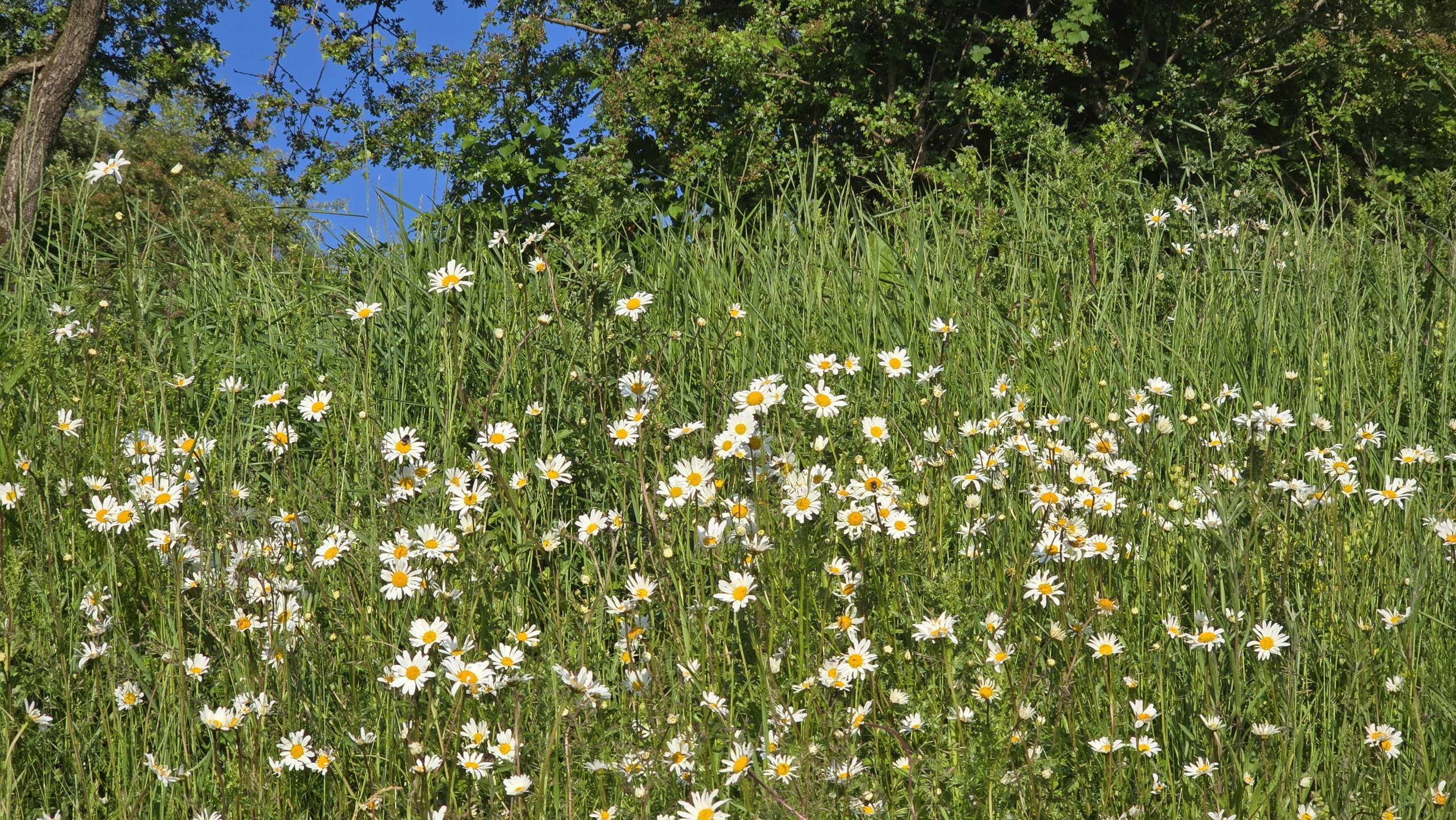
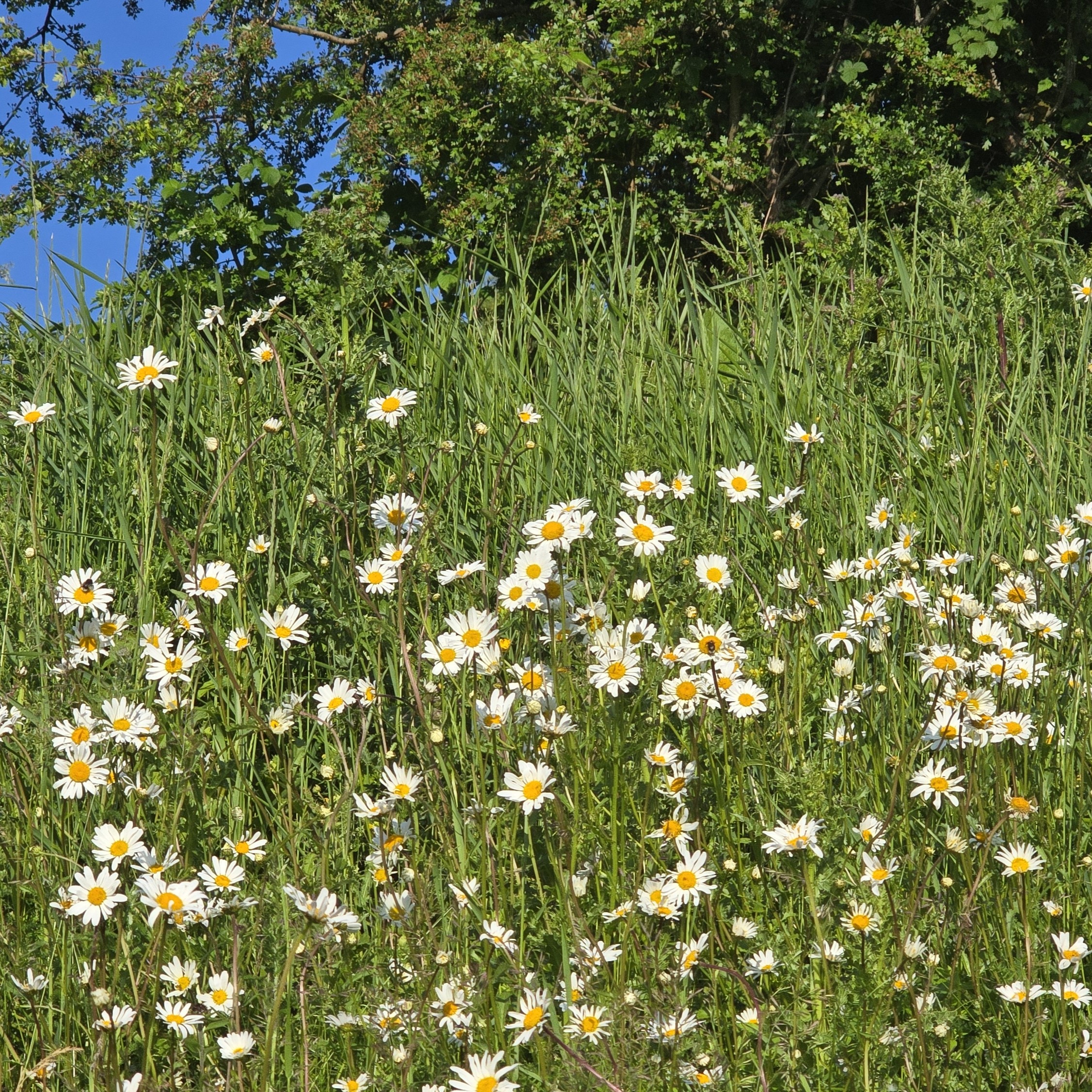
Abundant Ox-eye Daisy Blooms
Flowering Hedgerow
Huge Swathe of Yellow Rattle

Winter 2024/25

The entrance started off the year with a total revamp to the steps! The previous wooden steps had begun to warp and were very slippy, so the upgrade was greatly appreciated. Funds were acquired by the Friends of Arden Hall & the Coppice, and the work was carried out by Hyndburn Borough Council.

Northern Gateway after cut
January 2025 Steps Renovation
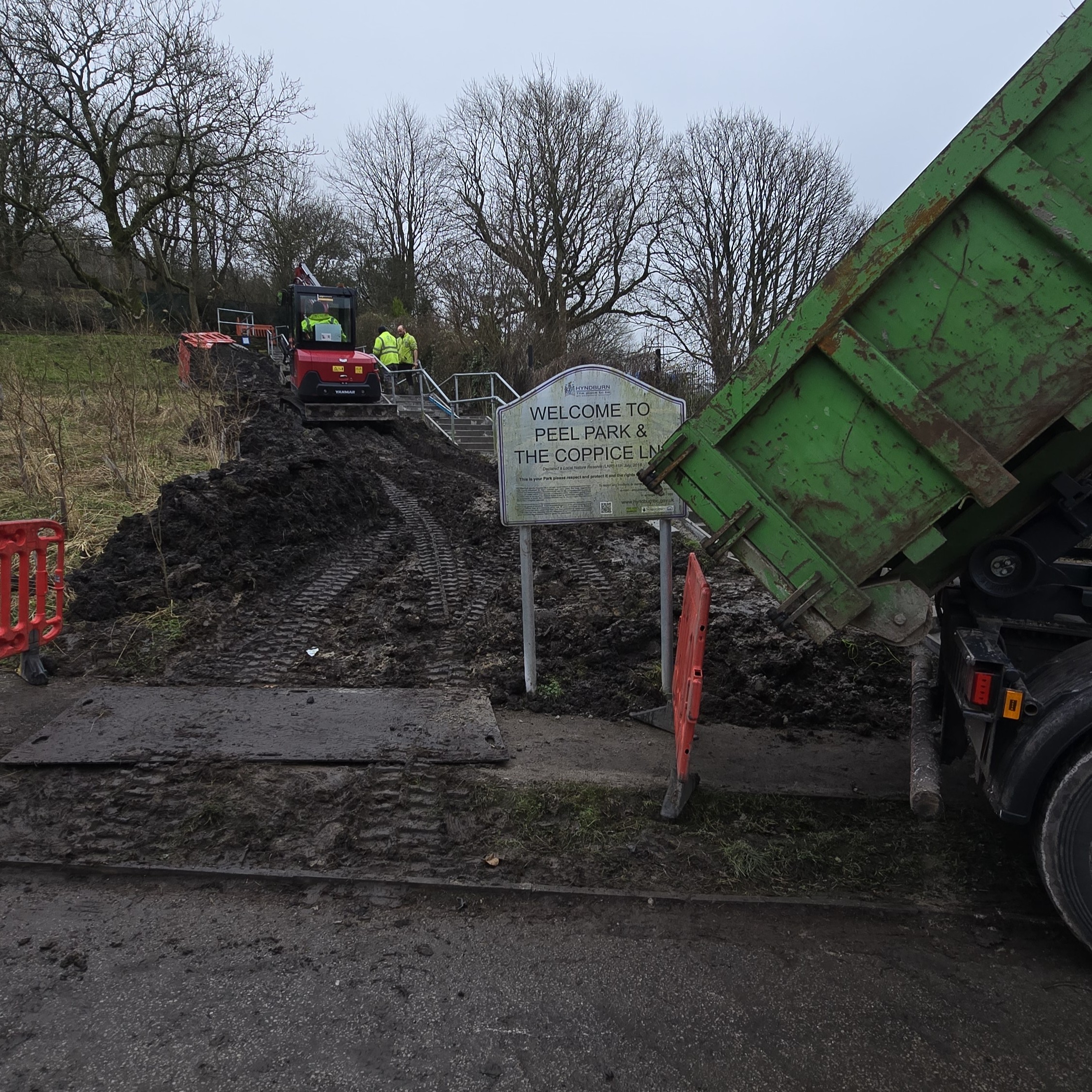
Steps Before and After

Spring 2025

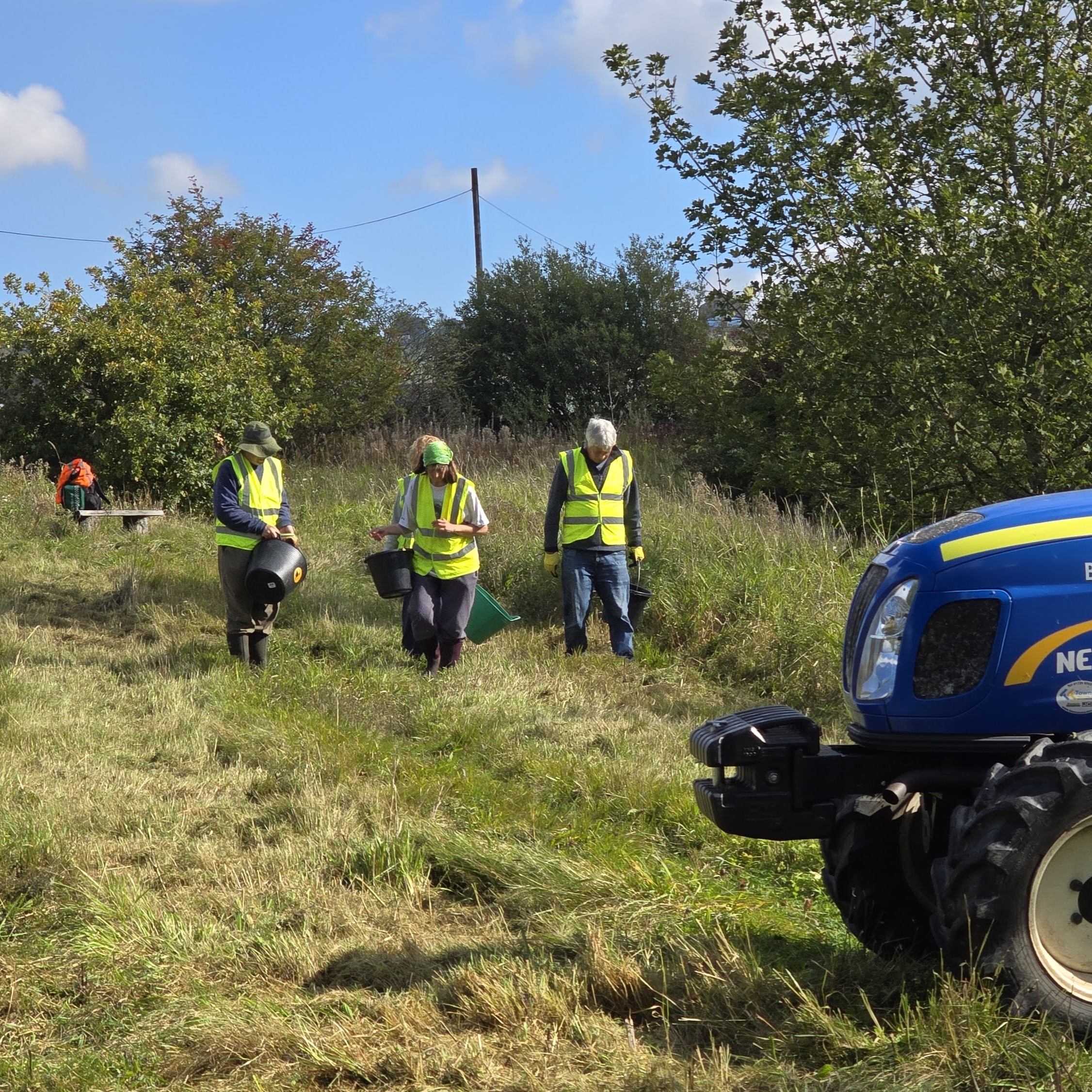
In spring 2025, both PROSPECTS volunteers and students from Peel Park Primary School worked to remove injurious weeds and sow wildflower seeds. Spring is an important time for wildlife and abundant early-flowering plants are vital for many insects. Currently the gateway does not have many, but we spotted its first Cowslip this year! We hope this means many more to come.

Peel Park Primary Sowing Wildflower Seeds
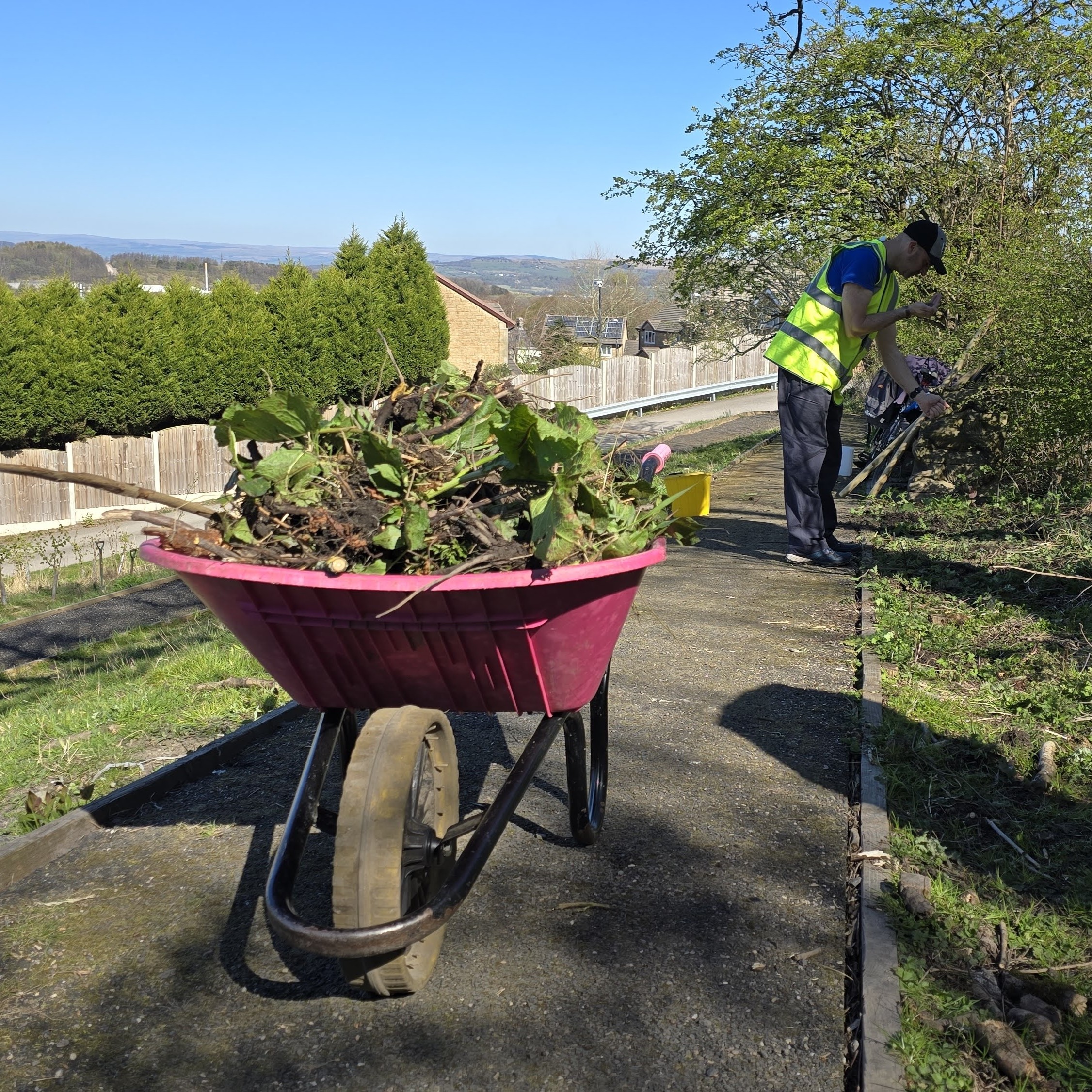
April 2025 - Removing Dock
Showcasing Volunteer Efforts
April 2025 - Removing Weeds & Seed Sowing
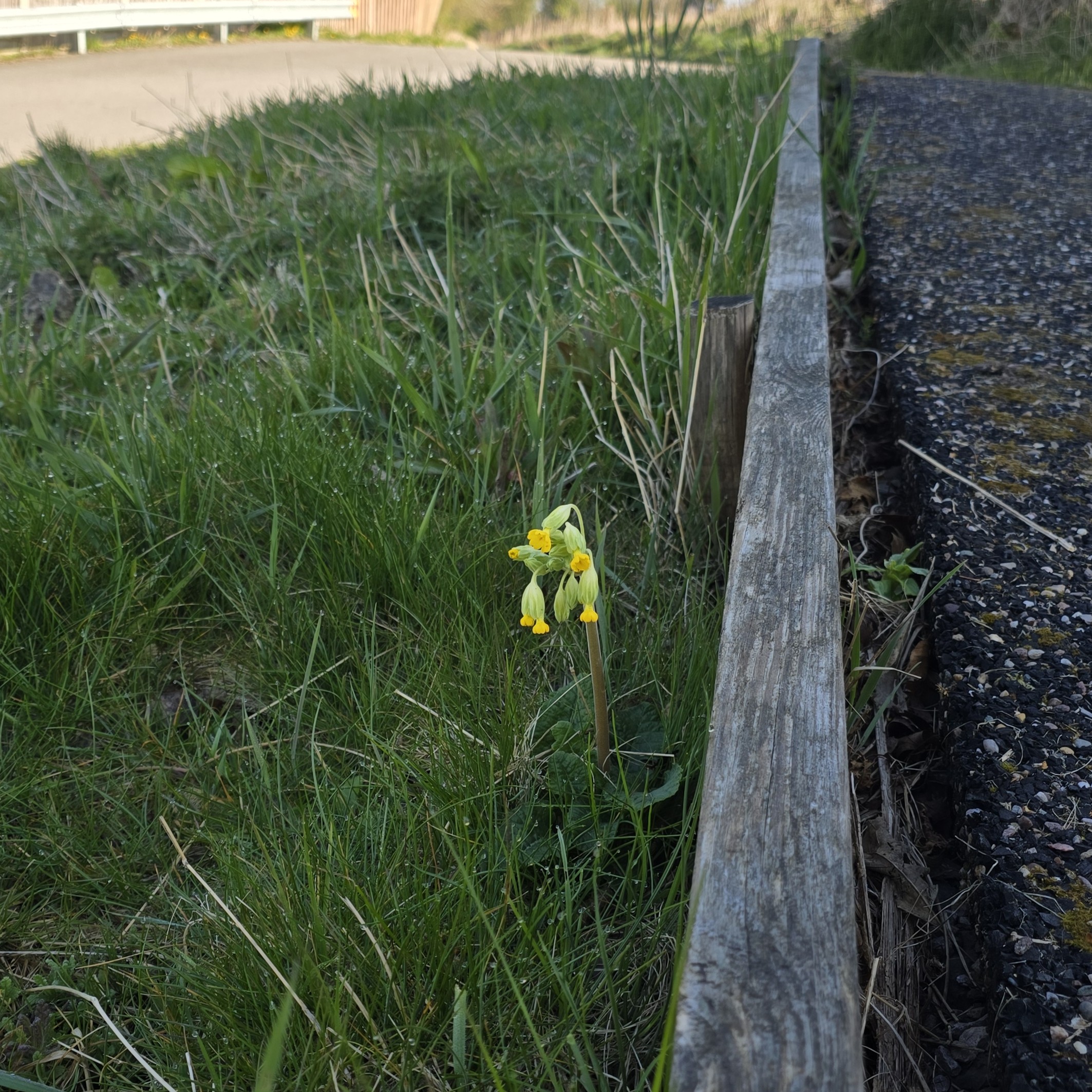
First Cowslip at the NG!

Summer 2025

In the summer we watched as the entrance burst into life, with nearly 30 species of wildflowers growing on the banks, attracting large numbers of Red-tailed Bumblebee, Patchwork Leafcutter Bee, white butterflies, day-flying moths, and numerous hoverfly species. Volunteers and the parks department worked to keep the accessibility path clear of vegetation.

Ox-eye Daisy
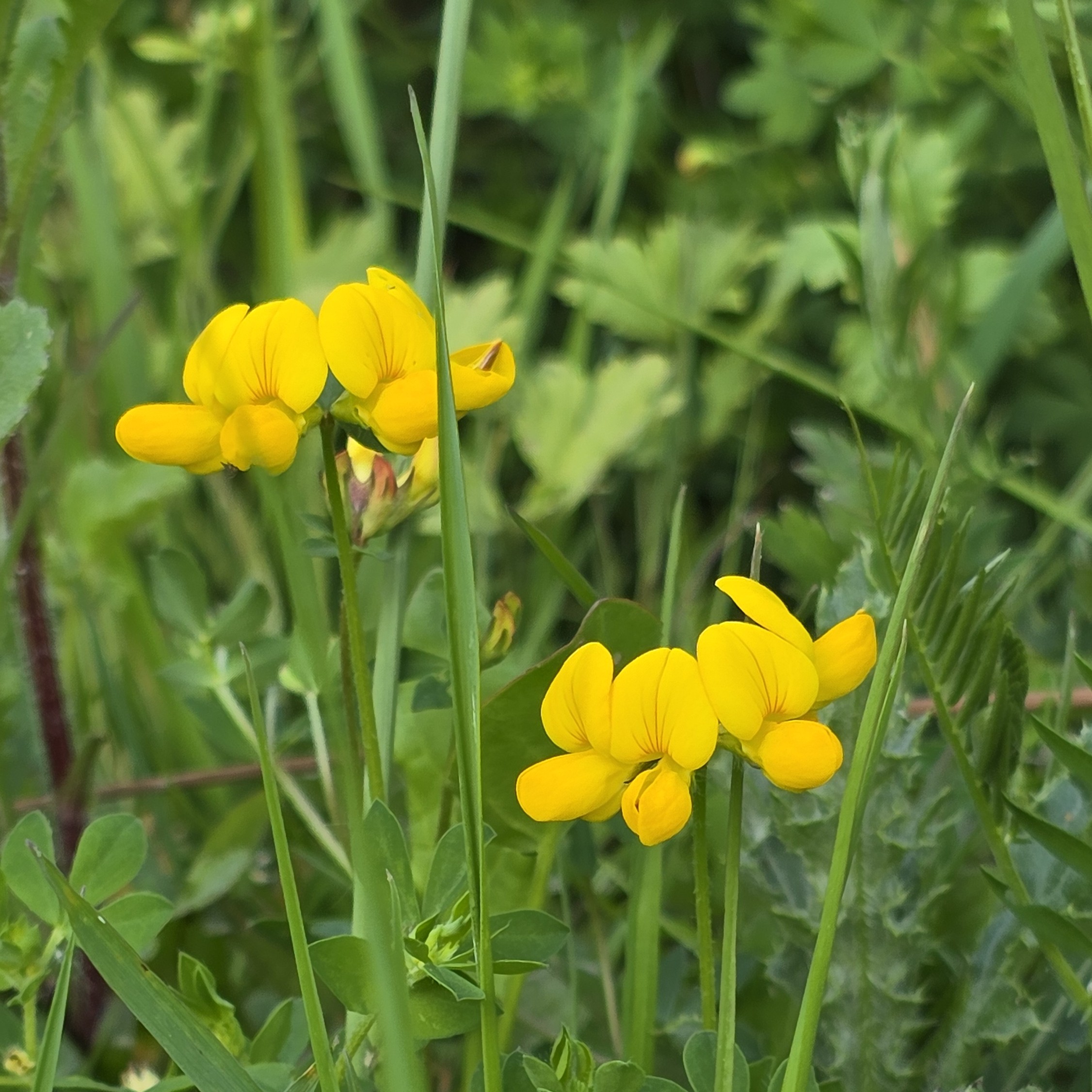
Common Bird's-foot-trefoil
Yellow Rattle (w/ Common Carder Bumblebee)
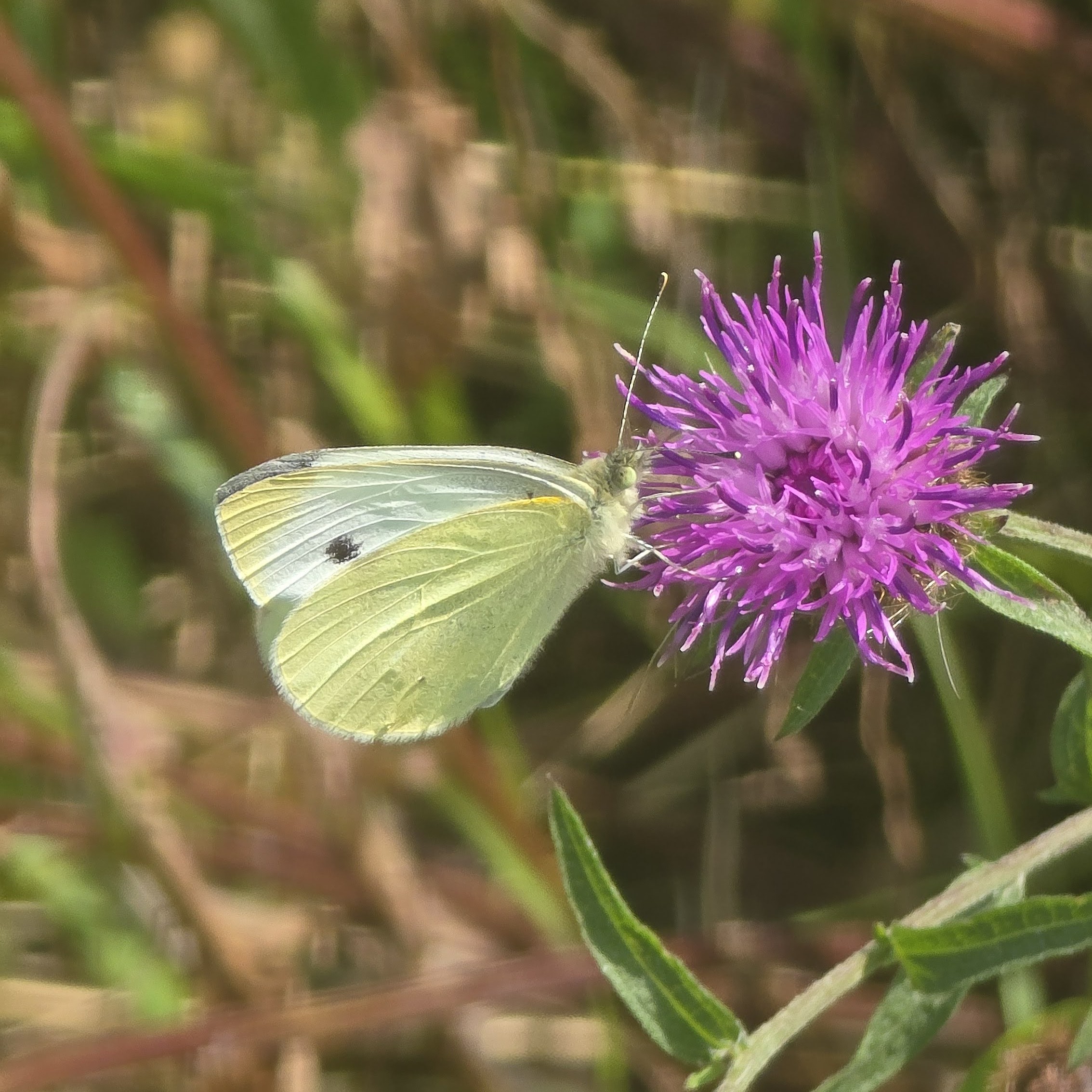
Black Knapweed (w/ Small White Butterfly)
Meadow Crane's-bill
Garlic Mustard
Common Vetch
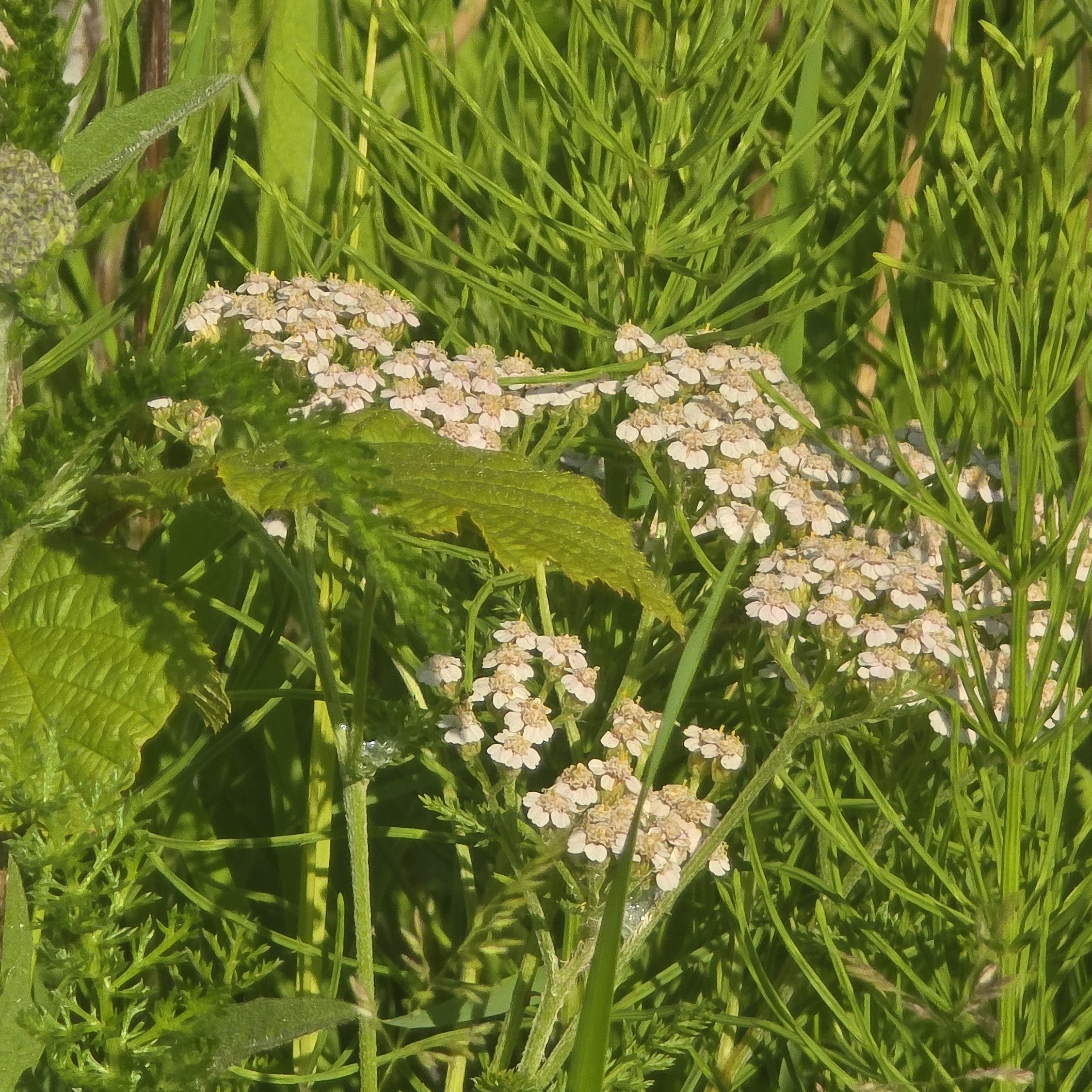
Sneezewort
Wild Marjoram
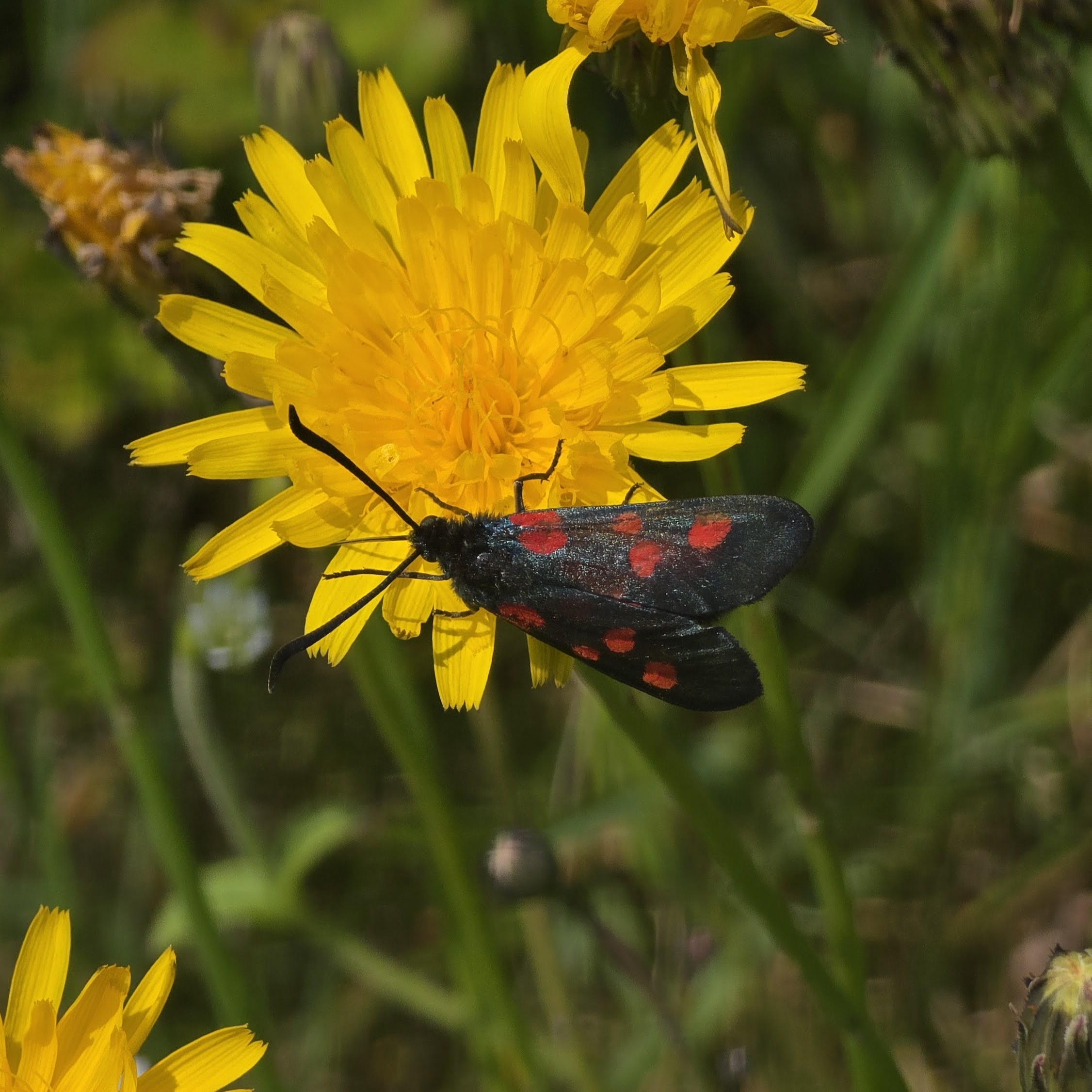
Tufted Vetch (w/ Six-spot Burnet Moth)
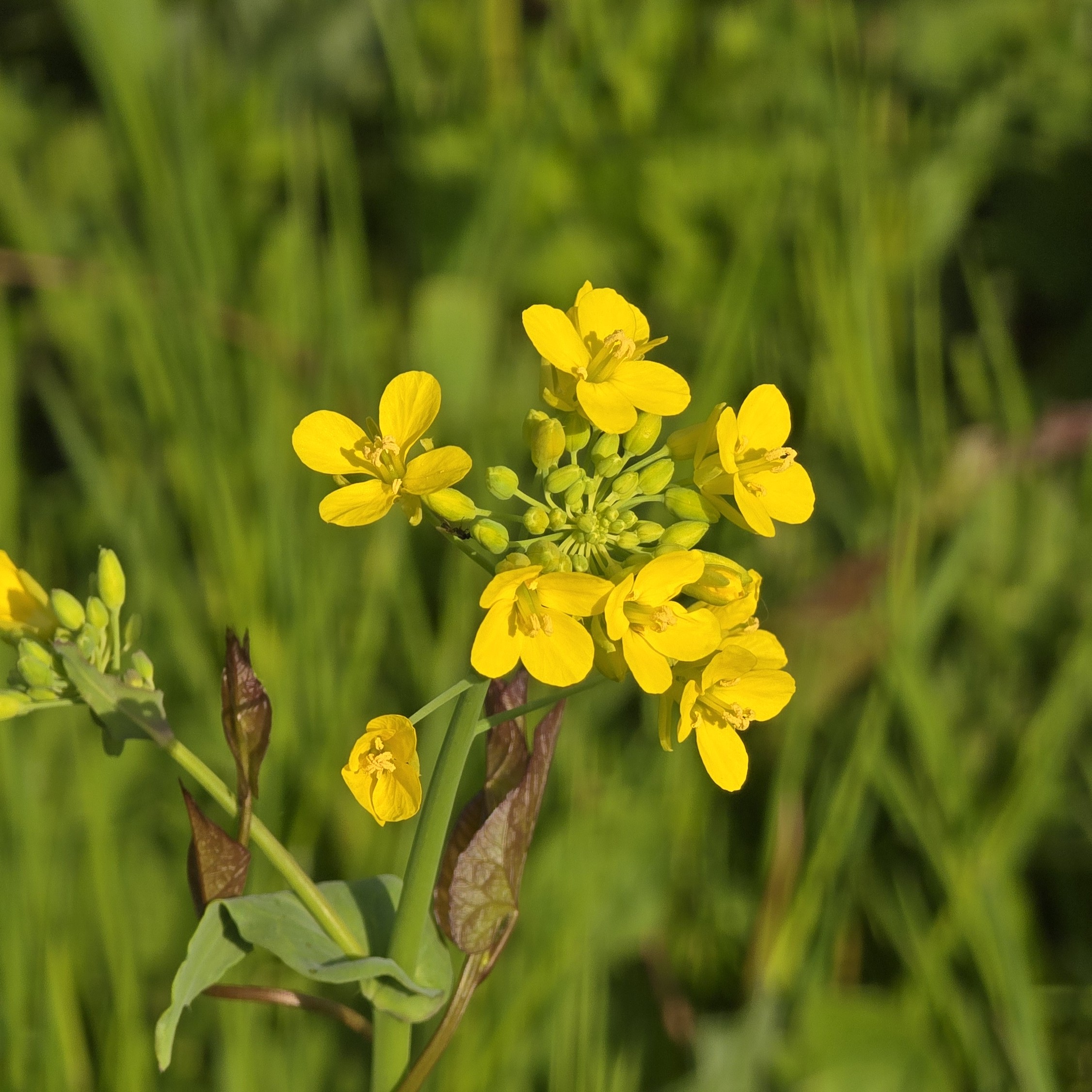
Wild Turnip
Red Campion
Self-heal
Corn Marigold
Wild Chamomile
Wild Radish
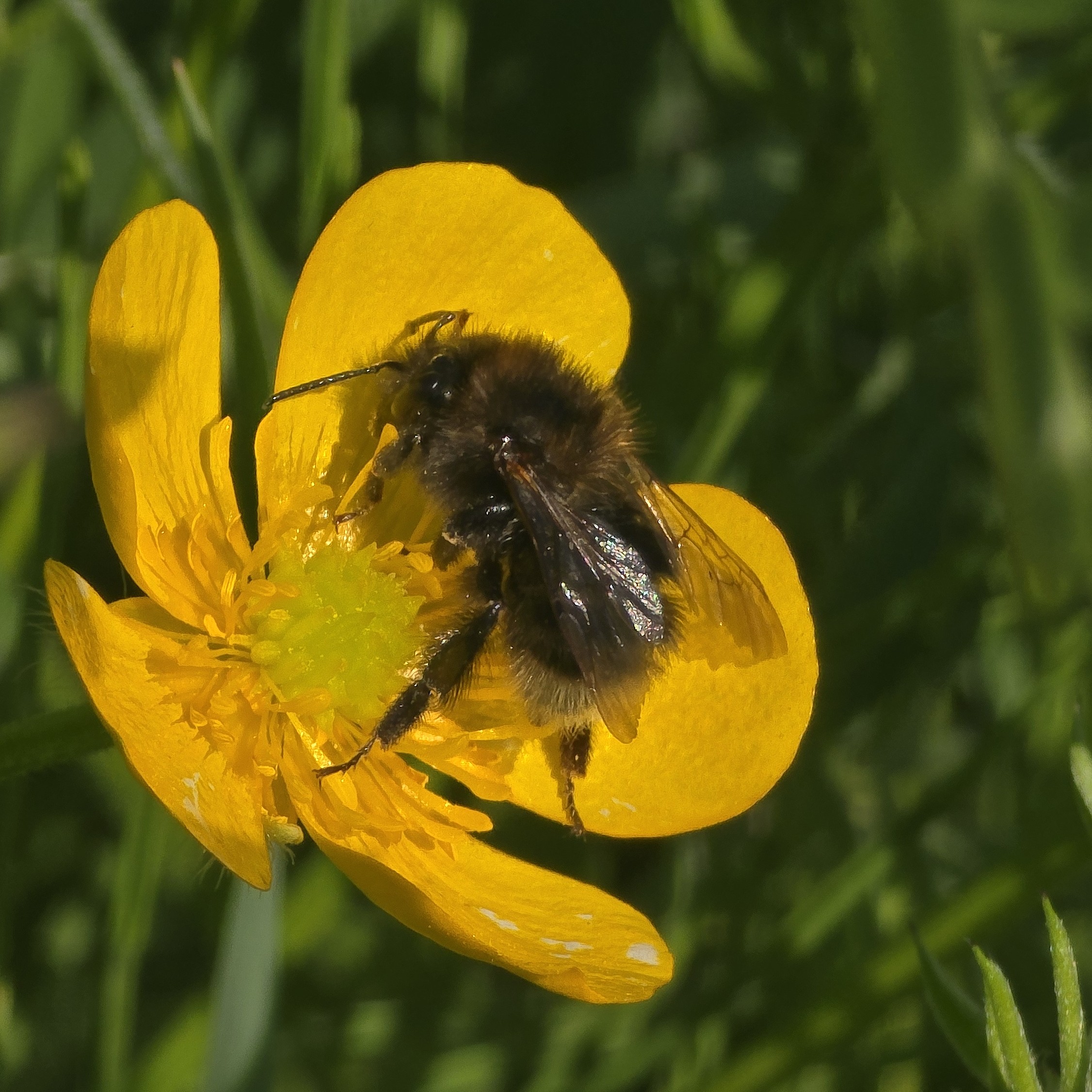
Meadow Buttercup (w/ Tree Bumblebee)
Creeping Thistle (w/ Nettle Tap Moth)
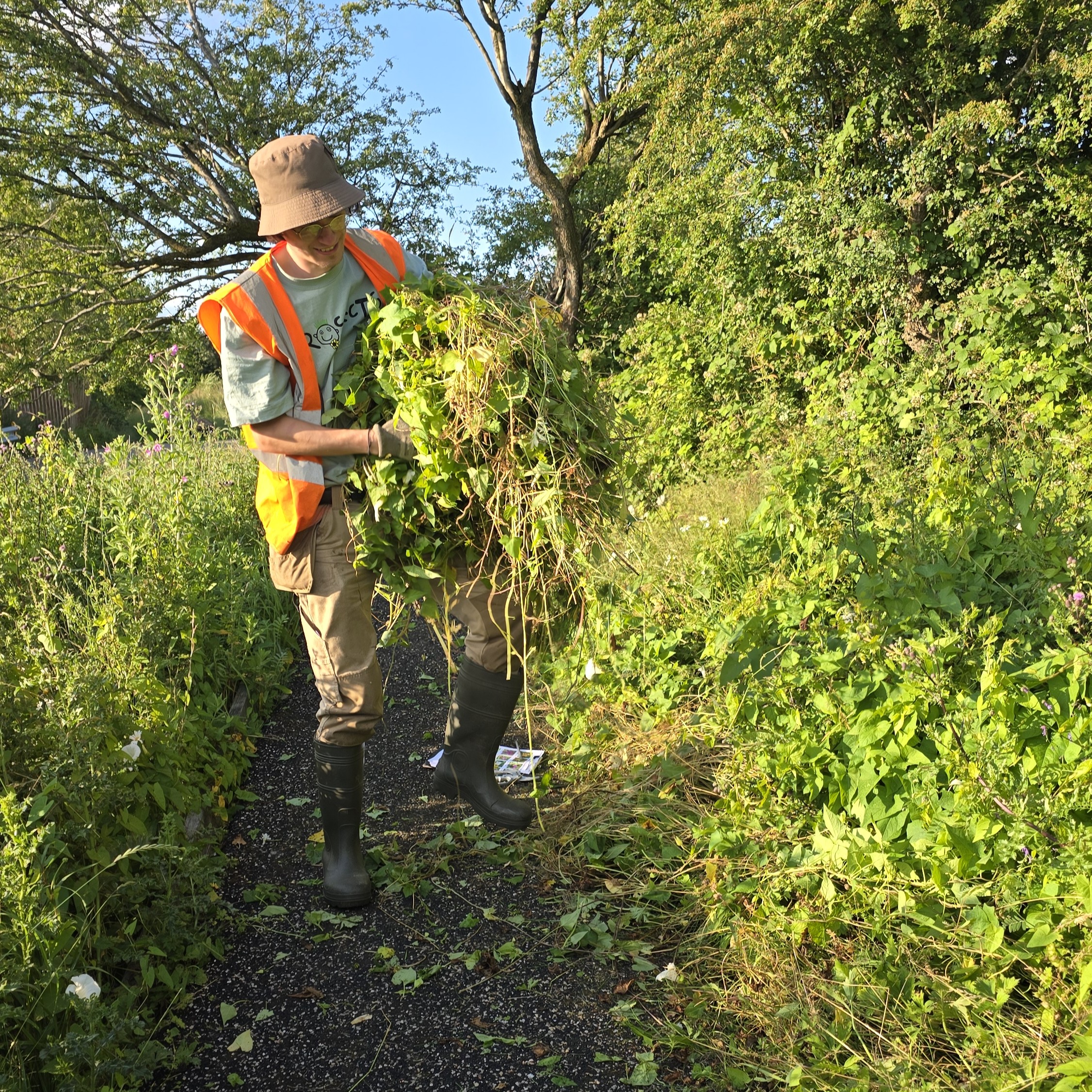
Clearing Vegetation
Monitoring Disturbed Ground Next to Steps

Autumn/Winter 2025

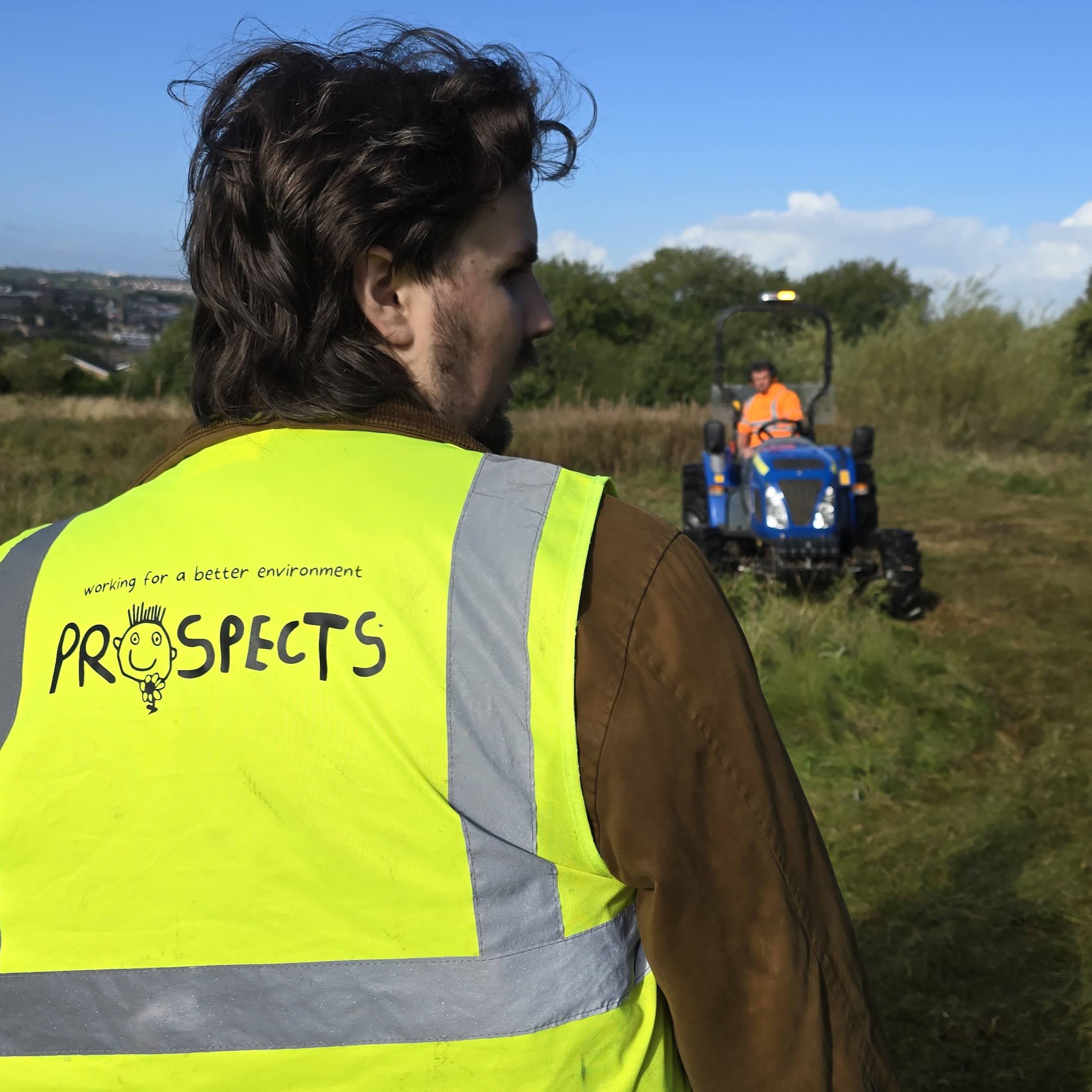
In the autumn we carried out our annual cut & collect. With help from volunteers, the banks were strimmed and the parks team took all the cuttings away to prevent nutrient build-up.

Volunteers once again helped in winter to remove moss from the paths and tidy up the edges, greatly anticipating the even bigger and better wildflower blooms next year! The Friends of Arden Hall & the Coppice helped clear 5 barrows full of bramble from the hedgerow to make more room for the growing trees and to open up some light for future wildflower seed sowing.

Scraping Paths
Northern Gateway Brushcut
Cutting Back Vegetation
Dec 2025 - Removing Bramble
Dec 2025 - Keeping Steps Clear
Goals for 2026

All management done this year will be continuing into 2026, meadow creation/restoration/management is a constant process, but the results have already been spectacular! We are looking forward to an even better wildflower patch next year.

Scraping the paths has revealed there is still an issue with water pooling on the lower path, we are looking into fixing this issue permanently but for the short term we have increased the size of the drainage ditch.

If you would like to get involved with meadow management at Peel Park & the Coppice then please get in touch: robert.gabryszak@prospectsfoundation.org.uk or 01254 230348.

This project would not have been possible without our funders:

Willow Coppicing & Festive Crafts @Hyndburn’s Nature Reserves

Coppicing willow is good for people and wildlife!

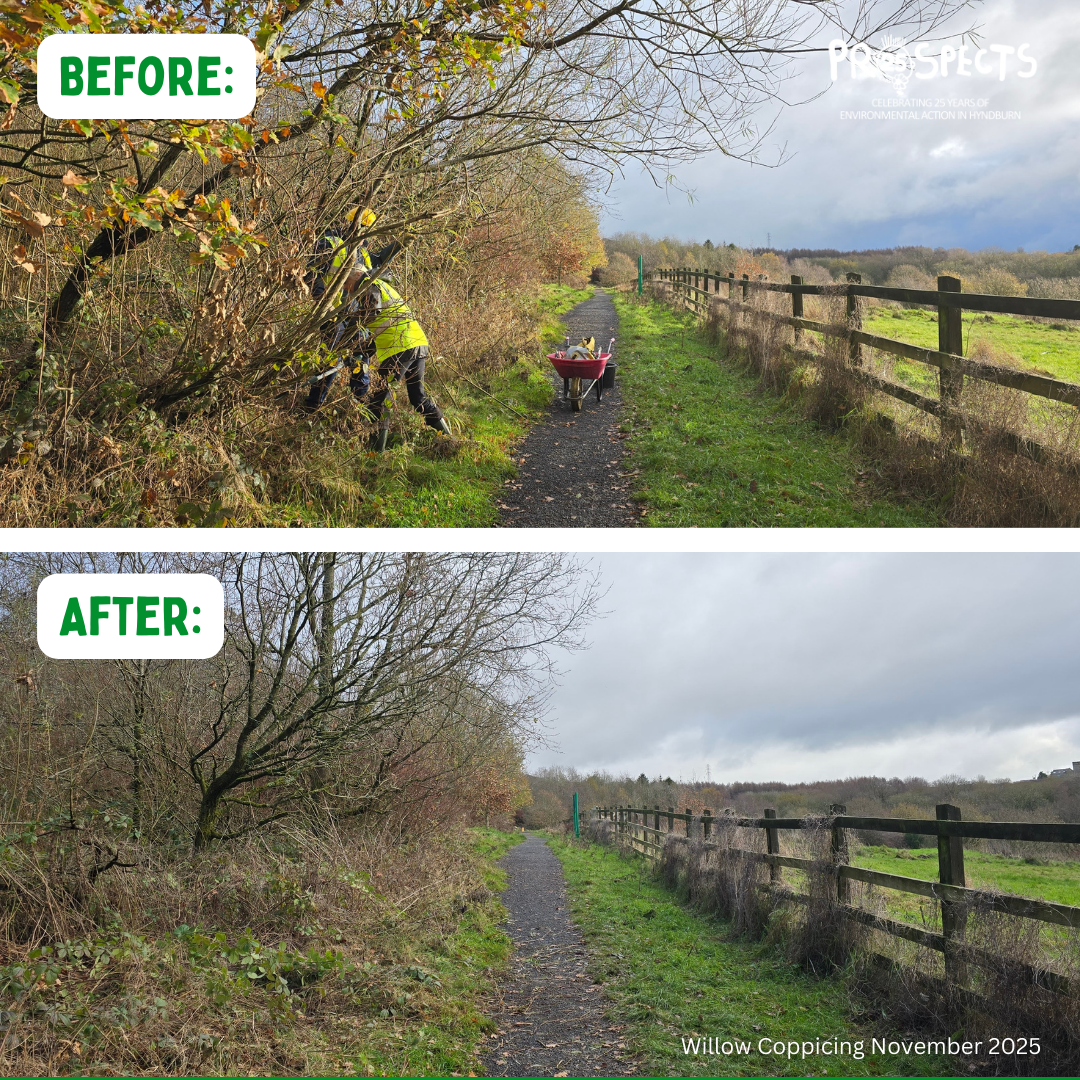
The Hyndburn's Nature Reserves project has had a busy past few weeks! The HNR VOLS have been coppicing willow trees that are encroaching on to the path above Pleck Meadow. The trees were traditionally coppiced which will encourage new growth that is perfect for crafting.

These woodland edges are too densely overgrown with willow which is creating dark and damp conditions, making it unfavourable for woodland flora. They also have a habit of leaning and falling on to the path, so coppicing these willow is good for site users and for wildlife! Some willow was also collected from Jackhouse Nature Reserve, which was encroaching on the meadow bordering the lodge. Volunteers bundled up the willow stems to be used in festive crafts, primarily wreath making!

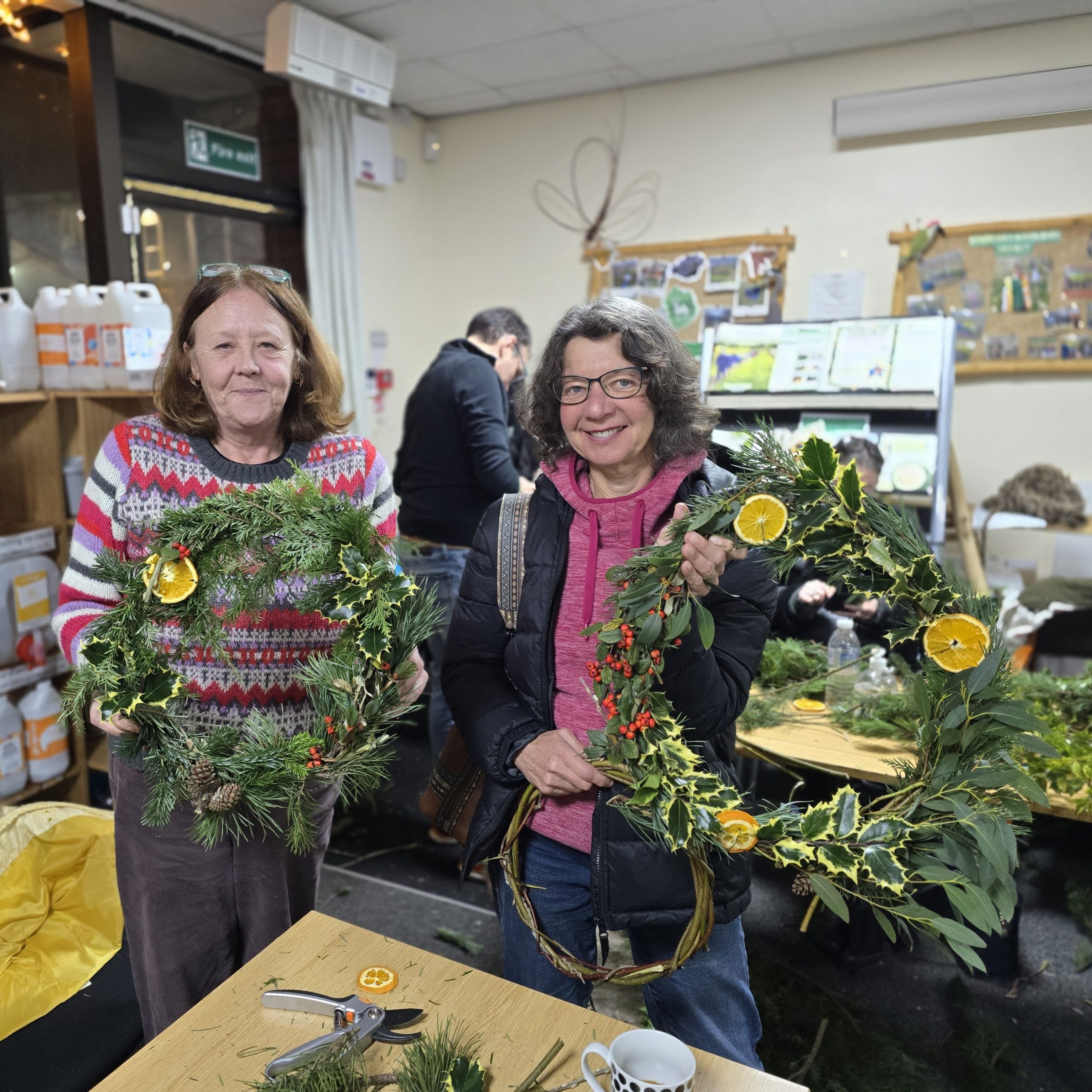
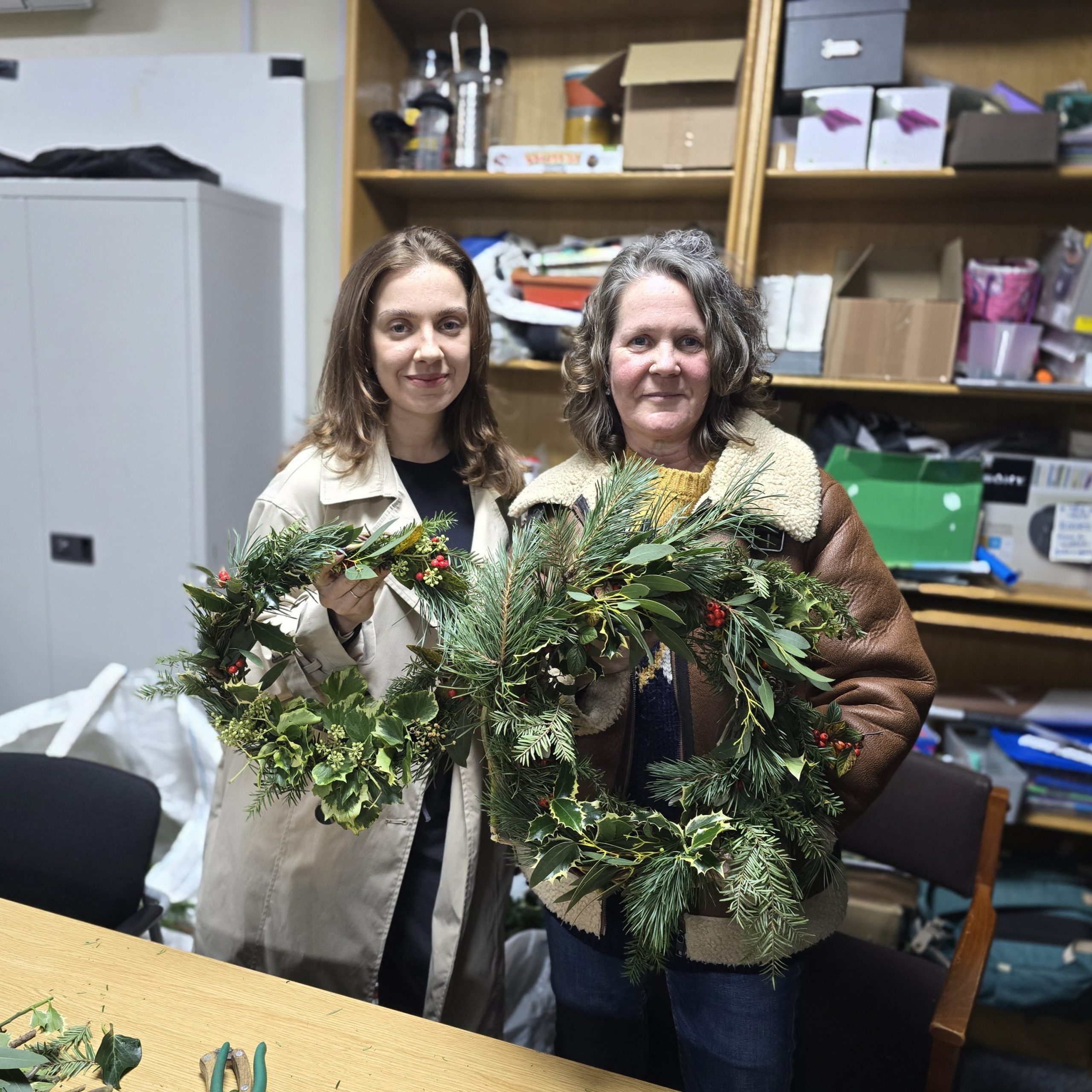
The project held 3 natural wreath-making workshops and engaged with over 50 people over the past couple weeks to make festive wreaths, including with the Cambridge St Ladies Group and St Christopher’s Eco Group. This produced some beautiful wreathes, perfect to celebrate the festive season! Participants were taught about the conservation ongoing at Hyndburn's Nature Reserves and how to make a completely natural wreath, free of plastic, that could be put directly into the compost bin after the season is done. The evergreen foliage was also harvested from local green spaces, in areas that were getting too dense with growth. Evergreen trees can block out too much light, starving low-growing woodland flora. So cutting them back will also encourage a more varied woodland floor!

Want to get involved with conservation or crafting activities? Robert hosts volunteer sessions every Monday & Wednesday, which sometimes produces materials for crafting workshops. Contact robert.gabryszak@prospectsfoundation.org.uk to find out how to get involved.

Annual Wreath-making Workshop @PROSPECTS Shop
Making Brash Piles with Unusable Willow Branches
Wreath Making w/ St Christopher's Eco Group
Abundant Evergreen Foliage to Choose From!
Wreath Making w/ Cambridge St Ladies Group
Natural Festive Wreathes!
Before and After Woodland Edge
Oak Moss Lichen
Before and After Willow Tree
Natural Festive Wreathes!
This project would not have been possible without our funders:

UKBMS Survey Results 2025 @Peel Park & the Coppice LNR

The results are in!

Map showing the butterfly transect around Peel Park & the Coppice.

Throughout 2025, Project Officer, Robert Gabryszak, has continued with weekly UKBMS surveys at Peel Park & the Coppice LNR. The walk, or transect, starts at Pleck Meadow and continues through multiple habitats at the site, finishing on the heathland. 2024 was a devastating year for pollinator populations, sparking a Butterfly Emergency Declaration from Butterfly Conservation, with several other invertebrate charities supporting the urgency for immediate change to prevent further decline.

2025 has been offered a much more optimistic outlook, as sunnier weather has resulted in a significant uptick. However, the main threats to invertebrate populations are still at play; habitat loss, pesticide use, and climate change are continuing to impact UK butterflies negatively. Additionally, the numbers are still lower than previous years, showing that some species have yet to recover.

Pleck Meadow (S1)
Woodland Edge (S4)
Heathland Habitat (S8)

Results Overview:

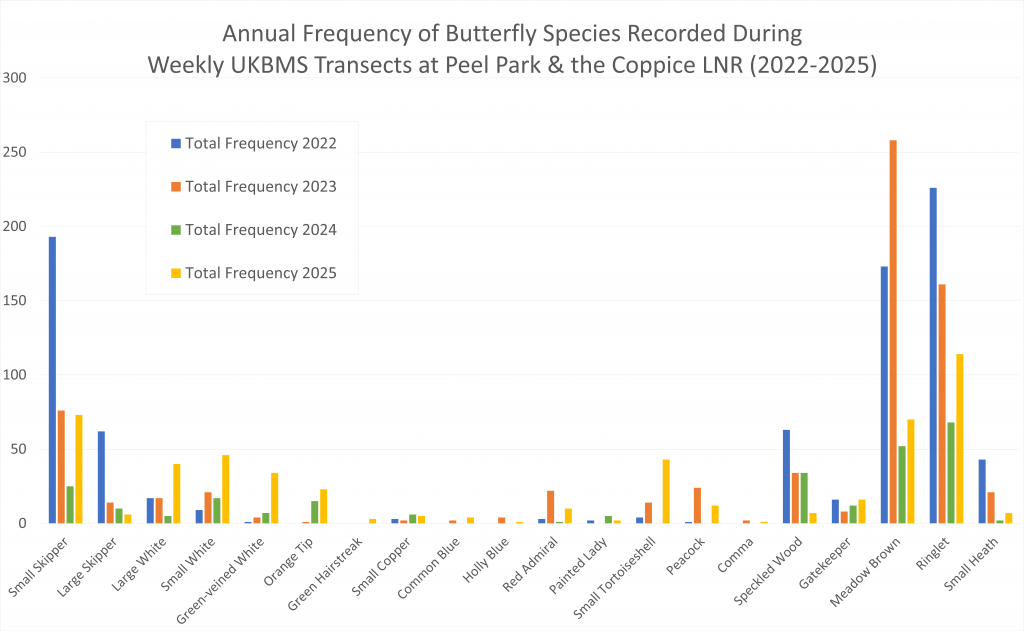
Breakdown by Species:

The good news:

 There were some great positives revealed from the transects:
  1. Green Hairstreak and Common Blue have been absent in previous years but have made their presence well known this year. The foodplant of Common Blue, Bird’s-foot-trefoil, has seen a massive increase in abundance at Pleck Meadow thanks to the management there, which may be the reason for the observation of male and female individuals.
  2. It has also been the best year for white butterflies (Large White, Small White, Green-veined White, and Orange-tip,) something which has been reflected in the Big Butterfly Count 2025’s data. All four of these species feed on plants in the Brassicaceae family which contains a variety of crop and wildflower species such as Cabbage, Broccoli, Radish, cresses, Garlic Mustard, Cuckoo Flower, and many more. Their success this year could be related to favourable conditions for their foodplants. This could be seen at the Coppice as there was an abundance of Cuckoo Flower and Wild Radish.
  3. Small Skipper, Ringlet, Meadow Brown, and Small Heath have all shown an increase after a 3-year decline.
  4. Lastly, Small Tortoiseshell have made a great recovery after a complete absence from the transects and having its worst Big Butterfly Count ever last year. Miraculously, they’ve had their best year on record at the Coppice. Decline in the species has been linked to a parasitic fly from mainland Europe arriving in the 90's.
The following invertebrate photos were all taken at Peel Park and the Coppice LNR in 2025, the majority during a butterfly transect. All credit to Robert W.S. Gabryszak. 

20 Butterfly Species

Here are the following butterfly species that were recorded in 2025.
Small Skipper - July
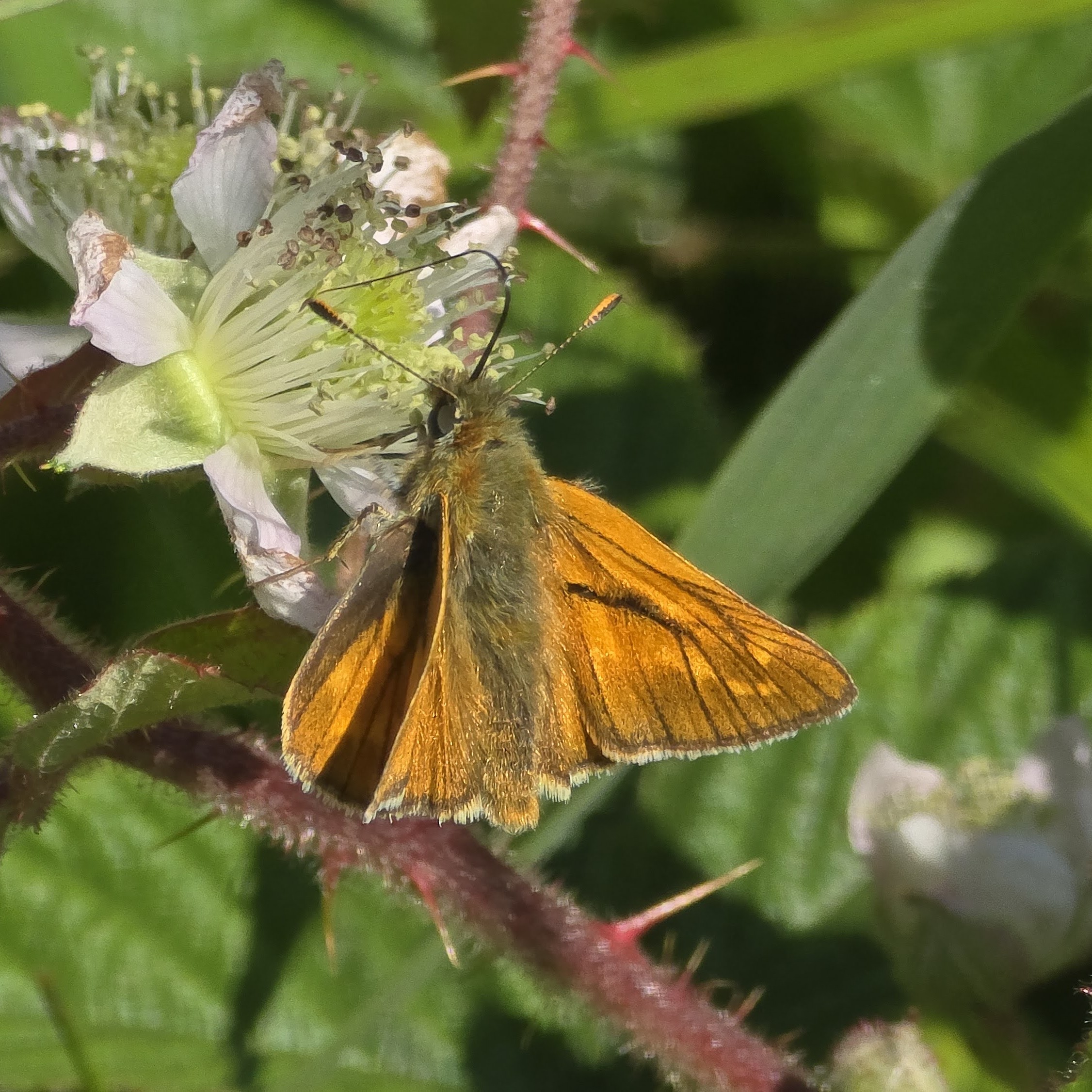
Large Skipper - June
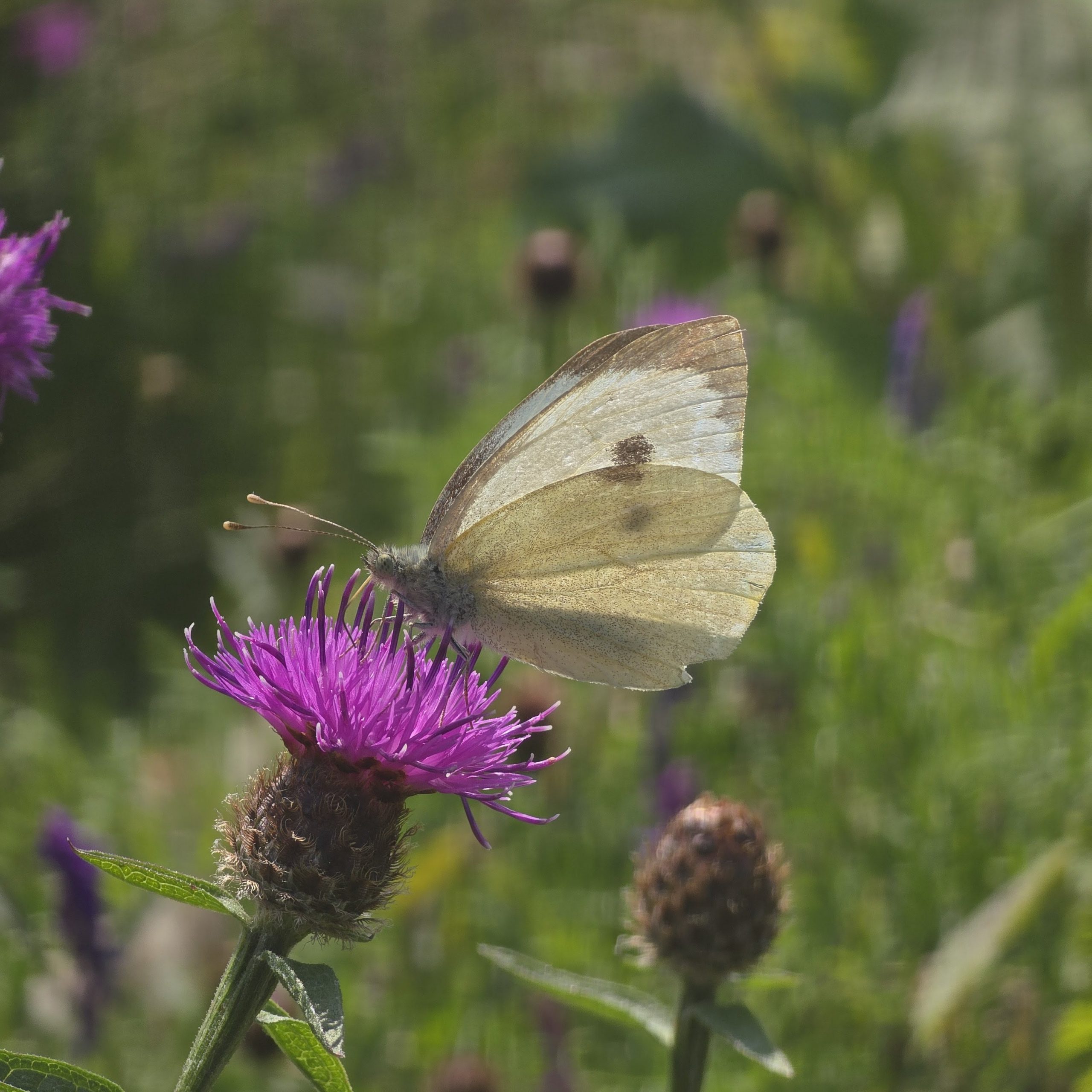
Large White - August
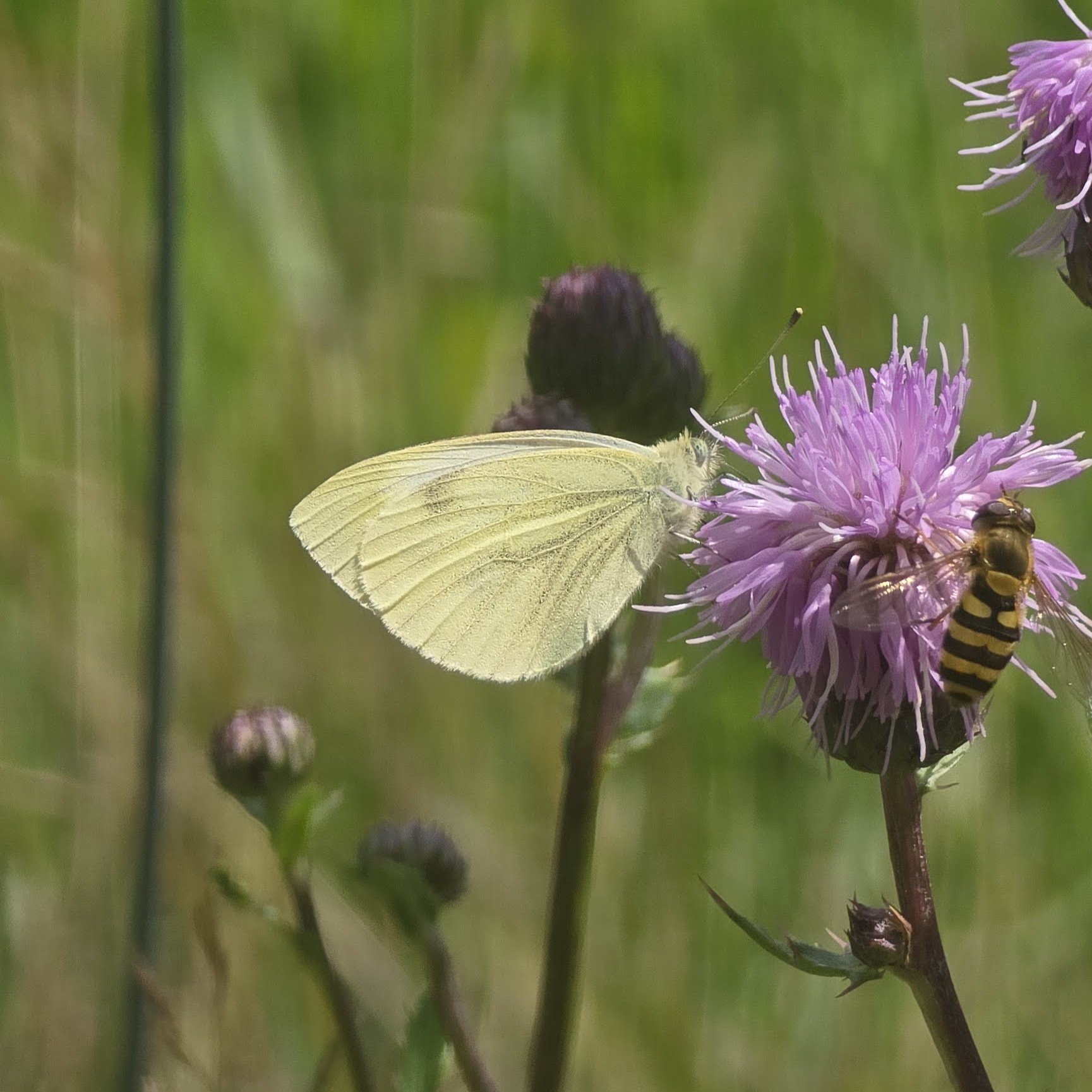
Small White - August
Green-veined White - July
Orange-tip (male) - April
Green Hairstreak - April
Small Copper - July
Common Blue (male) - August
Common Blue (female) - August
Holly Blue - August
Red Admiral - September
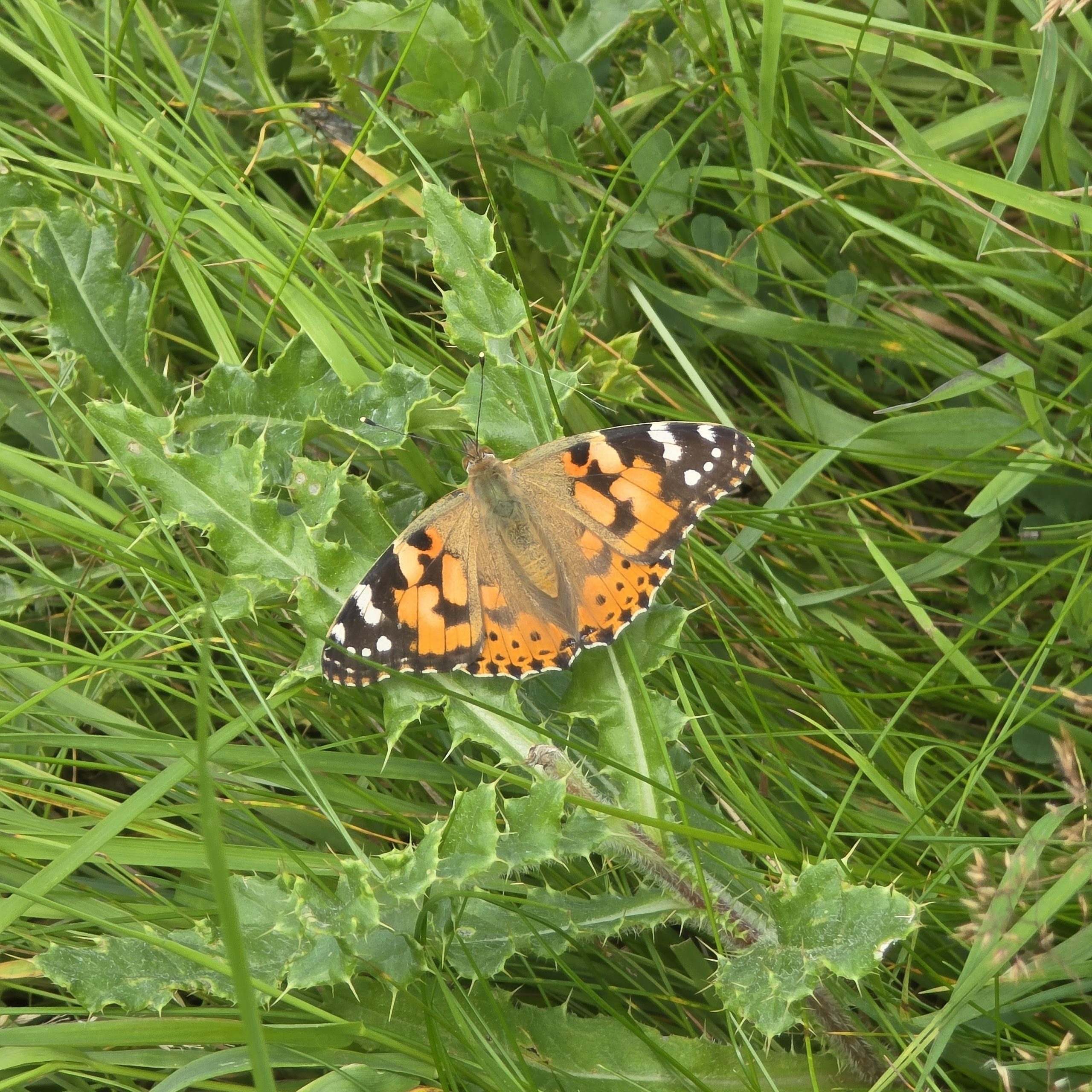
Painted Lady - August
Small Tortoiseshell - June
Peacock - July
Comma - September
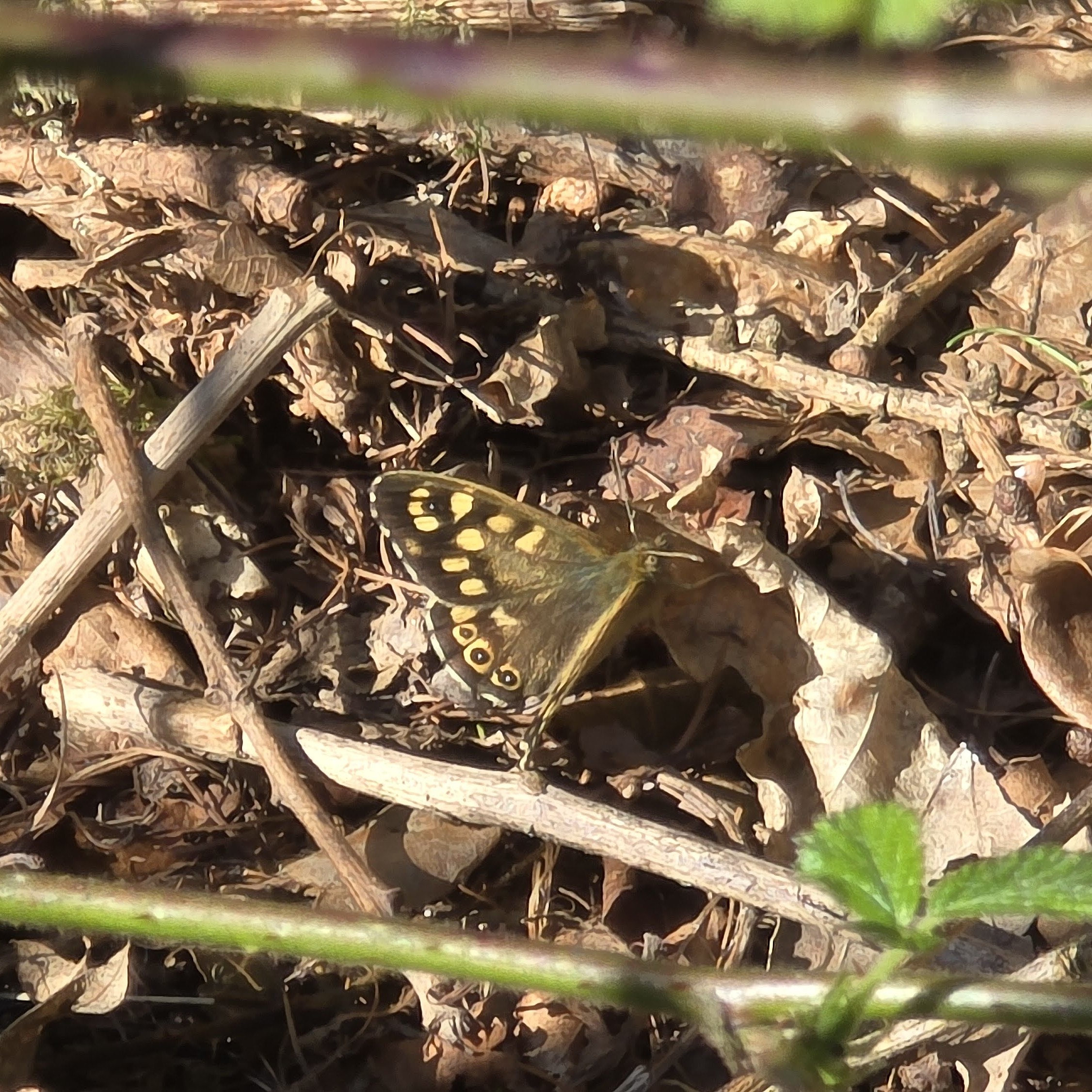
Speckled Wood - April
Gatekeeper - July
Meadow Brown - June
Ringlet - June
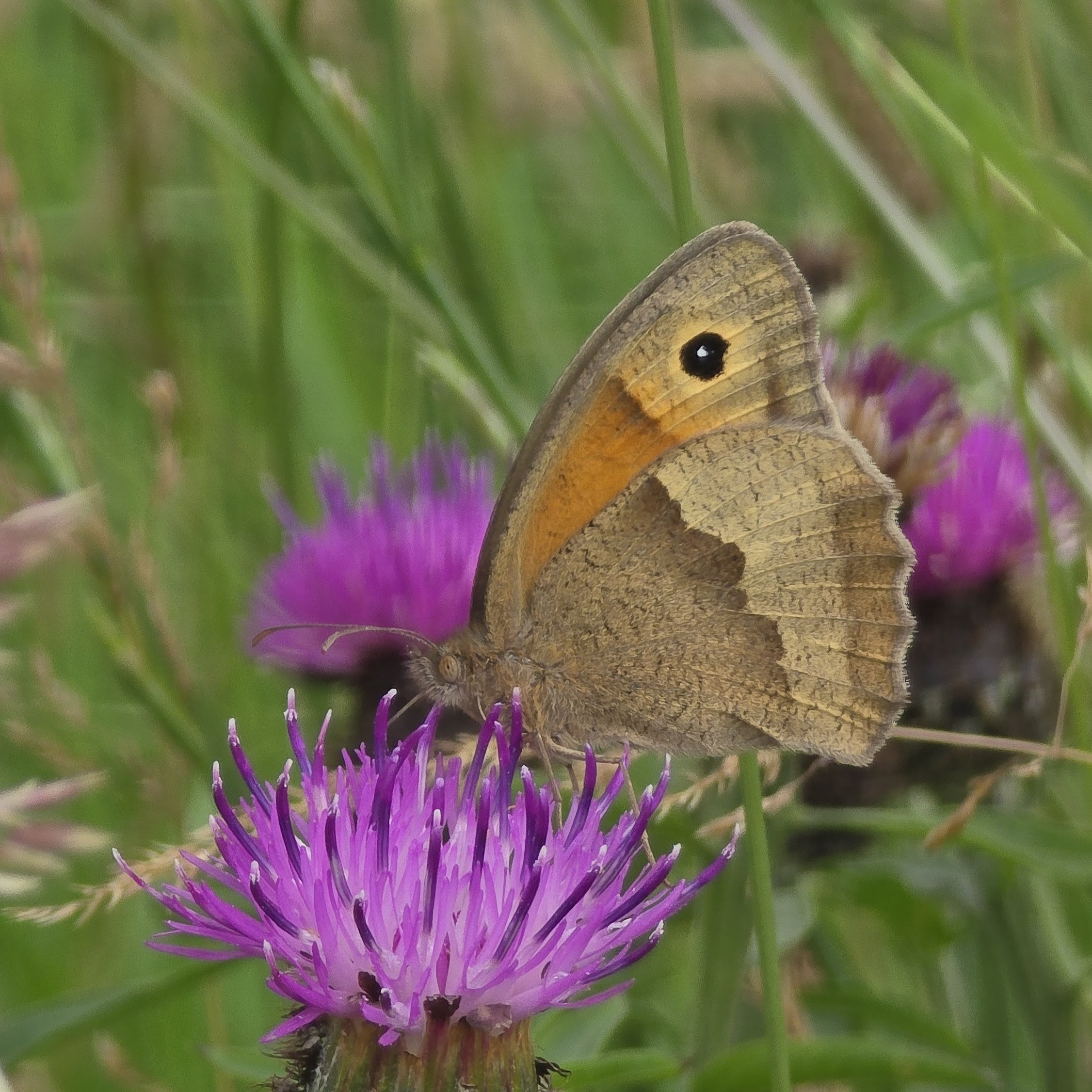
Small Heath - July

Additional species recorded during the transect:

The UKBMS transect also encourages surveyors to record day-flying moths and dragonflies. As part of the weekly transect at the Coppice, Robert also records bee and fly species, the results are still being processed for these and will be released later.
Narrow-bordered Five-spot Burnet Moth - June
Antler Moth - August
Nettle Tap Moth - June

What are we doing to improve numbers?

We will continue to protect, create, and restore habitat for pollinators and all wildlife across Hyndburn's green spaces in our Hyndburn's Nature Reserves project. PROSPECTS has been carrying out conservation work at Peel Park & the Coppice LNR for past 3 years during the HEAL, Peel Park Pollinators, and Hyndburn's Nature Reserves projects. See below for some of the work we have been doing to benefit butterflies:

Want to help? Please contact robert.gabryszak@prospectsfoundation.org.uk if you would like to involved with habitat restoration or survey work. Alternatively, call 01254 230348 or pop into our shop at 54 Broadway, Accrington, BB5 1EW.

If you would like more information on the survey data then please contact Robert.


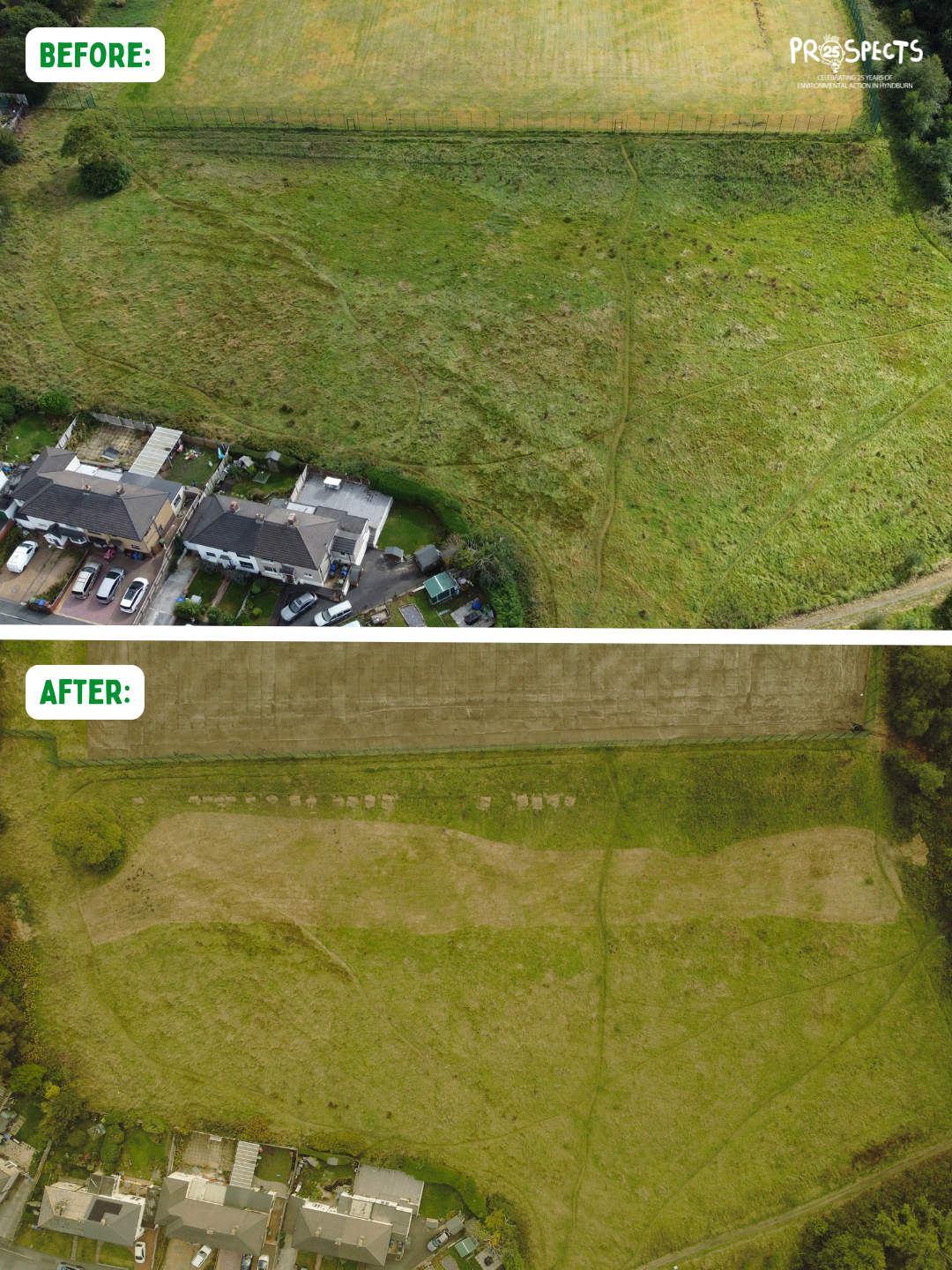
Pleck Meadow Cut and Collect
Butterfly Bank Creation
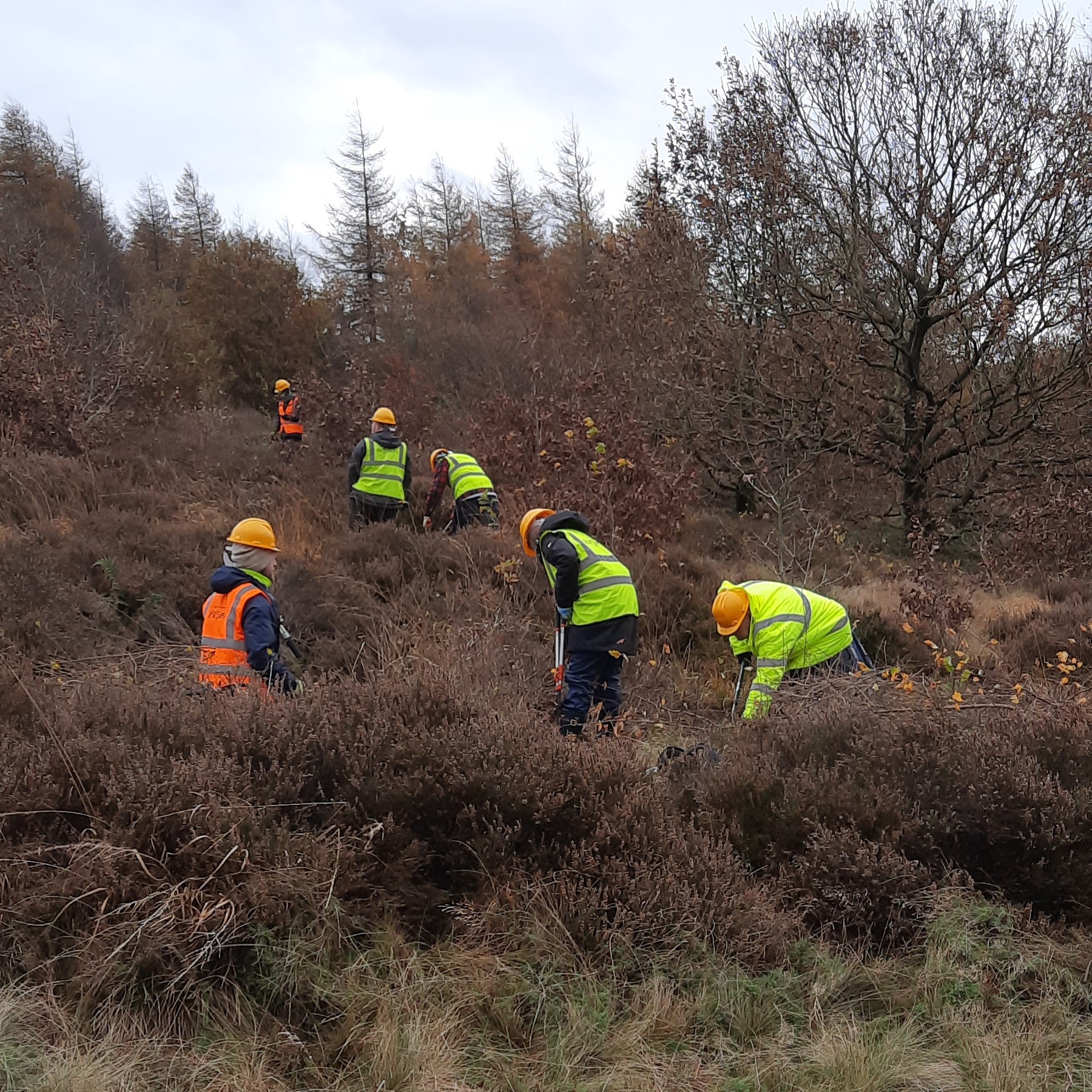
Tree Thinning to Improve Heathland
Wildflower Planting and Seed Sowing
Hedgerow Creation
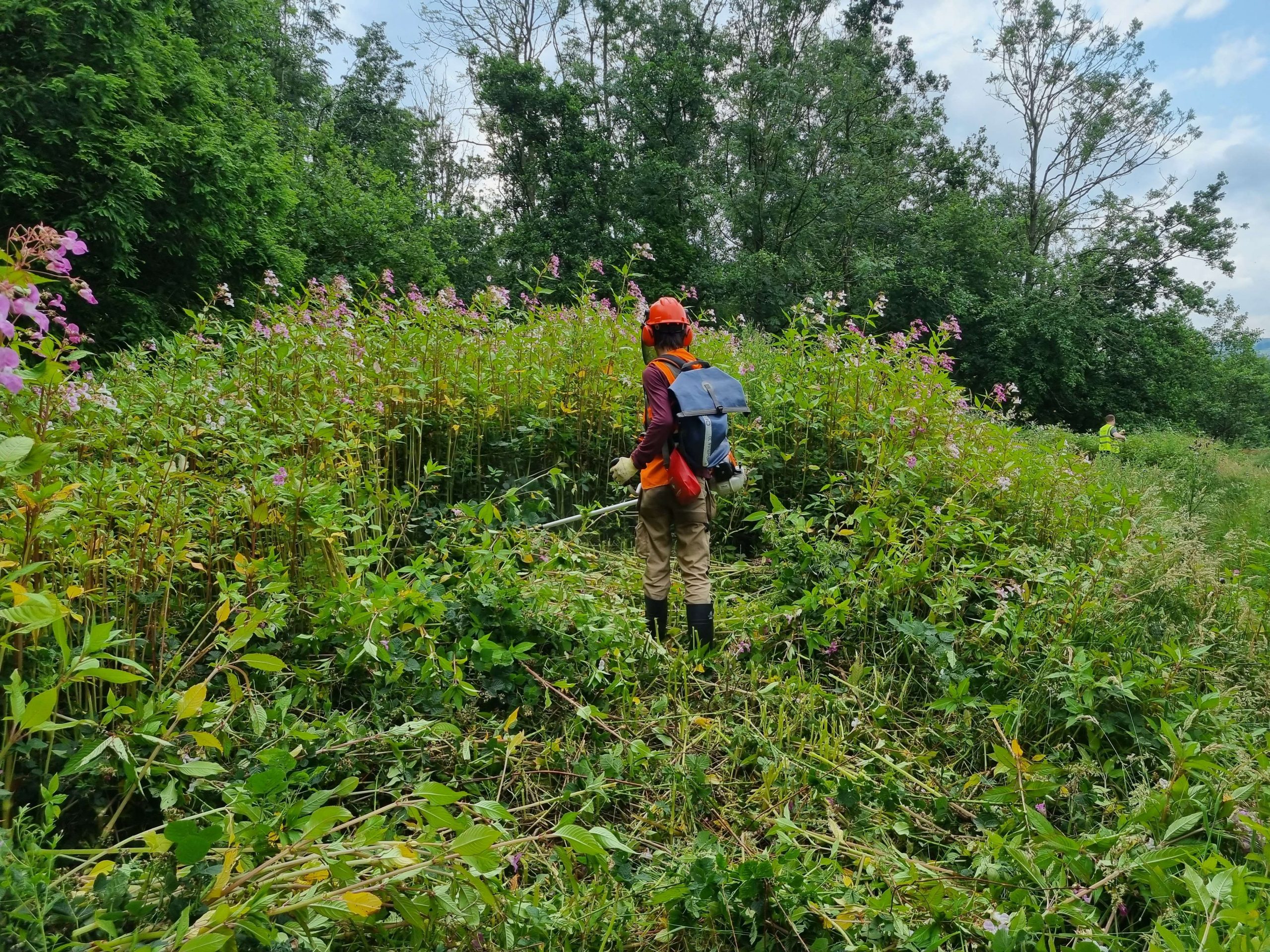
INNS Removal
Meadow Creation
Injurious Weed Removal
Educational Events & Surveys
and lots more!
This project would not have been possible without our funders:

Meadows across Hyndburn get important restorative cuts!

Important Meadow Restoration across Hyndburn

Throughout Autumn 2025, meadows across Hyndburn have been receiving important restorative cut and collects. Over 1.5ha of meadow has been cut at Peel Park & the Coppice LNR, Woodnook Vale LNR, and Jackhouse nature reserve. All sites were visited by a compact tractor and Jackhouse had some robo-mowers to get to some hard to reach places!

This is in addition to other meadow restoration in the borough such as at Spouthouse and Cutwood Park!

Hyndburn is set to be buzzing with bees and blooming with wildflowers in 2026!

The cuts have been funded by the Windfall Fund, with help from the Friends of Jackhouse and Friends of Arden Hall & the Coppice.

Before and Afters

Pleck Meadow
King George's
Jackhouse

Photos from the Cut and Collects

Tractor at King George's
Tractor at South Entrance to Pleck Meadow
Tractor at Pleck Meadow
Volunteers working on managing meadows and glades
Robo-mower and raker at Jackhouse
Volunteers and tractor at Jackhouse
Saving amphibians!

Why are cut & collects so important?

Annual cut & collects are an important part of wildflower meadow management as it reduces nutrients in the soil which overtime will ensure that vigourous grasses and injurious weeds do not become dominant. A wider variety of smaller and slow-growing plants can thrive as a result, increasing biodiversity in the meadow as more kinds of plants means more insects which will feed small birds and mammals, which then support larger carnivores like birds of prey.

In a natural ecosystem, plants are removed by herbivores which can spread the nutrients across a landscape as they migrate, creating a range of different habitats including areas of nutrient poor soil that can support wildflowers. In the UK, a majority of our native large herbivores are gone and the ones remaining have fragmented habitats which disrupts their migration. This means that the natural spread of nutrients can not occur, resulting in an accumulation of plant growth in an area that builds up over time, creating an area of high nutrient soil which allows plants like Creeping Thistle, Creeping Buttercup, docks, and Stinging Nettle to dominate.

Habitats like this can still be important for wildlife (E.g., Stinging Nettles act as the food plant for Comma, Peacock, Red Admiral and Small Tortoiseshell butterflies,)  but since 98% of wildflower meadows in the UK have disappeared in the last century, it's vital we transform areas of high nutrient density into spaces where a vast array of native wildflowers & pollinators can thrive.

So with a severe lack of grazing animals on hand, we settled with a tractor as the next best thing! The compact tractor we got was able to cut and remove a large area of the meadow over the course of two days. We have left areas of longer vegetation around the meadow to give small mammals and invertebrates areas to shelter over winter as well as provide cover for birds and deer.

For more information and to see what sort of species have been found in Pleck Meadow, check out our FAQ.

If you would like to get involved in meadow management on Peel Park & the Coppice LNR, then please email robert.gabryszak@prospectsfoundation.org.uk or call 01254 230348.

A huge thank you to Hyndburn Borough Council and Windfall Fund for making this project possible.

Butterfly Bank September 2025 Update

Bank bursting with bees and butterflies!

From a patch of grass to a bank bursting with wildflowers, Pleck Meadow's butterfly bank has come a long way in just one year!
Constructed in September 2024, the bank was installed to support native wildflowers and basking invertebrates (primarily butterflies) as it heats up better with its low-nutrient limestone slopes. The bank had a rough start following seed sowing and plug planting in Spring 2025 as we had one of our driest springs ever! Despite this hardship, the bank sprang to life in late summer and some species have already become well-established such as Black Knapweed, Kidney Vetch, Wild Carrot, Yarrow, Self-heal, Ox-eye Daisy, Scarlet Pimpernel, Viper's Bugloss, Wild Basil, and more! This wide range of wildflowers will be supporting all sorts of insect life with their pollen and nectar.
Thank you to our Hyndburn's Nature Reserves volunteers who helped with seed sowing and weeding throughout the year, and to Peel Park Primary School who helped us with planting and sowing in the spring!
Soon, the bank will have its vegetation cut back and removed to mimic the natural process of herbivory to avoid nutrient build up. The perennial wildflowers will come back even better next year!
For more info about practical conservation ongoing at Peel Park & the Coppice LNR, please contact robert.gabryszak@prospectsfoundation.org.uk.


Before and After Construction
Black Knapweed
Peel Park Primary School Seed Sowing & Plug Planting
Ox-eye Daisy
Weeding with Volunteers

A big thank you to our funders for making this possible!

The bank's construction was possible due to funding from Lancashire Wildlife Trust (Lancashire Environmental Fund & National Highways) and the Windfall Fund.

Pleck Meadow’s 4th Annual Cut (2025)

Pleck Meadow gets its 4th annual trim!

On Monday 8th & Tuesday 9th September 2025, Pleck Meadow at Peel Park and the Coppice LNR had its 4th annual cut!

The cut was a great success and the tractor was able to cut more than it has been able to do in previous years. As the meadow has already been cut 3 times before, the sward has thinned considerably, resulting in better wildflower diversity and less hay to remove. This, and the decision to split the cut across two days to give the hay some time to dry, made the cutting time a lot quicker allowing for additional areas to be included within the management.

This year, the meadow's cut was also funded with the support of the Friends of Arden Hall and The Coppice, who applied to the Windfall Fund.

Ensuring that small critters get out of the way!
The compact tractor next to Pleck Meadow's carved bench.
Aerial view of the cut!
Removing Creeping Thistle.
Pleck Meadow's South Entrance was also cut!
Tractor and volunteers with a view of the wind farm in the background.
View of tractor and volunteer.

Why are cut & collects so important?

Annual cut & collects are an important part of wildflower meadow management as it reduces nutrients in the soil which overtime will ensure that vigourous grasses and injurious weeds do not become dominant. A wider variety of smaller and slow-growing plants can thrive as a result, increasing biodiversity in the meadow as more kinds of plants means more insects which will feed small birds and mammals, which then support larger carnivores like birds of prey.

In a natural ecosystem, plants are removed by herbivores which can spread the nutrients across a landscape as they migrate, creating a range of different habitats including areas of nutrient poor soil that can support wildflowers. In the UK, a majority of our native large herbivores are gone and the ones remaining have fragmented habitats which disrupts their migration. This means that the natural spread of nutrients can not occur, resulting in an accumulation of plant growth in an area that builds up over time, creating an area of high nutrient soil which allows plants like Creeping Thistle, Creeping Buttercup, docks, and Stinging Nettle to dominate.

Habitats like this can still be important for wildlife (E.g., Stinging Nettles act as the food plant for Comma, Peacock, Red Admiral and Small Tortoiseshell butterflies,)  but since 98% of wildflower meadows in the UK have disappeared in the last century, it's vital we transform areas of high nutrient density into spaces where a vast array of native wildflowers & pollinators can thrive.

So with a severe lack of grazing animals on hand, we settled with a tractor as the next best thing! The compact tractor we got was able to cut and remove a large area of the meadow over the course of two days. We have left areas of longer vegetation around the meadow to give small mammals and invertebrates areas to shelter over winter as well as provide cover for birds and deer.

For more information and to see what sort of species have been found in Pleck Meadow, check out our FAQ.

If you would like to get involved in meadow management on Peel Park & the Coppice LNR, then please email robert.gabryszak@prospectsfoundation.org.uk or call 01254 230348.

A huge thank you to Hyndburn Borough Council and Windfall Fund for making this project possible.

24 Hour Bioblitz at Peel Park!

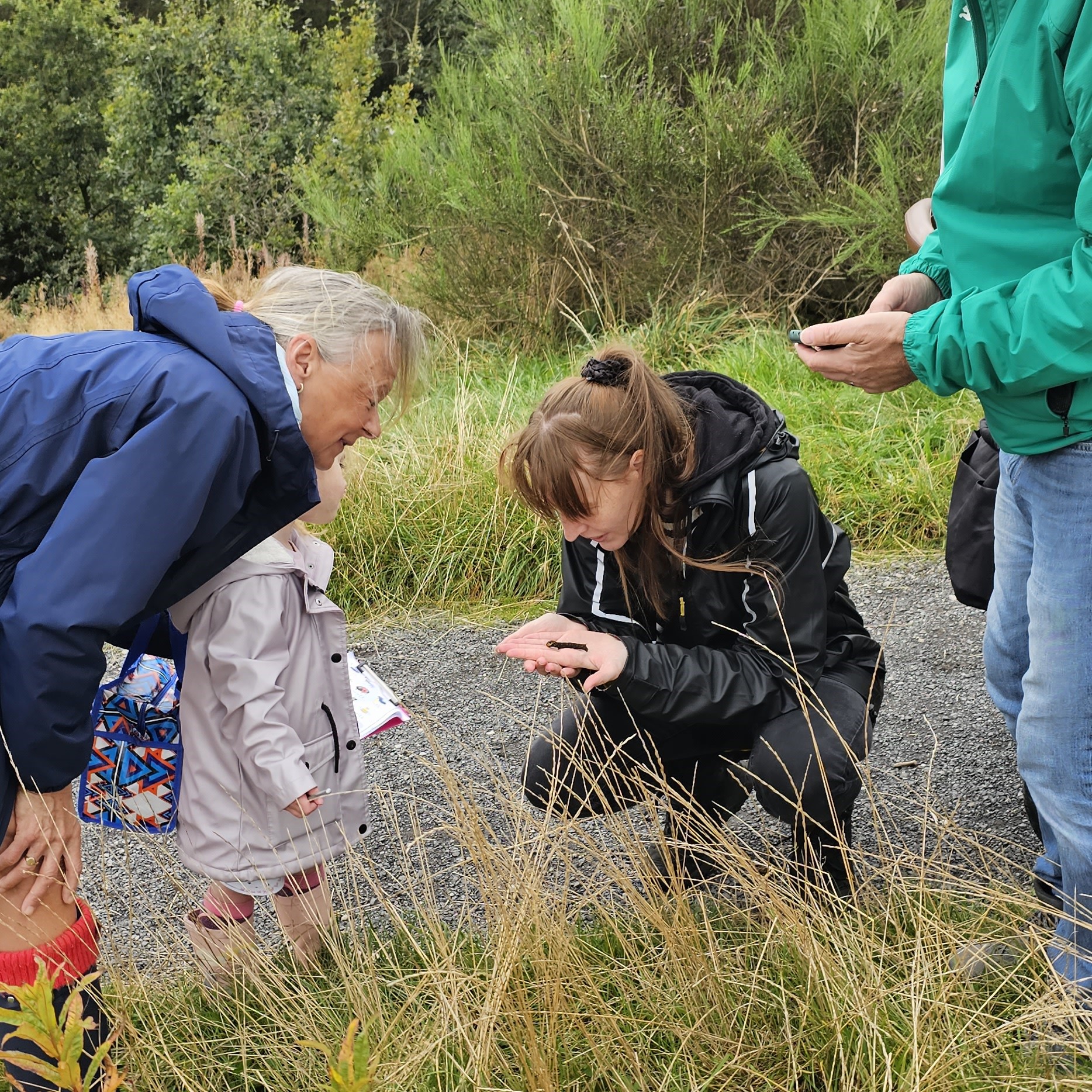
At the end of April, PROSPECTS participated in the worldwide City Nature Challenge weekend by running a 24-Hour Bioblitz at Peel Park and the Coppice! Run over 2 days, the event aimed to record as many species on iNaturalist as possible, with a series of walks and sessions open to the public throughout the event. The species recorded on iNaturalist will assist their citizen science project to map the spread of different species across the world, and how this changes over time in response to climate change. Sessions included a bat walk, moth trap, early morning bird walk, woodland ID walk, pollinator and wildflower walk, and pond ID sessions. In total, we recorded over 153 species! Some of the most impressive species were Daubenton’s bat and the Emperor moth.

During the freshwater session, we also surveyed Pleck Brook as part of the national WaterBlitz, which was happening on the same weekend! Both nitrogen and phosphate levels were very low, which means that the stream is an excellent quality habitat!

Thanks to everyone who took part in the recording!

Peel Park Pollinator Survey Results 2024

The results are in!

Throughout 2024, PROSPECTS has been carrying out pollinator surveys at Peel Park and the Coppice LNR. Measuring the abundance and distribution of species is vitally important for monitoring species health, climate change, and the effectiveness of conservation actions. Nationally, surveys provide data which allows climate scientists, conservationists, and insect experts to get a greater understanding of the environment across the UK. Locally, the surveys have laid the foundations for what we hope will be a continuous study at Peel Park and the Coppice LNR. In the short term they will show us the current biodiversity of the site; in the long term they will show us how effective conservation efforts on the site have been as well as inform future management.

The surveys have been open to the public as a way to engage people in citizen science and inspire people to take an interest in the environment. A HUGE thank you to all volunteers that assisted with these surveys, your support is invaluable.

Weekly Butterfly UKBMS transects were started in June 2022 by Chloe Jameson. Monthly moth trapping events and BeeWalk transects were started in April 2023 & July 2023, respectively, by Robert W.S. Gabryszak. Weekly butterfly and bee surveys continued throughout 2024 and a moth trap was set up in Pleck Meadow once a month.

Results overview:

Here are the results (scroll down to see all the photos!):

What do these results show?

Sadly, like the rest of the UK, these results paint a terrible picture. Nationwide, recorders have seen a huge decline in invertebrate abundance. In particular, Butterfly Conservation have noticed a 50% decrease in butterfly numbers, based on this year's Big Butterfly Count. This has prompted the declaration of a Butterfly Emergency, you can read more about that here. At the Coppice, we have seen worse than this, with a over a 60% drop in butterfly records from 2023 to 2024 in our weekly UKBMS surveys.

Data from the Bumblebee Conservation Trust shows that 2024 has been the worst year for bumblebees in recorded history, especially for species like the Red-tailed Bumblebee. Most UK bumblebees nest underground, which are vulnerable to flood damage and waterlogged conditions, something that we've had no shortage of this year. Our bee and moth data showed a slight increase this year - however we were surveying more frequently and for a longer time than in 2023, which would account for the increase.

Climate change, habitat loss, and pesticide use have all contributed to the gradual decline of invertebrate populations over the last century. This has made them extra vulnerable to severe weather, which we have seen a lot of in 2024. As one of the wettest years on record, it has made it harder for a significant majority of species to carry out their usual life cycles.

It is not all doom and gloom though, we have still seen a diverse range of species on the site which you can see below. With continued improvements to the site's meadow and heathland habitats, pollinators will be better equipped to recover their populations.

We can only hope that we see improved weather next year so that invertebrate populations have chance to bounce back. In the meantime, we will continue to protect, create, and restore habitat for pollinators and all wildlife across Hyndburn's green spaces in our new Hyndburn's Nature Reserves project.

Want to help? Please contact robert.gabryszak@prospectsfoundation.org.uk if you would like to help with habitat restoration or survey work. Alternatively, call 01254 230348 or pop into our shop at 54 Broadway, Accrington, BB5 1EW.

If you would like more information on the survey data then please contact Robert.

The following invertebrate photos were all taken at Peel Park and the Coppice LNR in 2024, credit to Robert W.S. Gabryszak. 

46 Macro Moth Species

Here are the following macro moth species that have been recorded.
Naming explanation, for example we'll look at "54.008 – 20240625 – Six-spot Burnet"
  • 54.008: The ABH number is a 5 digit code which orders Lepidoptera (moths and butterflies) taxonomically. Therefore showing how closely related each species is to one another. 
  • 20240625: The date the photograph was taken and/or the moth was recorded. If there is no photo we were unable to take a photo before the invertebrate flew away.
  • Six-spot Burnet: The common name of the moth as opposed to their scientific name.
3.003 – 20240615 – Map-winged Swift
54.008 – 20240625 – Six-spot Burnet
54.009 – 20240708 – Narrow-bordered 5-spot Burnet
66.010 – 2024 03 16 – Drinker (Larval)
69.016 – 20240924 – Elephant Hawk-moth (Larval) on RBWH
70.094 – 20240810 – Small Phoenix Male
70.100 – 20240615 – Green Carpet
70.101 – 2023 03 08 – Mottled Grey
70.218 – 20240706 – Latticed Heath
70.241 – 20240810 – Scalloped Oak
70.245 – 2024 03 16 – March (Resting)
70.252 – 20240706 – Peppered
70.255 – 2024 02 17 – Dotted Border
70.265 – 20240706 – Mottled Beauty
70.277 – 20240615 – Common White Wave
71.025 – 20240930 – Buff-tip (Larval) on Hazel
72.002 – 20240907 – Straw Dot
72.063 – 20240711 – Blackneck
73.012 – 20240810 – Burnished Brass f.aurea
73.015 – 20240602 – Silver Y on Yellow Rattle
73.016 – 20240615 – Beautiful Golden Y
73.022 – 20240907 – Gold Spot
73.113 – 20240924 – Angle Shades
73.169 – 20240810 – Common Rustic agg
73.194 – 2024 02 17 – Chestnut
73.210 – 2024 02 17 – Satellite
73.216 – 20240810 – Dun-bar
73.242 – 2024 03 16 – Clouded Drab
73.244 – 2024 03 17 – Common Quaker
73.245 – 2024 03 17 – Small Quaker
73.291 – 20240809 – Common Wainscot
73.301 – 20240810 – Shoulder-striped Wainscot
73.317 – 20240706 – Heart and Dart
73.333 – 20240615 – Ingrailed Clay
73.334 – 20240615 – Small Square-spot
73.336 – 2024 03 16 – Red Chestnut
73.342 – 20240706 – Large Yellow Underwing
73.343 – 20240907 – Broad-bordered Yellow Underwing
73.345 – 20240810 – Lesser Yellow Underwing
73.348 – 20240810 – Lesser Broad-bordered Yellow Underwing
73.352 – 20240615 – Green Arches
73.353 – 20240810 – Dotted Clay
73.357 – 20240907 – Square-spot Rustic
73.358 – 20240810 – Six-striped Rustic
73.365 – 20240907 – Autumnal Rustic

8 Micro Moth Species

Here are the following micro moth species that have been recorded.

Micro moths are, in general, smaller than macro moths but some larger species do occur. A more accurate way to describe them is that they are more primitive types of moth. They aren't as complex as macro moths, and some of them still have jaws!

16.001 – 20240810 – Bird-cherry Ermine
41.003 – 20240615 – Large Pale Masoner
49.127 – 20240615 – Thistle Straw
49.154 – 20240615 – Dusky Marble
63.073 – 20240810 – Peppered Grey
07.001 – 20240618 – Yellow-banded Longhorn
07.006 – 20240501 – Green Longhorn
48.001 – 20240722 – Common Nettle Tap

16 Butterfly Species

Here are the following butterfly species that have been recorded. Holly Blue and Small Tortoiseshell were not seen during a UKBMS survey, but during the Big Butterfly Count.
20240730 – Small Skipper
20240625 - Large Skipper
2024 04 16 – Small White
20240505 - Orange-tip
20240722 – Large White
20240516 - Green-veined White
20240903 – Red Admiral
20240903 – Small Copper
20240903 – Peacock
20240814 – Gatekeeper
20240702 – Ringlet
20240625 - Meadow Brown
20240814 – Small Tortoiseshell
20240802 - Holly Blue

14 Bee Species

Here are the following bee species that have been recorded.
20240419 - Common Carder Bumblebee
20240530 - Heath Bumblebee
20240814 – White-tailed Bumblebee
20240411 - Garden Bumblebee
20240326 - Red-tailed Bumblebee
20240322 - Buff-tailed Bumblebee
20240530 - Early Bumblebee
20240411 - Forester's Cuckoo
20240814 - Patchwork Leafcutter Bee
20240421 - Orange-tailed Mining Bee (pair)
20240411 - Lasioglossum sp.
20240324 - Andrena sp.
This project would not have been possible without our funders:

Summer 2024 Overview at Peel Park & the Coppice LNR

Tumultuous weather at Peel Park & the Coppice LNR this summer!

Like the rest of the UK, we have been experiencing some odd weather, accompanied by some disappointingly low invertebrate numbers. But we are still working hard to improve the site for pollinators.

Our summer started like many others do, tackling Himalayan Balsam! We had several sessions of balsam removal around Pleck Meadow to reduce its spread. Similarly, volunteers have been working around the site to remove Montbretia, a.k.a Crocosmia. Whilst it is a wonderful flower to have in the garden, a common cultivar (Crocosmia × crocosmiiflora) can escape from gardens, where it can kill biodiversity along paths and woodland floors as it spreads. Pleck Meadow also received its 3rd annual Grassland Condition Assessment. During the assessment, volunteers were able to attend to find out more about wildflower ID and what makes a healthy meadow.

We have continued to remove Rosebay Willowherb & Purple Moor Grass from the area of heathland that suffered a burn in June 2023.

We have continued to work at the Northern Gateway entrance near to the Peel Park Car Park where we removed dock, Creeping Thistle, and Bindweed. The summer results have been spectacular for the Northern Gateway as we have had swathes of Tufted Vetch, Black Knapweed, Yellow Rattle, Bird's-foot-trefoil, and Ox-eye Daisy. We've also had some new species appear such as Wild Marjoram, Marsh Woundwort, and Lady's Bedstraw.

Lastly, we had a double whammy of important management for pollinator diversity at Pleck Meadow as it received its 3rd annual cut and had a butterfly bank installed! You can read more about them by clicking their links.

Volunteer Work & Wildflowers- Summer 2024

Removing Himalayan Balsam!
Removing Montbretia!
Grassland Condition Assessment with Ben Hargreaves (LWT)
Pleck Meadow's Third Annual Cut
Butterfly Bank Creation
Tufted Vetch & Yellow Rattle
Wild Marjoram
All the wildflowers at the Northern Gateway!
Marsh Woundwort
Common Globetail on Ox-eye Daisy

A Butterfly Emergency - Summer 2024

Butterfly Conservation has officially declared a butterfly emergency - and looking at our survey results this year at Peel Park & the Coppice, we can see why. All in all, we have had a good diversity of invertebrates, with species like Small Copper, Peacock, Small Heath, Small Skipper & more still making an appearance. However there was a severe lack in abundance. We have released some preliminary butterfly data, our full results will be coming soon.

Our weekly surveys have now concluded for the year, but be sure to stayed tuned in 2025 to see the return of pollinator walks and surveys in Hyndburn.

To express your interest, contact Robert at robert.gabryszak@prospectsfoundation.org.uk.

Summer Pollinators!

Small Heath
Peacock on Black Knapweed
Large Skipper
Small Copper on Common Ragwort
Red Admiral
Early Bumblebee on Comfrey
Bumblebee Plumehorn
Honey Bee on Heather
Stripe-backed Fleckwing on Cat's-ear
Patchwork Leafcutter on Black Knapweed

Missing moths.

Again, moths have also lacked in abundance this year - but also in diversity as we have seen far less than we saw during last years moth traps. There has also been a widespread lack of Elephant Hawk-moth and Cinnabar moth caterpillars.

Nevertheless, we still saw some interesting moths species which you can check out below!

Our public moth traps have ended for the year, but be sure to stay tuned for moth trap events next year!

To express your interest, contact Robert at robert.gabryszak@prospectsfoundation.org.uk.

Summer Moths and Moth Night

Common White Wave
Green Carpet
Project Officer, Robert Gabryszak.
Green Arches
Beautiful Golden Y
Latticed Heath
July Moth Morning w/ Dave Bickerton!
Large Yellow Underwing
July Moth Morning w/ Dave Bickerton!
Peppered
August Moth Morning
Burnished Brass
August Moth Night!
Scalloped Oak
Brews and a Large Yellow Underwing!

Coming up in October:

We are still having weekly volunteer sessions in October, every Monday, 10am-1pm. October is the last month of the Peel Park Pollinators project, but it is not the end of PROSPECTS' conservation work at Peel Park & the Coppice LNR. We will have more information on future projects soon!

For info on conservation work @Peel Park & the Coppice LNR, Contact Robert:

robert.gabryszak@prospectsfoundation.org.uk

01254 230348 (ext. 208)

Thanks to our funders and partners:

Our work at Peel Park & the Coppice LNR wouldn't be possible without the permission of its use by Hyndburn Borough Council and the funding from LEF, Lancashire Wildlife Trust, & Windfall Fund.


Windfall Fund

Butterfly Emergency 2024

Preliminary butterfly data from Peel Park & the Coppice LNR

Throughout 2024, PROSPECTS has been performing pollinator surveys at Peel Park & the Coppice LNR as part of the Peel Park Pollinator's project. A huge thank you to anyone who assisted with the surveys, especially during a very poor year for it.
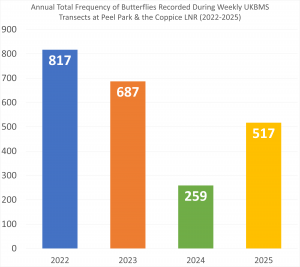
We'll be submitting/analysing all the data over the next couple weeks, but we wanted to share some shocking preliminary data from the weekly butterfly walks. The following chart shows the total number of butterflies counted in 2022, 2023, and 2024, revealing a shocking ~70% drop in butterflies from 2022 to 2024. We still managed to record 14 different species of butterfly, which is two less than in 2022 but 6 less than in 2023.
image.png
This data is coming at the same time as Butterfly Conservation's declaration of a Butterfly Emergency, after they have seen similarly shocking drops in the data received during the Big Butterfly Count this year. From Butterfly Conservation:

Overall, you spotted just seven butterflies on average per 15-minute Count, a drop of almost 50% on last year’s average of 12, and the lowest in the 14-year history of the Big Butterfly Count.

The incredibly poor weather this year is an obvious factor in the low numbers, but this is on top of existing pressures such as habitat loss, climate change, and pesticide use which have been causing a decline in pollinator populations over the past century. This year has made it all the more apparent that we should be continuing to restore and create habitat for pollinators. We are striving to continue this with the local community at Pleck Meadow, Peel Park, and throughout Hyndburn. If you have any ideas for how your local green space can be improved for pollinators, please get in touch.
In absence of the weekly pollinator walks, we hope to continue with some seasonal walks and seed collecting walks/sessions. We want to make these accessible for everyone, let us know if you are interested! Furthermore, please express your interest if you would like to take part in any pollinator surveys next year. If you wanted to attend this year but weren't able to make it, please let us know why and we will do our best to accommodate in the future.

Butterflies from 2024 at Peel Park & the Coppice LNR

Small Heath
Peacock
Large Skipper
Small Copper
Red Admiral
Gatekeeper
Orange-tip
Green-veined White
Small White
Meadow Brown
Ringlet
Speckled Wood

Contact us

Please contact robert.gabryszak@prospectsfoundation.org.uk for more information or to express your interest in pollinator surveys. Alternatively call in to our shop at 54 Broadway, Accrington, BB5 1EW or telephone 01254230348.

Spring 2024 Overview at Peel Park & the Coppice LNR

Spring is well underway at Peel Park and the Coppice LNR in April 2024!

Despite the temperamental weather in April, we still managed to get a lot done on Peel Park & the Coppice LNR.

April is the perfect month for planting & seed sowing. We have been planting a variety of different native species to benefit pollinators.

We have had a couple Saturday sessions at Pleck Meadow where we picked litter, removed Broadleaved Dock & Soft Rush, and planted wildflowers like Marsh Violet, Lesser Spearwort, & Meadowsweet. Amphibian activity was good as we have seen spawn from frogs and toads, as well as a pregnant Smooth Newt! We have also been removing Rosebay Willowherb & Purple Moor Grass from the area of heathland that suffered a burn in June 2023, and planting wildflowers like Sheep's Sorrel, Devil's-bit Scabious, and Heath Speedwell.

We also worked at the Northern Gateway entrance near to the Peel Park Car Park where we removed dock, planted wildflowers and sowed plenty of wildflower seeds!

We had huge help from primary schools in the area like Peel Park Primary School and Benjamin Hargreaves Primary School, who helped with wildflower planting all around Pleck Meadow! Thanks to them there will be tonnes of wildflowers for pollinators in the coming months and years.

Lastly, the long awaited Pleck Meadow Carved Bench has finally been installed after months of waiting for some dry weather! The talented local chainsaw artist, Rick Goodwin, has carved this beautiful bench from Larch which was felled on-site by Woody C.I.C. in Winter 2022/23. Please rest your feet and enjoy the views of the meadow & Accrington!

Volunteer Work in April & May.

Dock Removal at Pleck Meadow!
Removing Himalayan Balsam
Wildflower Planting with Benjamin Hargreaves Primary School!
Rosebay Willowherb Removal and Wildflower Planting
Pleck Meadow Carved Bench

Bees and butterflies in April/May

April marked the official start to this year's UKBMS surveys. It will be another month before we get huge amounts of butterflies - but we have had a few species on the site like Orange-tip, Peacock, Small Copper, Speckled Wood, and Small White. Some new bumblebees have been spotted like Early, Garden, and Heath Bumblebees.

Project Officer, Robert Gabryszak, will be continuing to do bee and butterfly surveys every week to track the progress of pollinators throughout the year. Check out our events calendar to see when the next survey is!

To express your interest, contact him at robert.gabryszak@prospectsfoundation.org.uk.

April/May Pollinators!

Small White
Orange-tip
Speckled Wood
Small Copper
Peacock
Honey Bee
Orange-tailed Mining Bee Pair
Early Bumblebee
Red-tailed Bumblebee (with mites!)
Heath Bumblebee

A lot of interesting characters!

PROSPECTS set the fourth & fifth monthly moth traps of 2024 up in Pleck Meadow. Now that the weather is warming up we are getting a more in the trap.

We have found four species in our trap, Hebrew Character, Clouded Drab, Common Quaker, and Small Phoenix. Just like butterflies, moths are invaluable pollinators for flowers. Their larvae also have a wide variety of food plants, making them useful herbivores.

Project Officer, Robert Gabryszak, will be continuing to set up the trap every month to track the progress of moths throughout the year. There will a special event celebrating over a year of moth recording on Peel Park & the Coppice on 15th June 2024, 9am-12pm in near the Peel Park Play Area.

To express your interest, contact him at robert.gabryszak@prospectsfoundation.org.uk.

April/May Moths and Moth Night

Small Phoenix
Hebrew Character
May Moth Night
Clouded Drab
Common Quaker

Thanks to our funders and partners:

Our work at Peel Park & the Coppice LNR wouldn't be possible without the permission of its use by Hyndburn Borough Council and the funding from LEF, Lancashire Wildlife Trust, & Windfall Fund.


Windfall Fund

Butterfly Bank Installation

Basking butterflies welcome!

On the 17th & 18th September, a butterfly bank was constructed at Pleck Meadow.

A butterfly bank is a raised bank made of low nutrient aggregate. This bank will be a perfect spot for basking invertebrates and will benefit a wide range of wildflowers which will be important for butterflies and other pollinators. Limestone aggregate was used to support wildflowers like Viper's Bugloss, Kidney Vetch, Bird's-foot-trefoil, Greater Knapweed, Small Scabious and more calcareous loving plants which are important to pollinators.

Volunteers have already begun to plant wildflowers and sow seeds on the bank so that it will be ready to bloom in spring, providing support to butterflies after the incredibly harsh year that 2024 has been for them. Butterfly Conservation have officially declared a butterfly emergency, so they are going to need all the help they can get!

The next volunteer session will be Monday 30th September, we will be working on Pleck Meadow to continue improvements for the pollinators. Contact robert.gabryszak@prospectsfoundation.org.uk for more information.

1. Creating the outline for the bank
2. Digging up clay and burying top soil
3. Building up the bank with soil and clay
4. Capping the bank with limestone aggregate
5. Seeding the bank.

A big thank you to our funders for making this possible!

This project was possible due to our thanks to funding from Lancashire Wildlife Trust (Lancashire Environmental Fund & National Highways) and the Windfall Fund.

Pleck Meadow 2024 Annual Cut

Pleck Meadow gets its 3rd annual trim!

On Monday 9th, September 2024, Pleck Meadow at Peel Park and the Coppice LNR had its 3rd annual cut!

Annual cut & collects are an important part of wildflower meadow management as it reduces nutrients in the soil which overtime will ensure that vigourous grasses and invasive species do not become dominant. A wider variety of short and slow-growing plants can thrive as a result, increasing biodiversity in the meadow as more kinds of plants means more kinds of pollinators!

In a natural ecosystem, plants are removed by herbivores which can spread the nutrients across a landscape as they migrate, creating a range of different habitats including areas of nutrient poor soil that can support wildflowers. In the UK, a majority of our native large herbivores are gone and the ones remaining have fragmented habitats which disrupts their migration. This means that the natural spread of nutrients can not occur, resulting in an accumulation of plant growth in an area that builds up over time, creating an area of high nutrient soil which allows plants like Creeping Thistle, Creeping Buttercup, docks, and Stinging Nettle to dominate.

Habitats like this can still be important for wildlife (E.g., Stinging Nettles act as the food plant for Comma, Peacock, Red Admiral and Small Tortoiseshell butterflies,)  but since 98% of wildflower meadows in the UK have disappeared in the last century, it's vital we transform areas of high nutrient density into to spaces for a vast array of native wildflowers & pollinators to thrive.

So with a severe lack of grazing animals on hand, we settled with a tractor as the next best thing! The compact tractor we got was able to cut and remove a large area of the meadow over the course of a day. We have left areas of longer vegetation around the meadow to give small mammals and invertebrates areas to shelter over winter as well as provide cover for birds and deer.

For more information and to see what sort of species have been found in Pleck Meadow, check out our FAQ.

If you would like to get involved in meadow management on Peel Park & the Coppice LNR, then please email robert.gabryszak@prospectsfoundation.org.uk or call 01254 230348.

A huge thank you to the Lancashire Wildlife Trust, LEF, National Highways, and the Windfall Fund for making this project possible.

Pleck Meadow Grassland Condition Assessment 2024

Pleck Meadow has its third annual assessment.

Pleck Meadow received its third annual Grassland Condition Assessment on the 8th July, 2024.

The results show that the "cut and collect" management is working as the grass sward and presence of negative indicator species has decreased significantly. Seed sowing and plug planting have also increased the number of species present on the meadow.

Read the full report here! 

If you have any questions about the management ongoing at Pleck Meadow, you can read more and look at some of the species we have recorded here! Furthermore, you can contact Project Officer, Robert Gabryszak, at robert.gabryszak@prospectsfoundation.org.uk.

National Highways visit Peel Park & the Coppice LNR

On Thursday 16th May we got lucky with some sunny weather as National Highways paid a visit to Peel Park & the Coppice LNR. National Highway have been funding the Network 4 Nature project across the UK, creating biodiverse habitats along our roads and highways in collaboration with The Wildlife Trust. This includes the Accrington Bypass (A56) which borders Peel Park.

The project has been funding Lancashire Wildlife Trust which has then in turn been funding PROSPECTS to help carry out the work with the help of volunteers in the Peel Park Pollinators Project.

The visit produced this fantastic video, highlighting the importance of de-fragmenting habitats to boost biodiversity.

For more information on the Network 4 Nature project, check out the National Highways website!

For more information on the project or to get involved, contact Project Officer Robert Gabryszak at robert.gabryszak@prospectsfoundation.org.uk or 01254 230348 (ext. 208)


March 2024 Overview at Peel Park & the Coppice LNR

Spring is here at Peel Park and the Coppice LNR in March 2024!

Spring has brought with it the usual perks, bees, flowers, and milder - albeit still very wet - weather!

March is the final month before nesting season when we can remove scrub on the heathland, so we spent a lot of time bringing down colonising Silver Birch for the benefit of Heather, Bilberry, Crowberry, and other unique heath species! Special thanks to the staff from BT Accrington who came to assist! Lowland Heathland is a semi-natural habitat which requires intervention from humans and/or large animals to keep the soils nutrient poor and acidic. These conditions provide a unique habitat which benefits many wildflowers and pollinators. You can read more about the cultural and biological importance of heathland on the Wildlife Trust website.

Our very own TreeACTION project joined us again for a session on the site to plant extend our Alder Buckthorn hedgerow to attract the Brimstone Butterfly. You can read more about the Brimstone Butterfly in last months' post!

We also had another Saturday session at Pleck Meadow where we picked some litter and removed Broadleaved Dock. Dock can very easily dominate an area of grassland, reducing biodiversity. We are also preparing areas of ground for wildflower planting next month! We also had a look at the frog spawn in wetlands which is now hatching! You can read more about the frog spawn at Pleck Meadow here.


Volunteer Work in March.

Dock Removal at Pleck Meadow!
Before and after removing Silver Birch.
Thank you to BT Accrington Staff!
Silver Birch removal!
Hedgerow planting with the TreeACTION project!

Moths are marching in!

PROSPECTS set up the third monthly moth trap of 2024 up in Pleck Meadow. Now that spring has arrived we are getting a few more species

All 5 species are moths that have that have not been officially recorded on the site (Moth Atlas 2020.) All of the following moths are invaluable pollinators for flowers that bloom in early spring, a time when there are not a lot of other pollinators around. This means that they can also be food for early spring birds when food is scarce. Their larvae also have a wide variety of food plants, making them useful herbivores.

  1. Clouded Drab (Orthosia incerta)
  2. Common Quaker (Orthosia cerasi)
  3. Small Quaker (Orthosia cruda)
  4. Red Chestnut (Conistra ligula)
  5. March (Alsophila aescularia) - Indicative of March! The females are flightless.

Project Officer, Robert Gabryszak, will be continuing to set up the trap every month to track the progress of moths throughout the year. Public sessions will start in May when the trap is expected to be more full, but we will be opening a trap on Saturday 6th April before our spring clean of Pleck Meadow!

To express your interest, contact him at robert.gabryszak@prospectsfoundation.org.uk.

March moths!

March Moth
Common Quaker
Small Quaker
Clouded Drab
Red Chestnut

Bees are waking up! (The butterflies are still asleep)

At the start of March we resumed our bee and butterfly surveys! Although the butterflies still seem to be waking up, we have seen plenty of bees! Buff-tailed bumblebees have been the most common so far but there have also been sightings of Red-tailed & White-tailed. A couple Andrena mining bees have also been spotted, but they are more difficult to ID to the species level. Andrena mining bees are solitary bees that make nests all by themselves! Just like honey and bumblebees, they are important pollinators.

Project Officer, Robert Gabryszak, will be continuing to do bee and butterfly surveys every week to track the progress of pollinators throughout the year. Check out our events calendar to see when the next survey is!

To express your interest, contact him at robert.gabryszak@prospectsfoundation.org.uk.

March bees!

Red-tailed Queen
Buff-tailed Queen
Andrena Sp.
Andrena Sp.

Coming up in April:

April will be a busy time full of wildflower planting and invertebrate habitat creation every Monday & Thursday! We will be continuing our bee & butterfly surveys which are taking place every Tuesday.

For info on conservation work @Peel Park & the Coppice LNR, Contact Robert:

robert.gabryszak@prospectsfoundation.org.uk

01254 230348 (ext. 208)

Thanks to our funders and partners:

Our work at Peel Park & the Coppice LNR wouldn't be possible without the permission of its use by Hyndburn Borough Council and the funding from LEF, Lancashire Wildlife Trust, & Windfall Fund.


Windfall Fund

February 2024 Overview at Peel Park & the Coppice LNR

Brimming with excitement on Peel Park and the Coppice LNR in February 2024!

We have have been a lot busier on the Coppice this month thanks to the milder weather.

Brimstone Butterfly (photographed by Gemma McMullan)

During February half term, our very own TreeACTION project hosted a session on the site to plant a new Alder Buckthorn hedgerow to attract the Brimstone Butterfly. We also had help from the North Lancs Training Group hospitality team who volunteered their time to help us with the Alder Buckthorn and the leftover Hawthorn from last month. They even made the Lancashire Telegraph! A huge thank you to NLTG for all their hard work.

The Brimstone Butterfly is an unmistakable butterfly, with the males of the species sporting sulphur yellow scales that instantly brighten up the landscape in early spring. The females are a bit more modest, with their pale greenish-white wings, the average person may mistake them for a Large White or even a leaf! The butterfly is quite common down south but is becoming more common in the north of England. We are brimming with anticipation to see if the Brimstone will take to our new hedgerow and choose it to lay its eggs. The caterpillars can only feed on Alder Buckthorn & Buckthorn so they are essential to have if we hope to help the Brimstone population!

During the half term, we also held a litter pick walk from Arden Hall to Pleck Meadow where we collected 8 bags of litter! On the walk, we discovered some frog spawn in the new wetlands on Pleck Meadow, amazing news for this habitat. You can read more about the frog spawn at Pleck Meadow here.

And of course, we continued to clear scrub in the heathland to prevent woodland encroachment, ensuring that heath species like Heather and Bilberry have plenty of light and can continue to thrive. Lowland Heathland is a semi-natural habitat which requires intervention from humans and/or large animals to keep the soils nutrient poor and acidic. These conditions provide a unique habitat which benefits many wildflowers and pollinators. You can read more about the cultural and biological importance of heathland on the Wildlife Trust website. We have also been busy removing dominant Purple Moor Grass to give heath species more room to grow, not an easy feat as the grass's roots form rock hard mats which are difficult to dig up!
Volunteer Work in February

Scrub clearing on the heathland!
8 bags of litter!
NLTG in front of the Holly & Hawthorn hedgerow.
Alder Buckthorn for the Brimstone Butterfly.
Alder Buckthorn hedgerow along Pleck Meadow!

Moths are warming up!

PROSPECTS set up the second monthly moth trap of 2024 up in Pleck Meadow and despite the cold weather we got 3 species! Most insects are not known to thrive in the winter time, however, there are a few moths like to stick around or emerge early before spring is underway.

We got a Satellite, Chestnut, and Dotted Border. It is the first time that Chestnut and Dotted Border have been officially recorded on the site. All of the following moths are invaluable pollinators for flowers that bloom from late autumn to early spring, a time when there are not a lot of other pollinators around. This means that they can also be food for winter birds when food is scarce. Their larvae also have a wide variety of food plants, making them useful herbivores.

  1. Satellite (Eupsilia transversa) - Common - Fly from autumn to early spring. They are very easy to recognise from the two small dots that 'orbit' a larger dot on each of their forewing. The markings can be orange or white. Fascinatingly, the Satellite's larvae are known to be omnivorous! Once they have grown considerably, they will eat the larvae of other moth species that occupy the same plant as them.
  2. Chestnut (Conistra vaccinii) - Common - Fly from autumn to early spring. They are small brown moths with varying patterns on their wings, but are easily distinguished by the time of year they fly and by the half kidney mark on their rounded forewing (although the half kidney mark can sometimes be absent.)
  3. Dotted Border (Agriopis marginaria) - Common - Fly from early spring. Harder to distinguish from a distance, but on closer inspection the 'dotted border' of it's forewings make it unmistakeable. It can be confidently said that all the 4 Dotted Border we found are males as the female Dotted Border is flightless. It will wait on tree trunks during the early hours of the morning for a male to visit it, this will save her energy which she can put towards egg production instead!

Project Officer, Robert Gabryszak, will be continuing to set up the trap every month to track the progress of moths throughout the year. Public sessions will start in May when the trap is expected to be more full, but we will be opening a trap on Saturday 16th March before our spring clean of Pleck Meadow!

To express your interest, contact him at robert.gabryszak@prospectsfoundation.org.uk.

February moths!

Satellite Moth
Chestnut Moth
Dotted Border Moth

Coming up in March:

March will be our final chance to clear scrub & encroaching trees on the heathland before bird-nesting season begins. We will also be starting our bee & butterfly surveys which will take place every Tuesday.
For info on conservation work @Peel Park & the Coppice LNR, Contact Robert:

robert.gabryszak@prospectsfoundation.org.uk

01254 230348 (ext. 208)

Thanks to our funders and partners:

Our work at Peel Park & the Coppice LNR wouldn't be possible without the permission of its use by Hyndburn Borough Council and the funding from LEF, Lancashire Wildlife Trust, & Windfall Fund.


Windfall Fund

Bee and Butterfly Surveys at Peel Park & the Coppice LNR!

A butterfly transect on the Coppice!

It’s that time of year again when we start our Bee and Butterfly surveys at Peel Park & the Coppice LNR!

The walks will start on Tuesday 5th March 2024, and will take place every Tuesday @1pm (weather permitting) until September 2024. The transects start in Pleck Meadow and go around the whole site, where participants will count and ID every butterfly or bee they see. This data will then be submitted to UKBMS and the Bumblebee Conservation Trust respectively.

The surveys are open to all members of the public, whether you are a butterfly novice or an invertebrate expert. The walk around the site will help you stay fit and get in touch with nature!

Meeting point & Accessibility: Robert will be in the Peel Park Car Park next to the bowling green at the end of Peel Park Avenue, BB5 6UQ at 1pm. Look for Robert in his orange hi-vis! By 1:15pm, the group should arrive at the starting point for the transect, where attendees on foot are welcome to meet. This map details the meeting points as well shows the route taken. Some areas of the walk are not accessible for everyone, but there are alternate routes which individuals may take to avoid these.

The transect route for bee and butterfly surveys!

Date & Time: Every Tuesday @1pm. The survey is subject to weather conditions. Assume that if is below 10°C, there are wind gusts above 20mph, and/or it is raining, that the survey will not go ahead and will be done at another point in the week if feasible.

If you are interested in attending surveys throughout the year, would like more information, or would like to notified if/when a survey is not going ahead, get in touch with Robert:


Amphibians spotted at Pleck Meadow’s ponds!

Frog Spawn in Pleck Meadow Pond

After the wetlands on Pleck Meadow were constructed last year, we all waited with baited breath to see whether any frogs, toads or newts would find them suitable enough to call home.

This week our anticipation was quenched when, with the help of some plucky, young, litter-picking volunteers, we spotted some eggs in two of the ponds!

During this time we especially ask that people do not let their dogs in any ponds as they can trample the spawn/tadpoles and also leech pesticides into the water from flea treatments.

If you’d like more information, Froglife runs a #pawsagainstponds campaign and has an extensive article on the subject.

Thank you for keeping dogs out of wildlife ponds.

January 2024 Overview at Peel Park & the Coppice LNR

Icy and cold on Peel Park and the Coppice LNR in January 2024!

The Coppice was not as busy as usual this month with bank holidays and frozen weather slowing down work. Particularly the week of the 15th was very snowy and icy which lead to some sessions being cancelled due to safety concerns.

We made up for it other sessions where we continued to clear scrub in the heathland to prevent woodland encroachment, ensuring that heath species like Heather and Bilberry have plenty of light and can continue to thrive. Lowland Heathland is a semi-natural habitat which requires intervention from humans and/or large animals to keep the soils nutrient poor and acidic. These conditions provide a unique habitat which benefits many wildflowers and pollinators. You can read more about the cultural and biological importance of heathland on the Wildlife Trust website.

Another detrimental species to heathland are Invasive Non-Native Species (INNS.) INNS can spread and dominate very easily as they don't have many natural predators in their new environments, this can negatively impact our native species. Rhododendron in particular can be incredibly invasive. It can completely take over an area of land and stop all light from reaching the ground which makes it impossible for ground flora to thrive. We caught this cheeky one growing on the edge of a woodland near the heath. We quickly dug it up and have removed it off-site. Montbretia (a.k.a Crocosmia) is another garden escapee which can easily dominate a woodland floor. This particular patch had grown a thick mat of bulbs that went 20cm deep! Thank you to our volunteers who put in a tremendous amount of effort into removing INNS and protecting our native species.

On Saturday 20th January, our very own TreeACTION project hosted a session on the site to plant a new hedgerow to enforce the border to Pleck Meadow. Initially, planting was halted as the ice had frozen our Hawthorn into one solid block! Fortunately, our Holly was still ready to go and we managed to plant 60 of them. On Monday 12th February, during the February half-term, the remainder of the hedgerow will be planted, let us know if you'd like to help out!

PROSPECTS had the pleasure of hosting work experience for Lancashire Adult Learning's Railway learners. It strikes as odd at first for a railway worker to need work experience at the Coppice, but all train tracks suffer from overgrown vegetation which are handled by a Deveg (De-vegetation) team. We have plenty of overgrown vegetation at the Coppice so it's actually the perfect training site! Thank you to the Lancashire Adult Learning team for the assist!

Volunteer Work in January

ACCROSS College Railway Learners
Eyeing up a Rhododendron!
Removing a huge chunk of Montbretia (Crocosmia) bulbs!

(Most) Moths don't like the cold.

PROSPECTS set up the first monthly moth trap of 2024 up in Pleck Meadow. To no-one's surprise, it was empty the next morning. Most insects are not known to thrive in the winter time, however, there are a few moths which like to stick around. The aptly named Winter and December moths (pictured below) are quite tolerant of the cold, building up fats and anti-freeze chemicals in their bodies to stave of frost! And on milder nights you may get appearances from Mottled Umber, The Chestnut and Satellite moths.

Alas, it must have been too cold the night of the January 12th as no moths could be bothered to visit, (We don't blame them!) Fingers-crossed the trap gets some action in February as some early species start to become active such as the Pale Brindled Beauty, Satellite, and Spring Usher.

Project Officer, Robert Gabryszak, will be continuing to set up the trap every month to track the progress of moths throughout the year. Public sessions will start in May when the trap is expected to be more full.

To express your interest, contact him at robert.gabryszak@prospectsfoundation.org.uk.

Some cold-loving moths seen at the Coppice!

December Moth
Satellite Moth
Autumnal Moth

Frost and Ice at the Coppice.

Winter brings some lovely scenery at the Coppice, the leafless trees make it easier to spot a lovely array of wild birds!

The snow cancelled a lot of sessions in the past two months but it has made for some lovely walks.

Coal Tit
Song Thrush
Snowy Pleck Meadow!
Blue Tit
Robin

Thanks to our funders and partners:

Our work at Peel Park & the Coppice LNR wouldn't be possible without the permission of its use by Hyndburn Borough Council and the funding from LEF, Lancashire Wildlife Trust, & Windfall Fund.


Windfall Fund
Scroll to top