NEWS

Bee and Butterfly Surveys at Peel Park & the Coppice LNR!

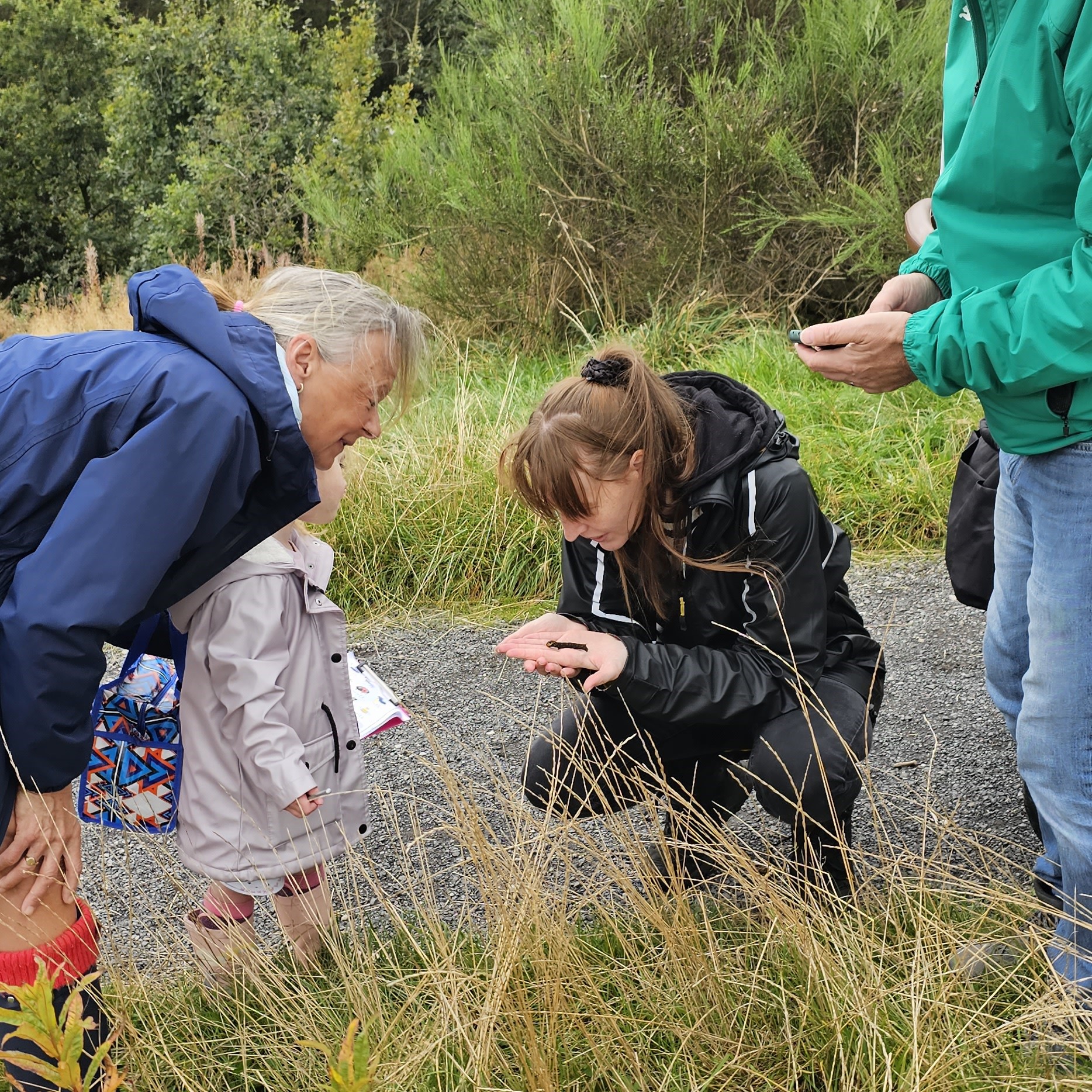
A butterfly transect on the Coppice!

It’s that time of year again when we start our Bee and Butterfly surveys at Peel Park & the Coppice LNR!

The walks will start on Tuesday 5th March 2024, and will take place every Tuesday @1pm (weather permitting) until September 2024. The transects start in Pleck Meadow and go around the whole site, where participants will count and ID every butterfly or bee they see. This data will then be submitted to UKBMS and the Bumblebee Conservation Trust respectively.

The surveys are open to all members of the public, whether you are a butterfly novice or an invertebrate expert. The walk around the site will help you stay fit and get in touch with nature!

Meeting point & Accessibility: Robert will be in the Peel Park Car Park next to the bowling green at the end of Peel Park Avenue, BB5 6UQ at 1pm. Look for Robert in his orange hi-vis! By 1:15pm, the group should arrive at the starting point for the transect, where attendees on foot are welcome to meet. This map details the meeting points as well shows the route taken. Some areas of the walk are not accessible for everyone, but there are alternate routes which individuals may take to avoid these.

The transect route for bee and butterfly surveys!

Date & Time: Every Tuesday @1pm. The survey is subject to weather conditions. Assume that if is below 10°C, there are wind gusts above 20mph, and/or it is raining, that the survey will not go ahead and will be done at another point in the week if feasible.

If you are interested in attending surveys throughout the year, would like more information, or would like to notified if/when a survey is not going ahead, get in touch with Robert:


Tuesday 27th February 2024- Coppicing and Dead-Hedge Repair

On Tuesday 27th February the Hyndburn’s Woodlands Volunteers were at Huncoat East carrying out some coppicing work. Coppicing is an ancient form of woodland management that dates back to at least the Neolithic period of the UK.

Coppicing involves felling a tree back to it’s base to create a ‘stool’. From the stool, new shoots are sent out which eventually grow into thin poles. Poles can be left for a desired number of years to create the desired girth, which can be utilised for a variety of functions from basket weaving, wattle weaving, or even building construction.

During our session, we were coppicing hazel stools around the woods. After felling, some of the product was used to create ‘dragon’s nests’ which are circular barriers erected around the stool to deter browsing animals, such as deer, from consuming the new shoots.

The product was also used to make repairs to the dead-hedge established at Huncoat East a few years ago as an outdoor learning area.

Thank you to our volunteers for helping us maintain this traditional skill and our wonderful outdoor learning area.

Activity funded by Lancashire County Council, Hyndburn Borough Council, and the Windfall Fund.


Saturday 24th February 2024 – Whinney Hill Helpers

On Saturday 24th February 2024 the Whinney Hill Helpers were carrying out a litter pick across the woodland. An extensive amount of litter and fly-tipping was removed from the woodland, including the front bumper of a car. Around 5 bin bags worth of litter were also removed along with the fly-tipping.

Thank you to our volunteers for helping us keep our woodlands clean!

Funded by Lancashire County Council, Hyndburn Borough Council, and the Windfall Fund.

Amphibians spotted at Pleck Meadow’s ponds!

Frog Spawn in Pleck Meadow Pond

After the wetlands on Pleck Meadow were constructed last year, we all waited with baited breath to see whether any frogs, toads or newts would find them suitable enough to call home.

This week our anticipation was quenched when, with the help of some plucky, young, litter-picking volunteers, we spotted some eggs in two of the ponds!

During this time we especially ask that people do not let their dogs in any ponds as they can trample the spawn/tadpoles and also leech pesticides into the water from flea treatments.

If you’d like more information, Froglife runs a #pawsagainstponds campaign and has an extensive article on the subject.

Thank you for keeping dogs out of wildlife ponds.

Share your views on the West Pennine Moors

The PROSPECTS Foundation is holding 2 community events for people to share their views on the West Pennine Moors.  The events are being held on behalf of Natural England, and the results will help to inform future priorities for the area.

The West Pennine Moors is a unique landscape connecting towns across Lancashire and Greater Manchester. Bordering the south side of Hyndburn along Oswaldtwistle Moor, and stretching across to Bolton, Chorley and Ramsbottom, this wild, open space has been enjoyed by locals and visitors for generations. Containing three protected Sites of Special Scientific Interest, the area supports a mosaic of distinctive habitats including moorland, fringe grassland, meadows and ancient woodland. Threaded throughout this remarkable natural landscape is a rich industrial heritage, historic parks and iconic gardens.

The PROSPECTS Foundation wants to capture the wide range of views, needs and opinions about the West Pennine Moors, and find out what this special place means to different people.

The community events will be held on:

  • Tuesday 5th March 2024 at Accrington Eco Train Station, from 7pm to 9pm
  • Tuesday 12th March 2024 at the Dog Inn, Belthorn, from 7pm to 9pm

To book a place email info@prospectsfoundation.org.uk

Lancashire Wildlife Trust will be running similar events outside of Hyndburn.

There’s also an online survey for those who can’t make the events.

Watch Natural England’s video below to find out more about people’s relationships with the West Pennine Moors.

Free Wildflower Seeds & Bombs for EcoFest 2024!

To get ready for EcoFest 2024, PROSPECTS will be handing out free wildflower seeds.

We will be handing them out at events and in our shop at 54 Broadway, BB5 1EW.

Be sure to keep updated on our events by checking our calendar or signing up to our e-newsletter.

The seeds are a mixture of 26 annual and perennial wildflowers. The annual flowers ensure you get some colour the first year and act as ‘nursery’ plants, shielding the perennial plants whilst they establish their roots and get ready to bloom the following year. Perennial plants can live for many years and will continue to flower yearly. Annual plants will die after one year and will only appear next year if they can get their seeds on to bare ground, so you may not see them again after the first year.

To sow them, you can sprinkle them on to any patch of bareground, e.g., in a pot/planter or on your lawn. Lightly tread the seeds in so that they are covered by soil. If the seeds are in Wildflower Bombs (which we will be making at EcoFest 2024!) then you don’t need to cover them in soil as they will already be protected from birds and rodents by a layer of clay. The seeds can cover an area of 0.5m2 but you can spread them as far as you like. To give your mini wildflower meadow the best chance, choose an area of low nutrient soil. Then once the growing season is over, cut the vegetation and remove it from the area. We do this on a bigger scale at Pleck Meadow.

The wildflower seed mixture is Boston Seeds’ Bees and Butterfly Seed Mix. See below for the full contents:

  • Common Agrimony (Perennial)
  • Borage (Perennial)
  • Wild Clary (Perennial)
  • Red Clover (Perennial)
  • White Clover (Perennial)
  • Corn Cockle (Annual)
  • Cornflower (Annual)
  • Ox-eye Daisy (Perennial)
  • Wild Foxglove (Biennial)
  • Common Knapweed (Perennial)
  • Greater Knapweed (Perennial)
  • Purple Loosestrife (Perennial)
  • Wild Marjoram (Perennial)
  • Meadow Cranesbil (Perennial)
  • Musk Mallow (Perennial)
  • Common Poppy (Annual)
  • Ragged Robin (Perennial)
  • Sainfoin (Perennial)
  • Field Scabious (Perennial)
  • Small Scabious (Perennial)
  • Teasel (Biennial)
  • Bird’s-foot Trefoil (Perennial)
  • Kidney Vetch (Perennial)
  • Viper’s Bugloss  (Biennial)
  • Yarrow (Perennial)
  • Yellow Rattle (Annual)

January 2024 Overview at Peel Park & the Coppice LNR

Icy and cold on Peel Park and the Coppice LNR in January 2024!

The Coppice was not as busy as usual this month with bank holidays and frozen weather slowing down work. Particularly the week of the 15th was very snowy and icy which lead to some sessions being cancelled due to safety concerns.

We made up for it other sessions where we continued to clear scrub in the heathland to prevent woodland encroachment, ensuring that heath species like Heather and Bilberry have plenty of light and can continue to thrive. Lowland Heathland is a semi-natural habitat which requires intervention from humans and/or large animals to keep the soils nutrient poor and acidic. These conditions provide a unique habitat which benefits many wildflowers and pollinators. You can read more about the cultural and biological importance of heathland on the Wildlife Trust website.

Another detrimental species to heathland are Invasive Non-Native Species (INNS.) INNS can spread and dominate very easily as they don't have many natural predators in their new environments, this can negatively impact our native species. Rhododendron in particular can be incredibly invasive. It can completely take over an area of land and stop all light from reaching the ground which makes it impossible for ground flora to thrive. We caught this cheeky one growing on the edge of a woodland near the heath. We quickly dug it up and have removed it off-site. Montbretia (a.k.a Crocosmia) is another garden escapee which can easily dominate a woodland floor. This particular patch had grown a thick mat of bulbs that went 20cm deep! Thank you to our volunteers who put in a tremendous amount of effort into removing INNS and protecting our native species.

On Saturday 20th January, our very own TreeACTION project hosted a session on the site to plant a new hedgerow to enforce the border to Pleck Meadow. Initially, planting was halted as the ice had frozen our Hawthorn into one solid block! Fortunately, our Holly was still ready to go and we managed to plant 60 of them. On Monday 12th February, during the February half-term, the remainder of the hedgerow will be planted, let us know if you'd like to help out!

PROSPECTS had the pleasure of hosting work experience for Lancashire Adult Learning's Railway learners. It strikes as odd at first for a railway worker to need work experience at the Coppice, but all train tracks suffer from overgrown vegetation which are handled by a Deveg (De-vegetation) team. We have plenty of overgrown vegetation at the Coppice so it's actually the perfect training site! Thank you to the Lancashire Adult Learning team for the assist!

Volunteer Work in January

ACCROSS College Railway Learners
Eyeing up a Rhododendron!
Removing a huge chunk of Montbretia (Crocosmia) bulbs!

(Most) Moths don't like the cold.

PROSPECTS set up the first monthly moth trap of 2024 up in Pleck Meadow. To no-one's surprise, it was empty the next morning. Most insects are not known to thrive in the winter time, however, there are a few moths which like to stick around. The aptly named Winter and December moths (pictured below) are quite tolerant of the cold, building up fats and anti-freeze chemicals in their bodies to stave of frost! And on milder nights you may get appearances from Mottled Umber, The Chestnut and Satellite moths.

Alas, it must have been too cold the night of the January 12th as no moths could be bothered to visit, (We don't blame them!) Fingers-crossed the trap gets some action in February as some early species start to become active such as the Pale Brindled Beauty, Satellite, and Spring Usher.

Project Officer, Robert Gabryszak, will be continuing to set up the trap every month to track the progress of moths throughout the year. Public sessions will start in May when the trap is expected to be more full.

To express your interest, contact him at robert.gabryszak@prospectsfoundation.org.uk.

Some cold-loving moths seen at the Coppice!

December Moth
Satellite Moth
Autumnal Moth

Frost and Ice at the Coppice.

Winter brings some lovely scenery at the Coppice, the leafless trees make it easier to spot a lovely array of wild birds!

The snow cancelled a lot of sessions in the past two months but it has made for some lovely walks.

Coal Tit
Song Thrush
Snowy Pleck Meadow!
Blue Tit
Robin

Thanks to our funders and partners:

Our work at Peel Park & the Coppice LNR wouldn't be possible without the permission of its use by Hyndburn Borough Council and the funding from LEF, Lancashire Wildlife Trust, & Windfall Fund.


Windfall Fund

Soft fruit pruning at Miller Fold

This week at Miller Fold we gave our red currant and black currant bushes their winter prune! We started by taking off any dead or low hanging branches, then picked around 10 stems on each bush with the most fresh growth to keep. All of the other stems were pruned to two shoots to allow them to regrow. Hopefully this means that in the summer the currents will have more light and ripen quicker, so more tasty fresh fruit for us and the birds!

Over tea and biscuits, we also decided which veg to plant in the coming year, and created a planting plan, making sure to rotate the veg groups round so that no bed is leeched of nutrients. Everyone is welcome to get involved at Miler Fold community garden. Please email sonja.bottomer@prospects foundation.org.uk or ring 07709710204 if you are interested to find out more.

Tuesday 23rd January 2024 – Cotoneaster and Bamboo Removal

On Tuesday 23rd January the Hyndburn’s Woodlands Volunteering were back at Whinney Hill carrying out some Invasive Non-Native Species (INNS) management.

This time, we were tackling Small-leaved Cotoneaster which had likely escaped from neighbouring allotments, this shrub has a tendency to spread and grow very large, thus occupying woodland space that native species could occupy. Removal is a large job, that first requires lopping the shrub into small, manageable pieces. Once removed, the extensive roots need to be dug out in their entirety.

A new INNS was then tackled, bamboo, which had escaped from nearby gardens. For now, this involved simply cutting the shoots down as close to the ground as possible. The cut shoots have been put to good use for various activities.

Thank you to our hardworking volunteers who held fast through the poor weather to help keep our woodlands native.

Funding provided by Lancashire County Council, Hyndburn Borough Council, and the Windfall Fund.

Friday 12th January 2024 – Rishton Art Installation

On Friday 12th January 2024 Hyndburn’s Woodlands Officer, Brandon Cherry, assisted with the installation of an art piece at Rishton Railway Station.

This job took multiple days and first involved creating a sturdy network of supporting frames to hold the artwork, which itself required the digging of multiple, measured, holes to hold them.

Art pieces were then glued onto each supporting frame in sequence. We are very happy with the final piece and hope visitors to the station are too.

Habitat Boxes at Peel Park & the Coppice LNR

Birds & Bats Welcome at Peel Park & the Coppice LNR

Lots of cosy new homes for birds & bats as well as comfy seats at Peel Park & the Coppice LNR!

In autumn 2023, WOODY C.I.C. created and installed 30 bird boxes and 10 bat boxes across the site. A variety of different openings for the bird boxes were made so that they will benefit lots of different bird species like Blue Tits, Marsh Tits, Great Tits, sparrows, Nuthatches, Robins, Wrens, Song Thrust, & more! We will be keeping a close eye on them to see if they have any inhabitants in the spring! The bat boxes will be suitable for both species of pipistrelles, Common and Soprano as well as other species that are present in the area such as Natterer's, Noctule, and Brown Long-eared. All bats are listed as vulnerable and are protected by UK law; inhabited boxes can only be handled/opened by a licensed bat worker. It can take a year or two for a bat box to become inhabited so we will need to be patient but it will be very worth it to see the bats flourish on the site!

They also built and installed a Barn Owl box near Pleck Meadow. The box will be able to house a Barn Owl and her chicks, we will be paying close attention to see if the house becomes occupied! It has been installed overlooking the meadow so that the owl will have plenty of open space for hunting.

WOODY C.I.C. has repaired 5 benches across the site and installed two new ones along the new Pleck Meadow path allowing for more areas to rest your feet! In particular, the path along Pleck Meadow is steep in some areas so they have been placed in prime spots so you can rest and catch your breath if need be.

The wood used to make all of these was sourced from Larch trees that were felled on-site to benefit native Oak in a management method knows as "halo-thinning." The Larch and the Oak were planted near each other because Larch is a good 'nurse' species as it grows faster than the Oak which is more susceptible to weather damage. The Oak are shielded by the taller Larch so that they can grow to a size which won't be as vulnerable to the environment. Now the Larch have done their job they can be felled and used to improve the site in other ways whilst the Oak can now grow bigger to fill the gaps left by the Larch. The Larch were felled in autumn and winter 2022/23 but the timber needed time to cure before it could be made into habitat boxes/benches or else the wood could warp.

This work was funded by the HEAL Project which ended in March 2023. A big thank you to the Green Recovery Challenge Fund which made this possible!

Bird and Bat box installation:

New and repaired benches:

Installing the Barn Owl box:

Wind turbines at St Nicholas’

In the last week before Christmas Sonja visited St Nicholas’ CE Primary School in Church to run a session on sustainable energy with the Year 5 class, which fits into their natural resources project. The students worked in small groups to make model wind turbines and went outside to try them out in the wind. They also learnt about Hyndburn Windfarm and were surprised that it can power 68% of Hyndburn’s dwellings! We finished with a discussion over whether St. Nicholas’ should have a wind turbine, with some very practical and insightful arguments.

Thank you to St. Nicholas’ for inviting Prospects to run a session. Hopefully the class will be able to visit Hyndburn windfarm in the summer to build on their learning. We run sessions with schools and community groups across Hyndburn. Please contact Sonja (sonja.bottomer@prospectsfoundation.org.uk) to get in touch.

Sustainable Christmas craft sessions

For the past month Prospects have been running free weekly Christmas craft sessions to encourage the local community to have a more sustainable Christmas. These were organised by the Outdoor Learning officer, Sonja, with support from different Prospects project officers. All the sessions were fully booked and hugely popular.

In the first session Robert joined us to make beeswax wraps, which are a reusable plastic free substitute for cling film and make a great Christmas gift. These are very easy to make at home too and make a fun holiday craft. Next was wreath making, led by Helen, the Community TreeACTION officer. We used locally sourced willow, Scots pine, Leyland cypress, holly, and ivy, making a sustainably door decoration.

The week after we made a selection of plastic- free Christmas tree decorations to showcase sustainable decorations, but also to help decorate our entry to the Ernest Street Babtist Church Christmas tree festival. The festival featured local charities and organisations who decorated their trees with a ‘who we are’ theme. Our wood cookie baubles and popcorn garland definitely stood out!

This week we finished off the sessions with Brandon leading a wooden reindeer making session using hazel coppice from Hyndburn’s woodlands. The attendees used handsaws, power drills, whittling knives, secateurs, and loppers to make their reindeer from scratch and they all looked brilliant!

Thank you to everyone who came along to the sessions and joined in with the festivities! And to Ernest Street Baptist Church for inviting us to the Christmas tree festival. Watch this space for more session next year. Seasons greetings everyone!

St Wulstan’s stand against soft plastics

St. Wulstan’s year 5/6 class have been collecting clean soft plastics to take back to supermarkets. They pack the single use plastic packaging in bread bags to compress the plastic as much as possible which saves space when the plastic is transported to the recycling plant. Outdoor learning officer, Sonja Bottomer, has been working alongside the students and Bob Turner of the Laudato Si Movement to write campaign slogans on the bread bag blocks to encourage others to take action.

Last week eight students from the St. Wulstan’s eco-committee took these bread bags to Morrisons in great Harwood to be recycled. They stopped off at Turtle Bee zero waste shop in the high street to experience a plastic-free way to shop and helped refill a customer’s groceries!

Some of the bread bag blocks that the St Wulstan’s pupils have made, and instructions on how to make them, are currently being displayed at Turtle Bee to encourage recycling. Keep up the good work St Wulstan’s!

You can find your nearest soft plastic supermarket collection point here on the recycle Now website: https://www.recyclenow.com/recycle-an-item/plastic-bags-and-wrapping?postcode=BB6%207JQ#locator

Over 700 Trees Planted by the Community

National Tree Week Sessions

This year’s National Tree Week (NTW) was celebrated by dedicated volunteers from across Hyndburn by helping to plant 720 trees at designated sites in Accrington and Oswaldtwistle.

A series of four community tree planting sessions were held from Sunday 26th to Wednesday 29th November, facilitated by the PROSPECTS Foundation.

In honour of the 50th anniversary of the famous ‘Plant a Tree in 73’ campaign, this year’s NTW introduced the ‘Grow a tree in 23’ initiative. 18 members of the local community planted the trees at well-known local greenspaces including Bullough Park, Woodnook Vale Local Nature Reserve, Peel Park & the Coppice Local Nature Reserve and Harvey Street in Oswaldtwistle. A huge variety of tree species were planted such as English Oak, Hazel, Hawthorn and Spindle.

The full News article from Hyndburn Borough Council can be found HERE

Budding young tree planters Haris and Iris at Bullough Park on Sunday 26th November 2023


If you would like to help with future tree planting activities or get involved further, contact TreeACTION Officer Helen helen.earnshaw@prospectsfoundation.org.uk

Peel Park Pollinator Survey Results 2023

The results are in!

Throughout the year, PROSPECTS has been carrying out pollinator surveys on Peel Park and the Coppice LNR. Measuring the abundance and distribution of species is vitally important for monitoring species health, climate change, and the effectiveness of conservation actions. Nationally, surveys provide data which allows climate scientists, conservationists, and insect experts to get a greater understanding of the situation across the UK. Locally, the surveys have laid the foundations for what we hope will be a continuous study at Peel Park and the Coppice LNR. In the short term they will show us the current biodiversity of the site; in the long term they will show us how effective conservation efforts on the site have been.

The surveys have been open to the public as a way to engage people in citizen science and inspire people to take an interest in the environment.

Weekly Butterfly UKBMS transects were started in June 2022 by Chloe Jameson. Monthly moth trapping events and BeeWalk transects were started in April 2023 & July 2023, respectively, by Robert W.S. Gabryszak. All surveys are set to continue until at least June 2024 with the butterfly transects and BeeWalks going on hiatus during the winter.

Here are the results (scroll down to see all the photos!):

What do these results show?

Overall, the number of butterfly records has gone down from 2022 to 2023. This could be due to a number of factors. In particular the weather this year and last year may have played a big part, high heat last August was suspected to be detrimental to pollinators this year, and the hot, dry, June this year may have also affected butterflies. A difference in recorders may also play a part with all of 2022 and early 2023 records having 2 recorders whilst later 2023 records mostly having 1 recorder. June records also usually show a large amount of Ringlets, preliminary data from UKBMS shows that Ringlets have had a huge decrease this year.

The moth and bee records can't tell us a lot as they are the only first year, however many have not been officially recorded in the past so it lays a great foundation for survey work in the future.

Moth data is severely lacking with the last species list for the site only containing 6 moth species. We now have plenty more to add to that list including at least 30 species that have not been officially recorded in the Accrington area! (Lancashire Moth Atlas 2020)

Moth surveys will continue throughout the winter months to catch the odd winter-loving moth, but butterfly and bee surveys will be on hiatus until spring 2024! If you're interested in participating or would like more information, email robert.gabryszak@prospectsfoundation.org.uk, call 01254 230348, or pop into our Environment Centre at 54 Broadway, Accrington, BB5 1EW.

What now?

The survey results can tell us what sort of management might be beneficial and what sort to avoid. For example, with the appearance of Holly Blue butterflies on the site, we can take extra care when working around their larval foodplants: Holly and Ivy. A lack of data can also help, Green Hairstreak has been recorded in the past but has not been spotted this year, we can continue our heathland management to promote Bilberry which they depend on. Dark Green Fritillary butterflies can be spotted across the Accrington Bypass on Hameldon Hill but haven't been found on the Coppice. We could plant violets, their larval foodplant, to encourage them to visit the site and boost their population.

Certain moth species like the Grey Shoulder-knot are uncommonly recorded in Lancashire so it is exciting to know that they are on the site! These moths overwinter as adults so require plenty of brash material to hide away in on particularly cold and rainy days. So by continuing to leave dead wood on the site in the form of brash piles and dead hedging we can support this species and other pollinators with similar behaviours as well as solitary bees who use brash for creating their nests.

We will use the results to tailor our management plan for the site in 2024, stay tuned for more information.

If you're interested in assisting with conservation management or would like more info on surveys, email robert.gabryszak@prospectsfoundation.org.uk, call 01254 230348, or pop into our Environment Centre at 54 Broadway, Accrington, BB5 1EW.

All photos taken at Peel Park and the Coppice LNR, credit to Robert W.S. Gabryszak, Chloe Jameson, and Levi K Davies.

55 Macro Moth Species

Here are the following macro moth species that have been recorded.
Naming explanation, for example we'll look at "03.002 - 2023 07 15 - Common Swift"
  • 03.002: The ABH number is a 5 digit code which, put simply, allows them to be ordered taxonomically. Therefore showing how closely related each species is to one another. 
  • 2023 07 15: The date the photograph was taken and/or the moth was recorded. In this case, we were unable to take a photo before the moth flew away.
  • Common Swift: The common name of the moth as opposed to their scientific name.
03.002 – 2023 07 15 – Common Swift
03.003 – 2023 07 15 – Map-winged Swift
54.009 – 2023 06 24 – Narrow-bordered Five-spot Burnet
66.001 – 2023 10 27 – December Moth
66.010 – 2023 06 24 – Drinker
69.003 – 2023 05 20 – Poplar Hawk-moth
69.016 – 2023 07 15 – Elephant Hawk Moth
70.054 – 2023 06 01 – Silver-ground Carpet
70.093 – 2023 06 24 – Barred Straw
70.097 – 2023 09 16 – Common Marbled Carpet
70.109 – 2023 10 14 – Autumnal
70.121 – 2023 07 15 – Scallop Shell
70.183 – 2023 06 24 – Common Pug
70.226 – 2023 06 24 – Brimstone
70.236 – 2023 09 15 – September Thorn
70.244 – 2023 10 27 – Feathered Thorn
70.252 – 2023 06 24 – Peppered
70.256 – 2023 10 27 – Mottled Umber
70.278 – 2023 06 24 – Common Wave
70.280 – 2023 06 24 – Clouded Silver
71.018 – 2023 08 15 – Lesser Swallow Prominent
71.021 – 2023 08 15 – Coxcomb Prominent
72.002 – 2023 09 16 – Straw Dot
72.024 – 2023 10 27 – Ruby Tiger Caterpillar
72.045 – 2023 07 15 – Common Footman
72.061 – 2023 09 16 – Pinion-streaked Snout
73.015 – 2023 08 19 – Silver Y
73.045 – 2023 06 24 – Knot Grass
73.063x – 2023 08 15 – Copper Underwing agg
73.123 – 2023 09 16 – Rosy Rustic
73.147 – 2023 06 24 – Small Dotted Buff
73.158 – 2023 05 20 – Rustic Shoulder-knot
73.162 – 2023 06 24 – Dark Arches
73.169 – 2023 08 15 – Common Rustic
73.176 – 2023 06 24 – Middle-barred Minor
73.190 – 2023 11 18 – Yellow-line Quaker
73.202 – 2023 10 27 – Grey Shoulder-knot
73.210 – 2023 10 27 – Satellite
73.216 – 2023 08 15 – Dun-bar
73.247 – 2023 04 13 – Powdered Quaker
73.249 – 2023 04 13 – Hebrew Character
73.254 – 2023 08 15 – Antler
73.291 – 2023 07 15 – Common Wainscot
73.293 – 2023 06 24 – Smoky Wainscot
73.301 – 2023 06 24 – Shoulder-striped Wainscot
73.317 – 2023 06 24 – Heart and Dart
73.328 – 2023 06 24 – Flame
73.333 – 2023 07 15 – Ingrailed Clay
73.338 – 2023 08 15 – True Lover’s Knot
73.342 – 2023 06 24 – Large Yellow Underwing
73.343 – 2023 07 15 – Broad-bordered Yellow Underwing
73.345 – 2023 08 15 – Lesser Broad-bordered Yellow Underwing
73.357 – 2023 08 18 – Square-spot Rustic
73.361 – 2023 07 15 – Double Square-spot
73.365 – 2023 09 16 – Autumnal Rustic

6 Micro Moth Species

Here are the following micro moth species that have been recorded.

Micro moths are, in general, smaller than macro moths but some larger species do occur. A more accurate way to describe them is that they are more primitive types of moth. They aren't as complex as macro moths, and some of them still have jaws!

04.045 – 2023 04 12 – Stigmella aurella
45.030 – 2023 06 24 – White Plume
49.110 – 2023 07 15 – Agapeta Zoegana
49.156 – 2023 06 24 – Marbled Orchard Tortrix
49.294 – 2023 06 24 – Notocelia uddmanniana
63.038 – 2023 07 15 – Mother of Pearl

19 Butterfly Species

Here are the following butterfly species that have been recorded.
57.005 – 2023 07 07 – Small Skipper
57.009 – 2023 06 23 – Large Skipper
58.003 – 2023 06 23 – Orange-tip
58.006 – 2023 07 19 – Large White
58.008 – 2023 08 03 – Green-veined White
58.007 - 2023 08 03 - Small White
59.003 – 2023 06 06 – Speckled Wood
59.005 – 2023 07 13 – Small Heath
59.010 – 2023 08 08 – Meadow Brown
59.011 - 2023 08 08 - Gatekeeper
59.023 – 2023 06 26 – Red admiral
59.024 – 2023 10 10 – Painted Lady
59.026 – 2023 08 22 – Peacock
59.027 – 2023 07 13 – Small Tortoiseshell
59.031 – 2023 07 15 – Comma
61.004 – 2023 07 19 – Purple Hairstreak
61.004 – 2023 08 10 – Small Copper
61.012 – 2023 08 03 – Holly Blue
61.018 – 2023 07 07 – Common Blue

8 Bee Species

Here are the following bee species that have been recorded.
2023 08 08 – Honey Bee
2023 09 21 – Common Carder
2023 07 13 – White-tailed Male
2023 07 13 – Tree
2023 07 13 – Red-tailed Male
2023 05 12 - Orange-tailed Mining
2023 04 25 – Tawny Mining Male
2023 08 08 – Buff-tailed

Welcome to our new Outdoor Learning Officer

We are pleased to announce that Sonja Bottomer has joined the Prospects Team as our new Outdoor Learning Officer.

The Outdoor Learning Project has come about as a result of an initiative funded and promoted by the Ernest Cook Trust, and supplemented by the Windfall Fund. Sonja’s role is all about educating people about the natural environment whilst also raising awareness of climate change. the project will run for 18 months until the end of April 2025.

Sonja will work with Hyndburn schools, community groups and individuals to deliver exciting and engaging environmental activities across the borough. She will also be running weekly food growing sessions at Miller Fold allotments and helping schools and groups create green spaces for outdoor learning. Sonja’s role is to inspire the people of Hyndburn to get out into nature and live a more environmentally friendly lifestyle. She is a firm believer that if we all make small everyday changes, we can make a massive impact on climate change.

To find out more, get in touch by emailing sonja.bottomer@prospectsfoundation.org.uk or phone the Prospects office on 01254-230348.

First Memorial Park Session

On Wednesday 15th November we had the first Memorial Park volunteering session! Volunteers used hand tools to cut back and fell Rhododendron and Cherry Laurel shrubs to improve the biodiversity value of Roundwood! The team made a tremendous start! Around 6 shrubs were cleared with the arisings being moved closer to the road for later collection.

Now that the initial ‘break in’ has been completed more of the woodland has been opened up for future sessions, making it easier for more of the non-native shrubs to be removed.

Rhododendrons put a type of poison in the ground which eliminates other plants thereby reducing competition, promoting it’s own growth. Cherry Laurel produces a fruit which while toxic to humans, is edible for some birds, meaning they can spread easily around the neighbouring sites via seed dispersal.

PROSPECTS would like to thank everyone who attended the first session! Your work is greatly appreciated and we look forward to seeing you in future sessions, full details are available on our events calendar, or to find out more email brandon.cherry@prospectsfoundation.org.uk

Pleck Meadow 2023 Annual Cut

Pleck Meadow gets its 2nd annual trim!

On Monday 11th, September 2023, Pleck Meadow at Peel Park and the Coppice LNR had its 2nd annual cut!

Annual cut & rakes are an important part of wildflower meadow management as it reduce nutrients in the soil which overtime will ensure that vigourous grasses and invasive species do not overrun an area. A wider variety of short and slow-growing plants can thrive as a result, increasing biodiversity in the meadow as more kinds of plants means more kinds of pollinators!

In a natural ecosystem, plants are removed by herbivores which can spread the nutrients across a landscape as they migrate, creating a range of different habitats including areas of nutrient poor soil that can support wildflowers. In the UK, a majority of our native large herbivores are gone and the ones remaining have fragmented habitats which disrupts their migration. This means that the natural spread of nutrients can not occur, resulting in an accumulation of plant growth in an area that builds up over time and creating an area of high nutrient soil which allows plants like Creeping Thistle, Creeping Buttercup, docks, and Stinging Nettle to dominate.

Habitats like this can still be important for wildlife (Stinging Nettles act as the food plant for Comma, Peacock, Red Admiral and Small Tortoiseshell butterflies,)  but since 98% of wildflower meadows in the UK have disappeared in the last century, it's vital we transform areas of high nutrient density into to spaces for a vast array of native wildflowers & pollinators to thrive.

So with a severe lack of grazing animals on hand, we settled with a tractor as the next best thing! The compact tractor we got was able to cut and remove a large area of the meadow over the course of a day. We have left areas of longer vegetation around the meadow to give small mammals and invertebrates areas to shelter over winter as well as provide cover for birds and deer.

Stay tuned for updates on the meadow as PROSPECTS will be sowing wildflower seeds and planting wildflower plugs to encourage a wider diversity of plants to spread. The goal is to perform an annual cut in 2024 as well.

If you would like to get involved in meadow management on Peel Park & the Coppice LNR, then please email robert.gabryszak@prospectsfoundation.org.uk or call 01254 230348.

A huge thank you to the Lancashire Wildlife Trust, LEF, and Windfall Fund for making this project possible.


Scroll to top