Hyndburns Woodlands

Martholme Greenway Dawn Chorus Walk

We had a great Dawn Chorus walk along Martholme Greenway on Saturday morning (15th May) despite the rain! It was led by Dave Bickerton and we spotted 36 different bird species in total – well worth getting up for! We walked through Copy Wood and both ways along the Greenway and onto Martholme  viaduct. Many thanks to Dave for sharing his expertise.

Here’s the list of species Dave identified from their song:

Robin
Wren
Jackdaw
Chaffinch
Blackcap
Wood pigeon
Crow
Blue tit
Goldfinch
Blackbird
Dunnock
Magpie
Lesser black backed gull
Chiffchaff
Longtailed tit
Willow warbler
Garden warbler
Bullfinch
Coal tit
Lapwing
Redpoll
Greenfinch
Great spotted woodpecker
Mallard
Goosander
Whitethroat
Song thrush
Great tit
Swallow
Oystercatcher
Stock dove
House martin
Treecreeper
Starling
Collared dove
House sparrow


Habitats & Heritage Project Officer Recruitment

We’re currently recruiting for a project officer to run our ongoing Habitats & Heritage programme.

If you’re interested please visit our Job Opportunities page where you’ll find all the documents and information you’ll need to submit an application.

The deadline for applications is 5.00pm on Bank Holiday Monday 31st May 2021.

Interviews will take place on Thursday 10th June.


Whinney Hill Dawn Chorus Walk

We held our first Dawn Chorus Walk early on Sunday (2nd May) morning up at the Whinney Hill woodlands in Accrington.

The walk was led by Dave Bickerton and we had five people attending under the covid regulations.

It was a lovely morning and all who attended seemed to enjoy it.  We also learnt how to identify some birds from their birdsong.


Below is a list of birds that Dave identified, and where on the site:

Main path from Cricket Club to Livingstone RoadSome photos taken on the day by Dot

Wren
Blackbird
Jay
Great Tit
Blue Tit
Song Thrush (serenading from a tree top)
Robin
Dunnock
Great Spotted Woodpecker (flying above)
Blackcap
Chiffchaff
Bullfinch

Going up the 59 steps
Willow Warbler
Whitethroat

On the top meadow
Garden Warbler
Redpoll

By the Pond
Long tailed tits
Goldfinch

We also saw 2 Roe Deer, a black rabbit and a cat!

Winter Tree Identification 3

Here is the third of a series of posts to help you identify some common trees in Winter. To see the others  click here: Winter Tree IdentificationWinter Tree Identification 2

Winter tree identification is based on the twigs, buds and bark so here is a simple guide to the twigs of some trees you should see in a woodland: Twig ID or look online for Winter Tree ID Guides.

ASH 


Ash can grow up to 35m tall. It is usually found in woods but can also be seen as individual trees in parks and fields. It is currently a common tree but due to Ash Dieback disease it is now under threat. The ends of it’s shoots and branches tend to curl up and twigs and branches grow in opposite pairs.


The bark is pale brown to grey and tends to fissure as it gets older. It is often found with lichens and mosses growing on it. The bark can be mistaken for other trees but it’s distinctive buds are the main clue to it’s identity.


The tree has smooth, slightly flattened twigs, which are green or grey. The buds are a very distinctive black colour and are in pairs on the twig with a large bud at the end, often surrounded by smaller buds.


HAWTHORN


Hawthorn is a smaller tree which can grow to 15m but is often found in hedges as a more shrubby plant. It’s dense thorny foliage makes it an excellent hedge plant and shelter for nesting birds.


The bark is brown-grey and knotted and fissured, although in younger trees it tends to be grey and smoother. It has thorns on it’s twigs so can be confused with Blackthorn. You may see red fruits on it and also dead leaves which are heavily lobed.


Hawthorn has small buds which usually emerge from the base of a thorn and are sometimes on the end of wrinkled shoots. This helps tell it apart from Blackthorn which tends to have longer thorns and buds which grow from the thorn.


So get out and visit local woodlands, see what trees you can find and we’ll be putting some more tree ID tips up soon. We are developing a woodland website for Hyndburn and are interested in your local wood so if you’d like to take pictures of the trees you see or tell me about your local wood then you can email me at roger.plum@prospectsfoundation.org.uk and for more information on how to get involved with Prospects and activities you can do, then visit our website www.prospectsfoundation.org.uk

Winter Tree Identification 2

Here is the second of a series of posts to help you identify some common trees in Winter. To see the first post click here: Winter Tree Identification

Winter tree identification is based on the twigs, buds and bark so here is a simple guide to the twigs of some trees you should see in a woodland: Twig ID or look online for Winter Tree ID Guides.

BEECH 


Beech is a large tree which can grow up to 50m tall. It is usually found in woods but is also used as a hedge plant. The bark is smooth, thin and grey and even in older trees doesn’t become very rough. It has dense leaf cover in the Summer so the ground below Beech trees is often bare of other plants and in Winter has a thick carpet of dead leaves and Beech Mast, which are the fruits of the tree.


Beech buds are long and thin and stick out from the twig. Beech can be confused with Hornbeam as they have similar bark and buds but the buds on a Hornbeam grow along the twig and are not such a copper colour.


During the Winter Beech trees can hold onto their dead leaves and this can be seen most in young trees or hedgerow trees.


SILVER BIRCH


Silver Birch is a distinctive tree, which can grow to 20m high. It is found in woodlands, heathland, open ground and parks. With it’s silvery white bark it stands out and has elegant drooping branches with slender purple twigs. Some trees may also have catkins on the twigs.


Mature trees still have the silvery colour but the lower trunk develops dark diamond shaped fissures, which can be thick and corky. The buds of Silver Birch are small, 4-5mm (0.2 in), and egg-shaped.  But due to the unique features of the rest of the tree these aren’t usually needed to identify it.


So get out and visit local woodlands, see what trees you can find and we’ll be putting some more tree ID tips up soon. We are developing a woodland website for Hyndburn and are interested in your local wood so if you’d like to take pictures of the trees you see or tell me about your local wood then you can email me at roger.plum@prospectsfoundation.org.uk and for more information on how to get involved with Prospects and activities you can do, then visit our website www.prospectsfoundation.org.uk

Winter Tree Identification

Winter is here and at this time of year trees can look sparse but with a few simple tips you can identify some common trees in our woodlands. Woodlands are a great place for a Winter walk. They are more sheltered and even at this time of year have wildlife that you can see. Birds are about looking for food to get them through the winter, trees can have fruits and seeds and plants such as ferns and mosses are visible along with Christmas related plants such as Holly, Ivy and Mistletoe. The low Winter sunshine casts long shadows and lights up the bare trees, giving different views of familiar woods. As the current government guidelines restrict movement not everyone is lucky enough to have woodlands near enough that they can walk to, although in Hyndburn there are a number of woodland sites that are near enough to the towns to be visited. More information about Hyndburn’s Woodlands can be found here: Hyndburn’s Woodlands and local walks can be found here: Discover Hyndburn. This is the first of a series of posts to help you identify some common trees.

Winter tree identification is based on the twigs, buds and bark so here is a simple guide to the twigs of some trees you should see in a woodland: Twig ID or look online for Winter Tree ID Guides.

HAZEL 


Hazel is a common tree in woods and hedges. It is often multi-stemmed and grows to a maximum height of 15m. The bark is shiny and silvery or light brown and has horizontal lines or ‘breathing pores’.
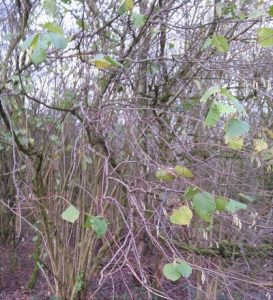


Especially in early Winter you may still see some of the leaves on the tree, either still green or usually yellow. They are quite large and roughly circular or heart shaped with a pointed end. If not on the tree then you may see them on the ground below, you may also see hazelnuts on the floor which is another clue.


During the Winter Hazel produce male and female flowers. The female flowers are small and red but the male flowers are long yellow catkins which can be seen on the tree. The twigs have buds which are short and blunt with green red scales and young shoots are hairy.


OAK


Oak trees can grow to 40m tall and are a vital habitat throughout the year for a variety of birds and insects. Young oaks have smooth, silvery-brown bark. As trees age, this grows rugged and is covered in finger-shaped platelets with deep fissures in between. Young oak bark can be confused with other trees so you need to look at the twigs to identify them.


Oak twigs have a distinctive cluster of brown buds at the end of the twig, other individual buds are spread down the twig in a spiral pattern.
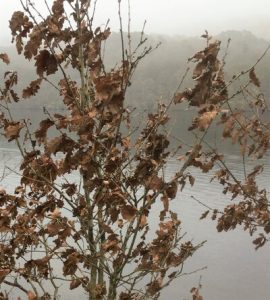


Oaks can keep their leaves in Winter, although dead and brown they have the distinct oak leaf shape. They are easier to see on young trees but another clue for an oak is to look on the floor for leaves, acorns and acorn cups.


So get out and visit local woodlands, see what trees you can find and we’ll be putting some more tree ID tips up soon. We are developing a woodland website for Hyndburn and are interested in your local wood so if you’d like to take pictures of the trees you see or tell me about your local wood then you can email me at roger.plum@prospectsfoundation.org.uk and for more information on how to get involved with Prospects and activities you can do, then visit our website www.prospectsfoundation.org.uk

Signs of Spring 3

Here are three more woodland related plants you may come across on your daily exercise. As always please follow government rules and don’t travel to exercise and maintain a safe distance from others. Please search online to get better images of the plants.

Greater Stitchwort                                     Hazel                                                         Wild Garlic


Greater Stitchwort can be found in deciduous woodlands, hedges and verges. It is beneficial to many flying insects, including bees and butterflies as a Spring nectar source. It is also the food plant of several moths. It has an explosive seed dispersal system and in late Spring when the seed capsules ripen it can be heard popping. As it’s name suggests it was once used to treat a stitch (the pain in the side felt when exercising) and was also known as the Poor Man’s Buttonhole presumably because it was used for this purpose. Some stories say if you pick it you will start a thunderstorm and in Cornwall it was believed to be the property of Pixies and picking it would anger them. It has a number of other names including Snapdragon, Star of Bethlehem and Stinkwort.

Hazel is a very useful tree found in woodlands and hedges. It can grow up to 12m in height but traditionally it was coppiced (cut down when 10 to 12 years old) and left to regrow. The coppiced wood has a variety of traditional uses as it can be twisted or knotted, including hurdles, thatching spars, furniture and water-divining sticks. It can also be used to make charcoal and is also valued for it’s nuts or cobs. Hazel grows both male and female flowers and in Spring the male flowers appear as yellow catkins before the leaves and the female flowers are small and bud like. The leaves are bright green when they appear and grow to become large and oval and have a hairy underside which makes them soft to touch. The leaves provide food for a variety of moth caterpillars and coppiced Hazel trees provide shelter for ground nesting birds. The nuts provide food for a range of birds and animals and are particularly associated with Dormice. Hazel was known as a magical tree and a Hazel rod was meant to protect against evil spirits as well as being used as a wand and for water-divining. In some parts of England hazelnuts were used as charms or held to ward off rheumatism. In Ireland it was known as the tree of knowledge and in medieval times was a symbol of fertility.
Wild Garlic is also known as Ramsons and at this time of the year can be found covering the floor of woodlands and verges. The long pointed leaves fill the air with a garlic smell and the small white flowers rise up on a long stem. As with some other flowers mentioned before Wild Garlic is an indicator of Ancient Woodland so if seen in a hedge or verge could indicate that there was once a woodland present. As an early flower Wild Garlic is important for bees and other pollinators. It is a popular plant to forage and the leaves can be used raw in salads, blanched and used like spinach or made into pesto or soup. They are best used before the flowers appear. The flowers can be eaten raw in salads. The bulbs are not large like commercial garlic but can be a food source for pigs and boars. The bulb was also used in tonics to help cure rheumatism and high cholesterol.

Signs of Spring 2

Here are three more woodland related plants you may come across on your daily exercise. As always please follow government rules and don’t travel to exercise and maintain a safe distance from others. Please search online to get better images of the plants.

Dog’s Mercury                                                  Primose                                                    Wood Anemone


Dog’s Mercury is a medium height woodland plant which is easily overlooked due to it’s small flowers but can cover large areas of ground. It is an Ancient Woodland indicator plant which means that it can be used to determine if a wood is long-established, so if seen in a hedge it can indicate that this was once part of a woodland. This is because it spreads due to underground rhizomes, horizontal underground stems,  so a large area of it shows the area was wooded for a long time even if the wood it developed in has now gone. It is known as Dog’s Mercury as Dog traditionally meant bad or not as good, so this was used to distinguish it from other members of the Mercury family as it is poisonous and therefore not as good. It also has an unpleasant decaying smell. All parts of it are poisonous and can induce vomiting, diarrhoea and even death. Despite this it’s leaves are a food source for some beetles, weevils and molluscs.

Primrose is a bright indicator of Spring and an early bloomer in woodlands. Many woodland flowers bloom early to take advantage of the Spring sunlight before the trees develop full leaves and the woodland floor is shaded. They are a nectar source for pollinators in particular Brimstone and Small Tortoiseshell butterflies. Traditionally they are a symbol of eternal love and in Irish folklore Primroses in the doorway protected from fairies which in traditional folklore are not the friendly folk we think of now!

Wood Anemone is another indicator of Ancient Woodland due to is slow growth. They can be seen covering the floor of old deciduous woodland and hedgerows. Hoverflies are thought to be particularly attracted to it and to be the main pollinator for it.  They are named after the Greek god Anemos who is said to send them ahead of him in Spring. The Romans considered it a lucky charm and would pick the first flowers to appear each year to ward off fever.

Signs of Spring

Spring has sprung and at this time of year you can watch as plants come to life. Woodlands with their mix of flowers, shrubs and trees are a particularly good place to see this. As the current government guidelines restrict movement and limit exercise to your local area not everyone is lucky enough to have woodlands near enough that they can walk to, although in Hyndburn there are a number of woodland sites that are near enough to the towns to be visited as part of an hours exercise. Even if you can’t get to a woodland signs of Spring can still be seen and many of these originate from woodlands. If you can walk along a hedgerow or even a grass verge you will see woodland plants. To start you off here are three plants that I have seen on my walks. I’ll be adding more in the coming days. The photos may not be the best so please look the plants up online to get better images!

Lesser Celandine                             Hawthorn                                          Blackthorn

Lesser Celandine is an early Spring flower and very common in woodlands, hedgerows, meadows and verges it is a low growing plant with shiny yellow flowers with eight to twelve petals. As an early flower it is an important nectar source for queen bumblebees and other pollinators emerging from hibernation.

Hawthorn is a large shrub common in woodlands and hedges. One of the first trees to produce leaves it later develops white or sometimes pale pink blossom in May and then bright red fruits called Haws. It is a valuable food source for a wide range of insects, animals and birds. The leaves are eaten by caterpillars, the blossom is eaten by Dormice and provides nectar and pollen for bees and other pollinators and the fruit is eaten by birds and small mammals. The young leaves and shoots can be eaten raw and were known as “Bread and Cheese”, the Haw fruits can be used to make teas, jellies and wines. Hawthorn is known to be good for the heart and was also an ancient symbol of fertility.

Blackthorn is another large common shrub found in woodlands and hedges. Unlike Hawthorn it produces it’s blossom before it’s leaves so at this time of year they can easily be told apart. This blossom provides an early source of pollen and nectar for bees and other pollinators. As with Hawthorn it’s leaves are a food source for a range of caterpillars and insects. It’s blue black fruits are known as Sloes and as well as being a source of food for birds and small mammals are also used to make Sloe Gin. Traditionally syrups made of the bark, flowers and fruits were used to cleanse the blood and treat digestive complaints and rheumatism.

Hedgerow Restoration (Plantation Road)

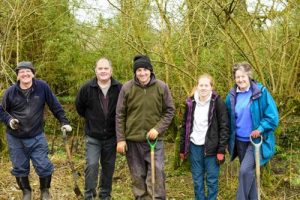
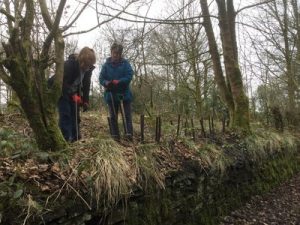
We had a Saturday session on 7th March as part of the Hyndburn Local Nature Reserve Weekend Volunteering Programme. A group of volunteers worked on the old hedge along Plantation Road which is part of the Peel Park & Coppice Local Nature Reserve. The hedge was in need of rejuvenation so some of the hedge was cut down to allow new growth to develop from the roots of the cut trees which will be healthier and thicker. Where there were gaps in the hedge these were planted up with mainly Hawthorn but also some Hazel and Crab Apple. Hopefully once these new plants have grown and the growth from the cut trees has developed then we should see a thicker, healthier hedge which will be an improved habitat for the local wildlife.

The Hyndburn Local Nature Reserve Weekend Volunteering Programme is being run in partnership with the Ribble Rivers Trust on behalf of Hyndburn Borough Council.

Above pictures by Russell Taylor: https://russelltaylorphotography.co.uk/

Tree Planting at Rothwell Heights

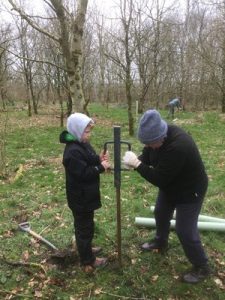
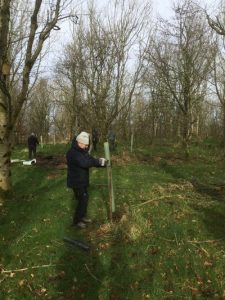
We had a Saturday session on 22nd February as part of the Hyndburn Local Nature Reserve Weekend Volunteering Program. We planted 200 trees in the woodland at Rothwell Heights which is part of Woodnook Vale Local Nature Reserve. Some thinning had been done in the woods and we planted Hazel, Hawthorn, Holly and Crab Apple to provide some understorey to the woods which will improve the habitat and increase the range of animals and birds that are attracted to the woods and also planted Oak and Silver Birch to replace the larger trees that were removed. Woodnook Vale Local Nature Reserve was declared last year and along with Peel Park and The Coppice Local Nature Reserve is one of the two largest Local Nature Reserves in Lancashire. Leaflets on the reserves are available from Prospects Foundation and Hyndburn Borough Council. Further events as part of the Weekend Volunteer Program are being held in February and March, details are in our What’s On section.

Work at Huncoat Woods

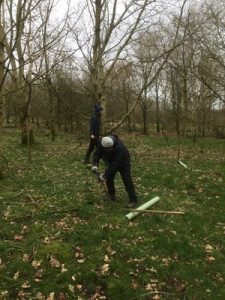
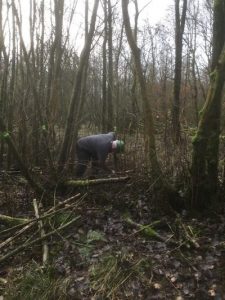
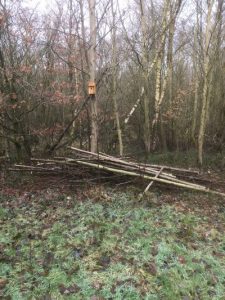
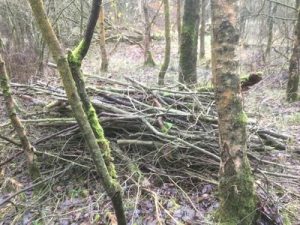
Over the last few weeks our Monday and Tuesday volunteers have been working at Huncoat Woods, cutting down some of the trees. This is to open up areas allowing more light in to encourage growth of a shrub layer which will help improve the habitat and also to clear round some of the Oak and Hawthorn trees to allow them space to develop. The cut trees have been made into habitat piles which along with the bird boxes put up previously will provide shelter and habitat for a range of wildlife. If you’d like to get involved with the project or get more information then please contact Roger at roger.plum@prospectsfoundation.org.uk or on 01254 230348

Scroll to top