
Winter is here and at this time of year trees can look sparse but with a few simple tips you can identify some common trees in our woodlands. Woodlands are a great place for a Winter walk. They are more sheltered and even at this time of year have wildlife that you can see. Birds are about looking for food to get them through the winter, trees can have fruits and seeds and plants such as ferns and mosses are visible along with Christmas related plants such as Holly, Ivy and Mistletoe. The low Winter sunshine casts long shadows and lights up the bare trees, giving different views of familiar woods. As the current government guidelines restrict movement not everyone is lucky enough to have woodlands near enough that they can walk to, although in Hyndburn there are a number of woodland sites that are near enough to the towns to be visited. More information about Hyndburn’s Woodlands can be found here: Hyndburn’s Woodlands and local walks can be found here: Discover Hyndburn. This is the first of a series of posts to help you identify some common trees.
Winter tree identification is based on the twigs, buds and bark so here is a simple guide to the twigs of some trees you should see in a woodland: Twig ID or look online for Winter Tree ID Guides.
HAZEL

Hazel is a common tree in woods and hedges. It is often multi-stemmed and grows to a maximum height of 15m. The bark is shiny and silvery or light brown and has horizontal lines or ‘breathing pores’.
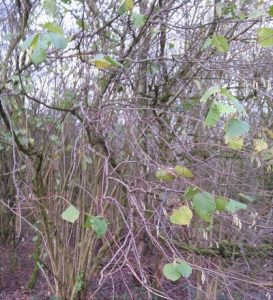
Especially in early Winter you may still see some of the leaves on the tree, either still green or usually yellow. They are quite large and roughly circular or heart shaped with a pointed end. If not on the tree then you may see them on the ground below, you may also see hazelnuts on the floor which is another clue.

During the Winter Hazel produce male and female flowers. The female flowers are small and red but the male flowers are long yellow catkins which can be seen on the tree. The twigs have buds which are short and blunt with green red scales and young shoots are hairy.
OAK

Oak trees can grow to 40m tall and are a vital habitat throughout the year for a variety of birds and insects. Young oaks have smooth, silvery-brown bark. As trees age, this grows rugged and is covered in finger-shaped platelets with deep fissures in between. Young oak bark can be confused with other trees so you need to look at the twigs to identify them.

Oak twigs have a distinctive cluster of brown buds at the end of the twig, other individual buds are spread down the twig in a spiral pattern.
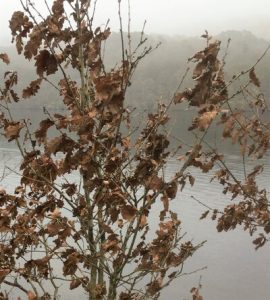
Oaks can keep their leaves in Winter, although dead and brown they have the distinct oak leaf shape. They are easier to see on young trees but another clue for an oak is to look on the floor for leaves, acorns and acorn cups.
So get out and visit local woodlands, see what trees you can find and we’ll be putting some more tree ID tips up soon. We are developing a woodland website for Hyndburn and are interested in your local wood so if you’d like to take pictures of the trees you see or tell me about your local wood then you can email me at roger.plum@prospectsfoundation.org.uk and for more information on how to get involved with Prospects and activities you can do, then visit our website www.prospectsfoundation.org.uk