Annual cut & collects are an important part of wildflower meadow management as it reduces nutrients in the soil which overtime will ensure that vigourous grasses and injurious weeds do not become dominant. A wider variety of smaller and slow-growing plants can thrive as a result, increasing biodiversity in the meadow as more kinds of plants means more insects which will feed small birds and mammals, which then support larger carnivores like birds of prey.
In a natural ecosystem, plants are removed by herbivores which can spread the nutrients across a landscape as they migrate, creating a range of different habitats including areas of nutrient poor soil that can support wildflowers. In the UK, a majority of our native large herbivores are gone and the ones remaining have fragmented habitats which disrupts their migration. This means that the natural spread of nutrients can not occur, resulting in an accumulation of plant growth in an area that builds up over time, creating an area of high nutrient soil which allows plants like Creeping Thistle, Creeping Buttercup, docks, and Stinging Nettle to dominate.
Habitats like this can still be important for wildlife (E.g., Stinging Nettles act as the food plant for Comma, Peacock, Red Admiral and Small Tortoiseshell butterflies,) but since 98% of wildflower meadows in the UK have disappeared in the last century, it's vital we transform areas of high nutrient density into spaces where a vast array of native wildflowers & pollinators can thrive.
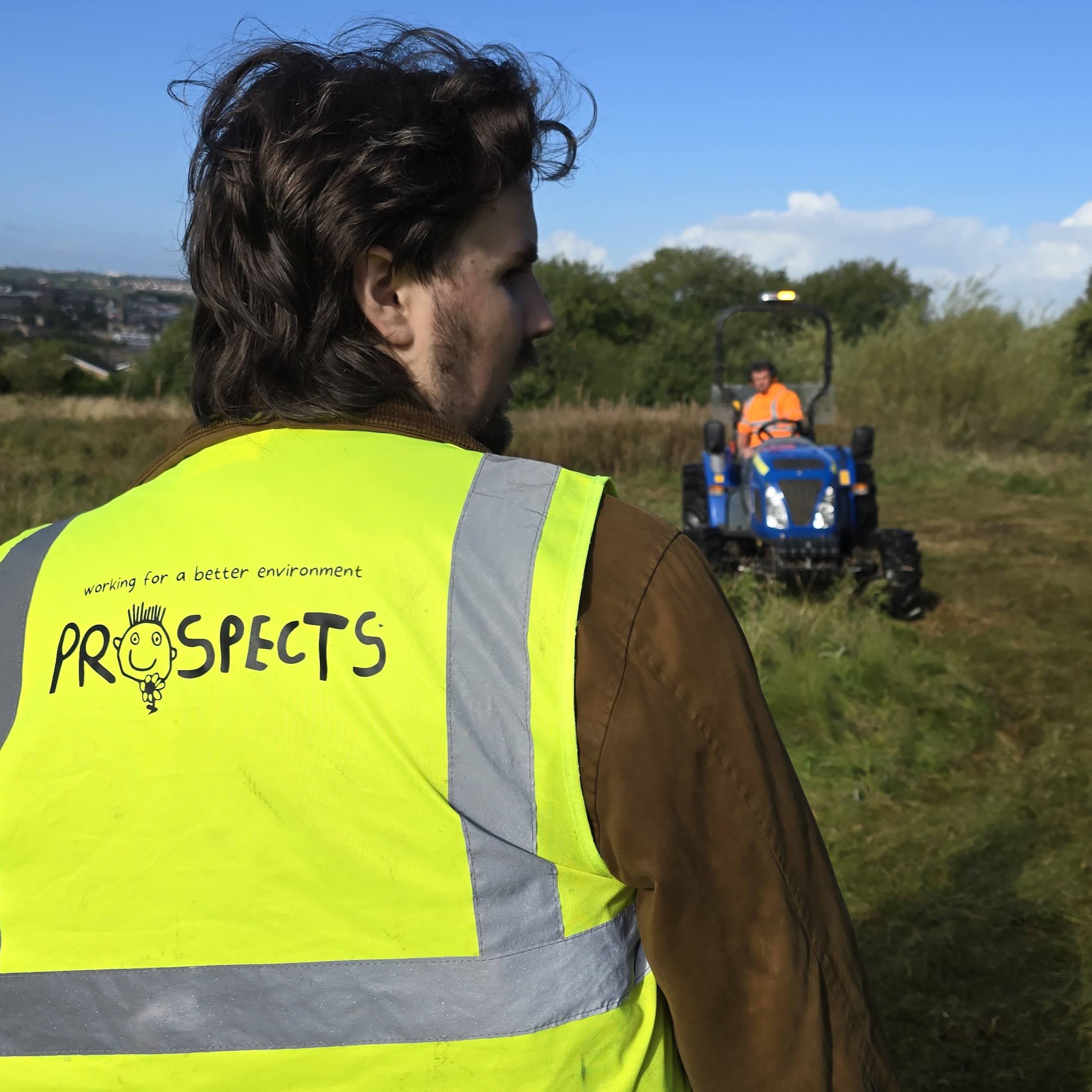
So with a severe lack of grazing animals on hand, we settled with a tractor as the next best thing! The compact tractor we got was able to cut and remove a large area of the meadow over the course of two days. We have left areas of longer vegetation around the meadow to give small mammals and invertebrates areas to shelter over winter as well as provide cover for birds and deer.
For more information and to see what sort of species have been found in Pleck Meadow, check out our FAQ.
If you would like to get involved in meadow management on Peel Park & the Coppice LNR, then please email robert.gabryszak@prospectsfoundation.org.uk or call 01254 230348.
A huge thank you to Hyndburn Borough Council and Windfall Fund for making this project possible.

 Ensuring that small critters get out of the way!
 The compact tractor next to Pleck Meadow's carved bench.
 Aerial view of the cut!
 Removing Creeping Thistle.
 Pleck Meadow's South Entrance was also cut!
 Tractor and volunteers with a view of the wind farm in the background.
 View of tractor and volunteer.